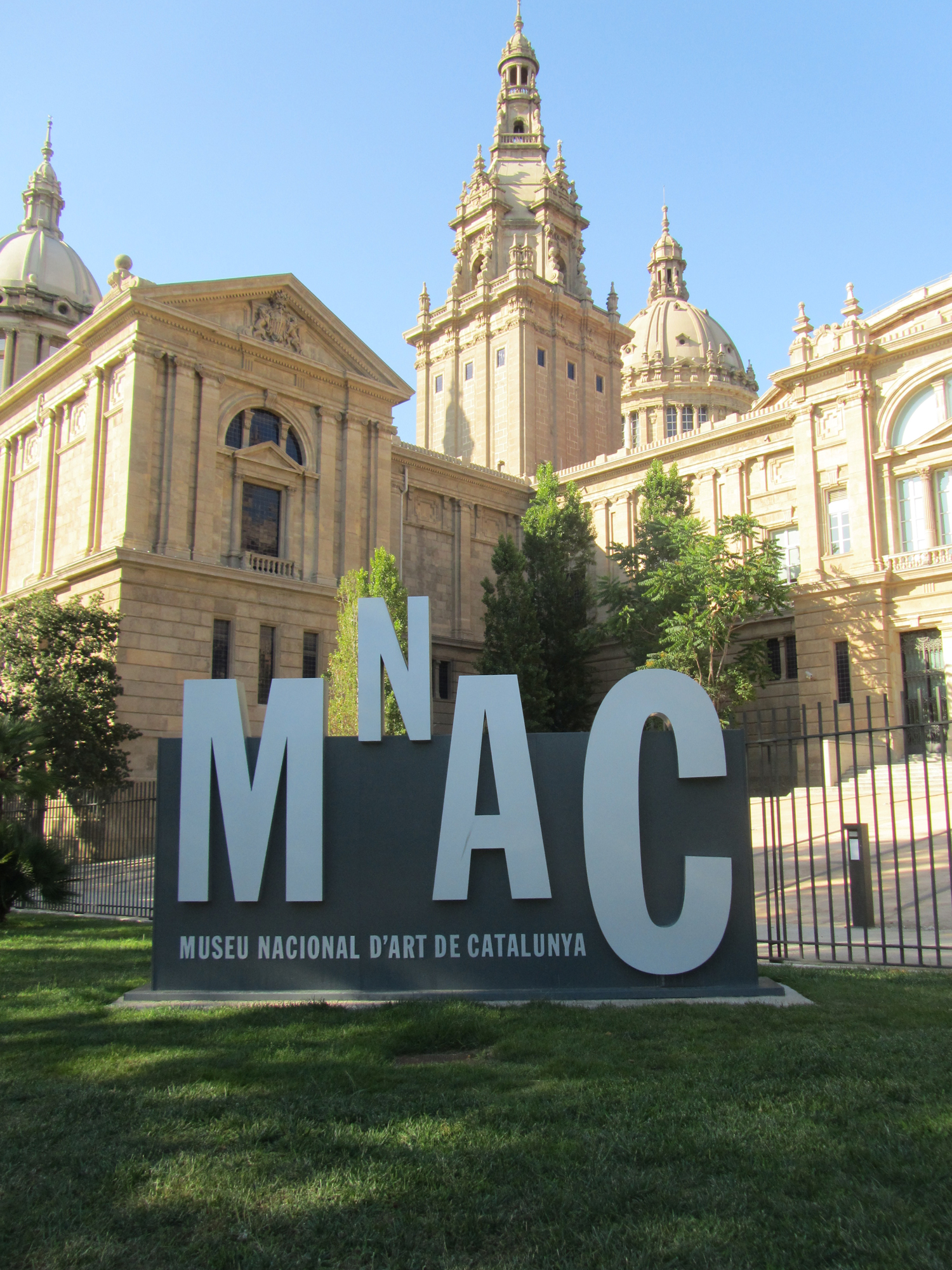
The Museu Nacional d'Art de Catalunya (MNAC) is located in the Palau Nacional, a landmark building constructed for the 1929 International Exposition in Barcelona. It serves as the primary institution for the preservation and exhibition of Catalan visual arts, spanning from the Romanesque period to the mid-20th century.
The museum is internationally renowned for its collection of Romanesque mural paintings, which were salvaged from churches in the Pyrenees during the early 20th century and transferred to canvas. Beyond its medieval holdings, the museum features extensive galleries dedicated to Gothic art, Renaissance and Baroque works, and a significant collection of Catalan Modernisme, including works by Antoni Gaudí and Ramon Casas.
Key Facts
- Materials
- Stone, Brick, Iron, Glass
- Civilization
- Catalan
- Accessibility
- Fully accessible with elevators and ramps
- Date(s)
- 1926-1929
- Condition
- Well-preserved, active museum
- Original Function
- Exhibition pavilion for the 1929 International Exposition
- Key Figures
- Eugenio Cendoya, Enric Catà, Pere Domènech i Roura
The Palau Nacional
1929The building was designed by architects Eugenio Cendoya and Enric Catà under the supervision of Pere Domènech i Roura for the 1929 International Exposition. It was intended to be a temporary structure, but its architectural prominence led to its permanent preservation.
Formation of the Collection
1934The museum was officially inaugurated in 1934, bringing together the collections of the Museu d'Art de Catalunya and the Museu d'Art Modern. The core of the Romanesque collection was established through the rescue of mural paintings from rural churches in the Catalan Pyrenees.
Modern Expansion
1990-2004In 1990, the Catalan government passed the Museums Law, leading to a major renovation project led by architect Gae Aulenti. The museum reopened in stages, with the full collection finally accessible to the public by 2004.
Cultural Significance
The MNAC is a cornerstone of Catalan cultural identity, acting as the primary repository for the region's artistic heritage. Its collection of Romanesque art is considered one of the most complete in the world, providing a unique insight into the religious and social life of the medieval Pyrenees.
Furthermore, the museum plays a critical role in documenting the development of Catalan Modernisme, a movement that defined the aesthetic landscape of Barcelona. By housing these works, the museum reinforces the historical narrative of Catalonia as a distinct cultural and artistic entity within Europe.
Interpretive Notes
Scholarly debates and areas of uncertainty
The ethics of removing mural paintings from their original architectural contexts in the early 20th century remains a subject of discussion. While the transfers were necessary to prevent the loss of these works to international art dealers, scholars continue to debate the impact of decontextualization on the interpretation of Romanesque liturgical space.
Visiting Information
Entry Rules
Open Tuesday to Sunday. Tickets can be purchased online or at the box office. Free entry is available on Saturday afternoons after 3:00 PM and on the first Sunday of every month.
Best Times to Visit
Weekday mornings are generally quieter. Visiting in the late afternoon allows for a view of the sunset from the museum's terrace, which overlooks the Plaça d'Espanya.
Photography
Personal photography is permitted without flash or tripods. Professional photography requires prior authorization from the museum administration.
Preservation Notes
Maintain a respectful distance from all artworks. Flash photography is strictly prohibited to protect light-sensitive pigments in the medieval mural paintings.
Nearby POIs
11 shown- Magic Fountain of Montjuic0.3 km
- Poble Espanyol0.4 km
- Barcelona Museum of Contemporary Art2 km
- Maritime Museum of Barcelona2 km
- Palau Guell2.1 km
- Columbus Monument2.2 km
- Basilica de Santa Maria del Pi2.3 km
- Cathedral of the Holy Cross and Saint Eulalia2.6 km
- Casa Batllo2.7 km
- Santa Maria del Mar2.9 km
- Museu Picasso3 km
Sources & Further Reading
- [1]The Museu Nacional d'Art de Catalunya: A History — Bonaventura Bassegoda. MNAC Publications (2010)
- [2]Romanesque Mural Painting in Catalonia — Milagros Guardia. Editorial Electa (2005)
Key Facts
- Materials
- Stone, Brick, Iron, Glass
- Civilization
- Catalan
- Accessibility
- Fully accessible with elevators and ramps
- Date(s)
- 1926-1929
- Condition
- Well-preserved, active museum
- Original Function
- Exhibition pavilion for the 1929 International Exposition
- Key Figures
- Eugenio Cendoya, Enric Catà, Pere Domènech i Roura
Nearby POIs
11 shown- Magic Fountain of Montjuic0.3 km
- Poble Espanyol0.4 km
- Barcelona Museum of Contemporary Art2 km
- Maritime Museum of Barcelona2 km
- Palau Guell2.1 km
- Columbus Monument2.2 km
- Basilica de Santa Maria del Pi2.3 km
- Cathedral of the Holy Cross and Saint Eulalia2.6 km
- Casa Batllo2.7 km
- Santa Maria del Mar2.9 km
- Museu Picasso3 km