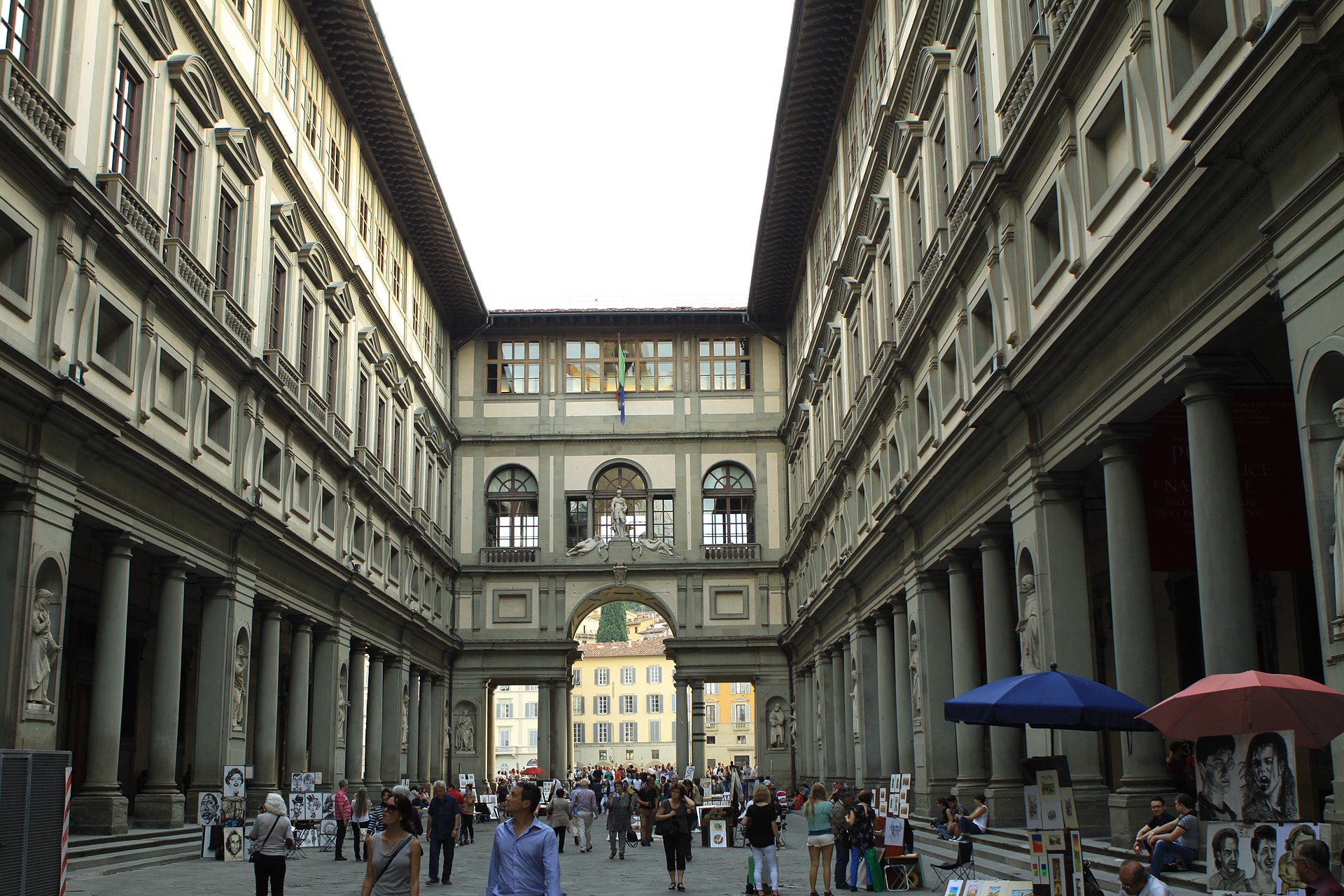
The Uffizi Gallery is a prominent art museum located in the historic center of Florence, Italy. Originally commissioned by Cosimo I de' Medici in 1560, the building was designed by Giorgio Vasari to serve as the administrative offices (uffizi) for the Florentine magistrates. The structure is a prime example of Mannerist architecture, featuring a long, narrow courtyard that connects the Piazza della Signoria to the Arno River.
Following the extinction of the Medici dynasty, the vast art collection was bequeathed to the city of Florence under the condition that it remain accessible to the public. Today, the gallery houses an unparalleled collection of Italian Renaissance masterpieces, including works by Botticelli, Michelangelo, Leonardo da Vinci, and Raphael, serving as a primary repository for the artistic heritage of the Tuscan region.
Key Facts
- Materials
- Pietra serena, Brick, Stucco
- Civilization
- Italian Renaissance
- Accessibility
- Wheelchair accessible with elevators
- Date(s)
- 1560-1581
- Condition
- Well-preserved, active museum
- Original Function
- Administrative offices for the Florentine magistrates
- Key Figures
- Cosimo I de' Medici, Giorgio Vasari, Bernardo Buontalenti
Commission and Design
1560-1580Cosimo I de' Medici commissioned Giorgio Vasari to consolidate the city's administrative offices into a single building. The design utilized a U-shaped plan that integrated the existing medieval Mint (Zecca) and the church of San Pier Scheraggio.
The Medici Collections
16th-18th centuryThe upper floor was converted into a gallery for the Medici family's private art collection. By the 17th century, it had become a destination for European travelers on the Grand Tour, showcasing the family's immense wealth and cultural influence.
Public Access and Modernization
1765-presentThe gallery was officially opened to the public in 1765. In the 20th and 21st centuries, the museum underwent significant expansions and renovations, including the 'New Uffizi' project, to accommodate increasing visitor numbers and modernize climate control systems.
Cultural Significance
The Uffizi is central to the global understanding of the Italian Renaissance. It represents the transition of art from private dynastic display to public institutional heritage. The collection is instrumental in the study of Western art history, providing a chronological narrative of stylistic evolution from the Middle Ages through the Baroque period.
Beyond its artistic contents, the building itself is a landmark of Florentine urban planning. Its integration into the city's fabric reflects the political power of the Medici family and their role in shaping the cultural identity of Tuscany.
Interpretive Notes
Scholarly debates and areas of uncertainty
Debates often center on the attribution of specific works within the collection, particularly those from the workshop of Leonardo da Vinci. Additionally, there is ongoing academic discussion regarding the ethics of displaying works that were historically acquired through dynastic power dynamics versus modern standards of provenance.
Visiting Information
Entry Rules
Open Tuesday through Sunday. Tickets are required and advance booking is highly recommended due to high demand. Visitors must pass through security screening. Large bags and umbrellas must be left in the cloakroom.
Best Times to Visit
Early morning or late afternoon on weekdays during the shoulder season (November-March) to avoid peak tourist crowds.
Photography
Personal photography is permitted without flash or tripods. Professional photography requires prior authorization from the museum administration.
Preservation Notes
Do not touch the artworks or display cases. Maintain a quiet environment. The museum is climate-controlled to protect sensitive tempera and oil paintings; please follow all staff instructions regarding movement through the galleries.
Nearby POIs
11 shownSources & Further Reading
- [1]The Uffizi: The Official Guide — Antonio Natali. Giunti Editore (2015)
- [2]Vasari's Florence: The Architecture of the Uffizi — Patricia Rubin. Yale University Press (1995)
Key Facts
- Materials
- Pietra serena, Brick, Stucco
- Civilization
- Italian Renaissance
- Accessibility
- Wheelchair accessible with elevators
- Date(s)
- 1560-1581
- Condition
- Well-preserved, active museum
- Original Function
- Administrative offices for the Florentine magistrates
- Key Figures
- Cosimo I de' Medici, Giorgio Vasari, Bernardo Buontalenti