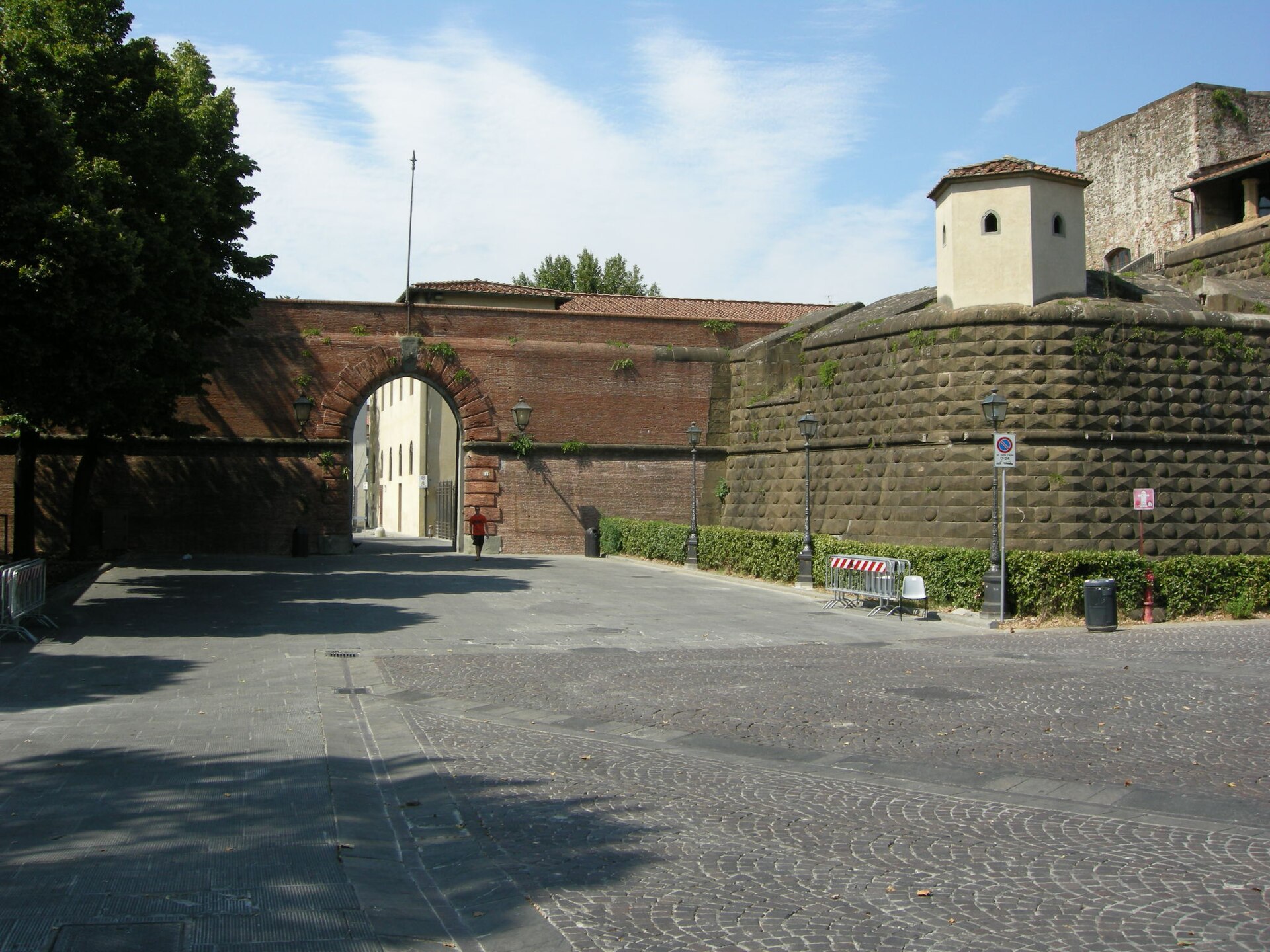
The Fortezza da Basso, officially known as the Fortezza di San Giovanni Battista, is a monumental fortification located in the northern part of the historic center of Florence. Commissioned by Alessandro de' Medici and designed by Antonio da Sangallo the Younger, construction began in 1534 to consolidate Medici power and defend the city against potential internal uprisings and external threats.
Architecturally, the structure represents a significant transition in military engineering, featuring a pentagonal plan with massive bastions designed to withstand contemporary artillery. While it served its original defensive purpose for centuries, the fortress has been repurposed in the modern era as a primary venue for international trade fairs, exhibitions, and cultural events, serving as the headquarters for the Firenze Fiera exhibition center.
Key Facts
- Materials
- Brick, Stone
- Civilization
- Renaissance Florence
- Accessibility
- Accessible for event attendees
- Date(s)
- 1534-1536
- Condition
- Well-preserved, active exhibition center
- Original Function
- Military fortification
- Key Figures
- Alessandro de' Medici, Antonio da Sangallo the Younger, Pier Francesco da Viterbo
Strategic Origins
1534Following the Siege of Florence, the Medici family sought to secure their control over the city. The fortress was strategically positioned to command the city walls and provide a secure retreat for the ruling family.
Construction and Design
1534-1536Antonio da Sangallo the Younger utilized advanced defensive principles, including thick, angled bastions. The project was completed in a remarkably short time, demonstrating the urgency of the Medici regime.
Military and Administrative Use
16th-19th centuryFor centuries, the fortress functioned as a military barracks and a symbol of ducal authority. It remained a restricted military zone, housing troops and artillery to monitor the Florentine population.
Modern Transformation
20th century-presentIn the modern era, the military function was phased out. The site was integrated into the city's infrastructure as a major exhibition space, hosting events such as Pitti Immagine and various international congresses.
Cultural Significance
The Fortezza da Basso serves as a physical manifestation of the transition from the Florentine Republic to the Medici Duchy. It stands as a stark reminder of the political tensions of the 16th century, contrasting with the surrounding Renaissance civic architecture. Today, it is central to the economic life of Florence as the city's primary hub for international trade and professional gatherings.
Interpretive Notes
Scholarly debates and areas of uncertainty
Debate persists regarding the extent to which the fortress was intended to defend against foreign invaders versus its primary function as a tool of domestic repression against the Florentine citizenry. Additionally, the impact of modern exhibition infrastructure on the preservation of the original 16th-century masonry remains a subject of ongoing conservation discussion.
Visiting Information
Entry Rules
Access is generally restricted to registered attendees of events, trade fairs, and exhibitions. Public access is limited to specific event schedules; check the official Firenze Fiera calendar for opening times.
Best Times to Visit
During major trade events or exhibitions. The exterior can be viewed year-round from the surrounding public streets.
Photography
Personal photography is generally permitted in public areas, but specific events may have restrictions on professional equipment or interior photography.
Preservation Notes
The site is a protected historical monument. Visitors are required to adhere to event-specific security protocols and respect the integrity of the historic bastions.
Nearby POIs
11 shown- Basilica di Santa Maria Novella0.8 km
- Basilica di San Lorenzo0.8 km
- Palazzo Medici Riccardi0.9 km
- Museo Nazionale di San Marco0.9 km
- Galleria dell'Accademia di Firenze0.9 km
- Battistero di San Giovanni1.1 km
- Museo Marino Marini1.1 km
- Duomo di Firenze1.1 km
- Palazzo Strozzi1.2 km
- Museo dell'Opera del Duomo1.2 km
- Stibbert Museum1.3 km
Sources & Further Reading
- [1]The Fortifications of Renaissance Italy — Simon Pepper. Oxford University Press (1986)
- [2]Firenze Fiera: History of the Fortezza — Firenze Fiera S.p.A.. Official Corporate Archive (2023)View
Key Facts
- Materials
- Brick, Stone
- Civilization
- Renaissance Florence
- Accessibility
- Accessible for event attendees
- Date(s)
- 1534-1536
- Condition
- Well-preserved, active exhibition center
- Original Function
- Military fortification
- Key Figures
- Alessandro de' Medici, Antonio da Sangallo the Younger, Pier Francesco da Viterbo
Nearby POIs
11 shown- Basilica di Santa Maria Novella0.8 km
- Basilica di San Lorenzo0.8 km
- Palazzo Medici Riccardi0.9 km
- Museo Nazionale di San Marco0.9 km
- Galleria dell'Accademia di Firenze0.9 km
- Battistero di San Giovanni1.1 km
- Museo Marino Marini1.1 km
- Duomo di Firenze1.1 km
- Palazzo Strozzi1.2 km
- Museo dell'Opera del Duomo1.2 km
- Stibbert Museum1.3 km