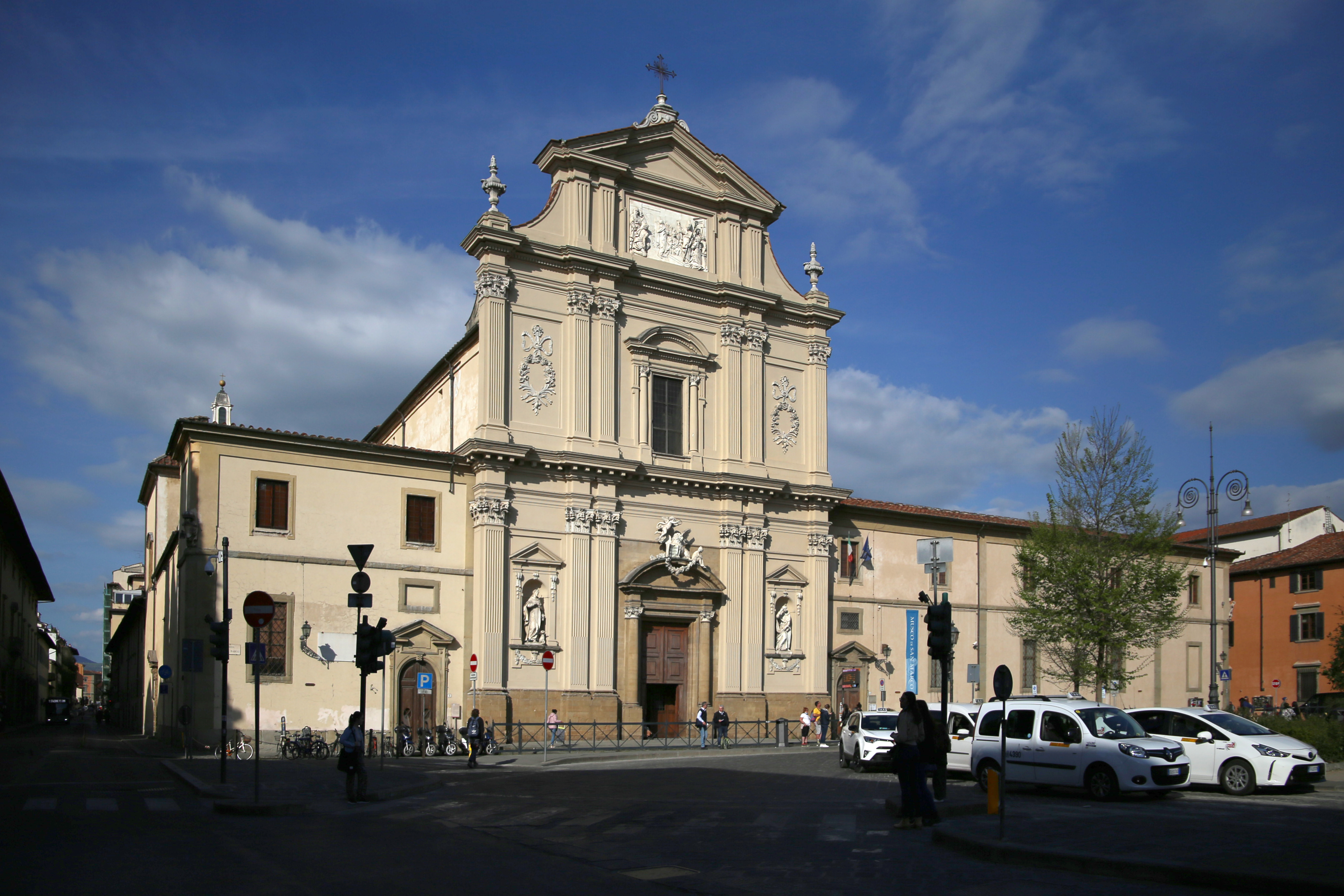
The Museo Nazionale di San Marco is housed within the former Dominican convent of San Marco in Florence, Italy. The complex is renowned for its exceptional collection of Renaissance art, particularly the frescoes painted by Fra Angelico in the monks' cells, corridors, and chapter house during the 1430s and 1440s. The site serves as a primary repository for the works of the artist-monk, preserving the intimate spiritual environment of the original monastic community.
Beyond the frescoes, the museum preserves the architectural integrity of the convent, including the library designed by Michelozzo, which is considered a masterpiece of Renaissance rationalist architecture. The site also holds significant historical importance as the residence of the reformer Girolamo Savonarola, whose cell remains part of the visitor circuit, offering insight into the religious and political tensions of late 15th-century Florence.
Key Facts
- Materials
- Stone, Brick, Plaster, Wood
- Civilization
- Italian Renaissance
- Accessibility
- Partially accessible; some areas involve stairs
- Date(s)
- 1437-1452
- Condition
- Well-preserved museum
- Original Function
- Dominican Convent
- Key Figures
- Fra Angelico, Michelozzo, Cosimo de' Medici, Girolamo Savonarola
Foundation and Patronage
1436-1443The convent was granted to the Dominican Observants by Pope Eugenius IV. Cosimo de' Medici commissioned the architect Michelozzo to rebuild the dilapidated complex, creating a modern, austere space that reflected the order's commitment to poverty and study.
The Era of Fra Angelico
1438-1445During the reconstruction, the painter-monk Fra Angelico and his assistants decorated the convent with a series of devotional frescoes. These works were intended to aid the monks in their private meditations, marking a unique integration of art and monastic life.
Savonarola and Religious Reform
1489-1498The convent became the center of the reformist movement led by the friar Girolamo Savonarola. His presence transformed the site into a focal point for the political and religious upheaval that gripped Florence in the late 15th century.
Secularization and Museum Status
1866-presentFollowing the suppression of religious orders in Italy in 1866, the convent was declared a national monument. It was subsequently converted into a museum to preserve the frescoes and the architectural legacy of the Medici-funded renovation.
Cultural Significance
The museum is a cornerstone of Renaissance studies, representing the intersection of humanist patronage and religious devotion. It is the only site where a significant body of Fra Angelico's work remains in its original architectural context, providing a rare glimpse into the intended function of religious art in a monastic setting.
Furthermore, the library of San Marco is celebrated as one of the first public libraries of the Renaissance, symbolizing the Medici family's commitment to the revival of classical learning and the preservation of ancient manuscripts.
Interpretive Notes
Scholarly debates and areas of uncertainty
There is ongoing academic discussion regarding the extent of Fra Angelico's personal hand in the various frescoes versus the contributions of his workshop assistants. Additionally, scholars debate the degree to which the architectural design by Michelozzo was influenced by the specific liturgical requirements of the Dominican Observants versus the aesthetic preferences of the Medici patrons.
Visiting Information
Entry Rules
Open Tuesday through Sunday. Tickets are required for entry. Visitors are expected to maintain a quiet demeanor appropriate for the historical and religious nature of the site.
Best Times to Visit
Weekday mornings are generally quieter, allowing for a more contemplative experience of the frescoes in the monks' cells.
Photography
Personal photography is permitted for non-commercial use without the use of flash or tripods.
Preservation Notes
The frescoes are highly sensitive to light and humidity. Visitors are requested not to touch the walls or the artwork and to remain on the designated paths to protect the historic floors.
Nearby POIs
11 shown- Galleria dell'Accademia di Firenze0.2 km
- Palazzo Medici Riccardi0.5 km
- Museo dell'Opera del Duomo0.6 km
- Basilica di San Lorenzo0.6 km
- Duomo di Firenze0.6 km
- Battistero di San Giovanni0.7 km
- Museo Nazionale del Bargello0.9 km
- Basilica di Santa Maria Novella0.9 km
- Fortezza da Basso0.9 km
- Palazzo Strozzi1 km
- Palazzo Vecchio1.1 km
Sources & Further Reading
- [1]Fra Angelico at San Marco — William Hood. Yale University Press (1993)
- [2]Michelozzo and the Convent of San Marco — Harald Hendrix. Journal of the Society of Architectural Historians (1998)
Key Facts
- Materials
- Stone, Brick, Plaster, Wood
- Civilization
- Italian Renaissance
- Accessibility
- Partially accessible; some areas involve stairs
- Date(s)
- 1437-1452
- Condition
- Well-preserved museum
- Original Function
- Dominican Convent
- Key Figures
- Fra Angelico, Michelozzo, Cosimo de' Medici, Girolamo Savonarola
Nearby POIs
11 shown- Galleria dell'Accademia di Firenze0.2 km
- Palazzo Medici Riccardi0.5 km
- Museo dell'Opera del Duomo0.6 km
- Basilica di San Lorenzo0.6 km
- Duomo di Firenze0.6 km
- Battistero di San Giovanni0.7 km
- Museo Nazionale del Bargello0.9 km
- Basilica di Santa Maria Novella0.9 km
- Fortezza da Basso0.9 km
- Palazzo Strozzi1 km
- Palazzo Vecchio1.1 km