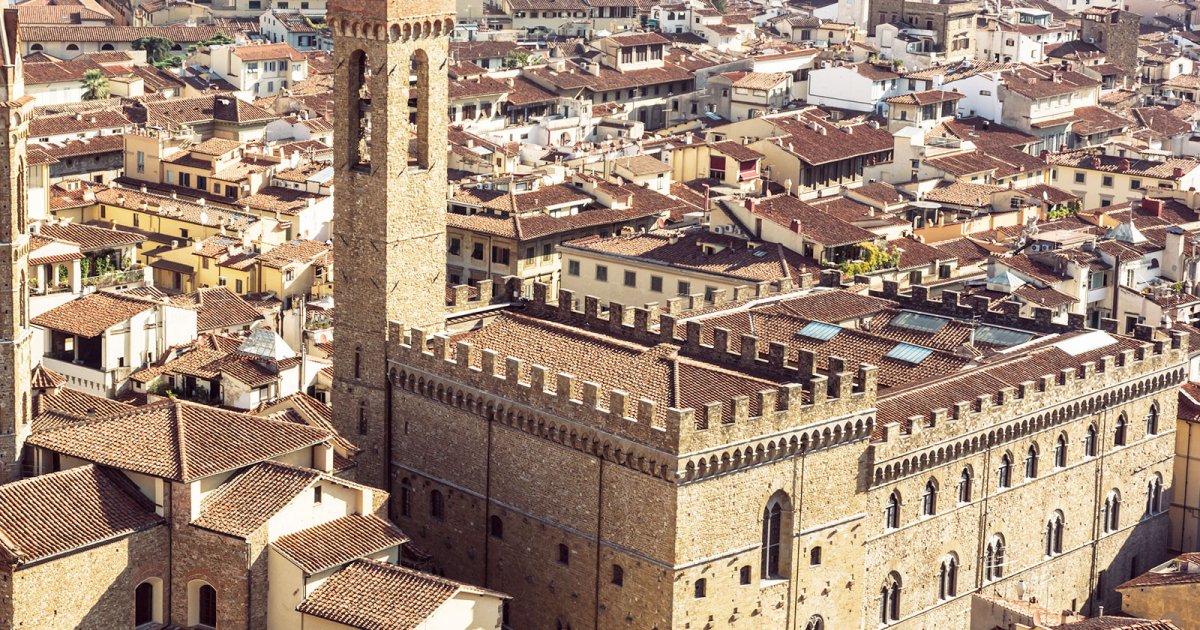
The Museo Nazionale del Bargello is housed in the Palazzo del Bargello, one of the oldest buildings in Florence. Originally constructed as the seat of the Capitano del Popolo and later serving as a prison and police headquarters, the structure is a prime example of medieval fortress architecture in the city. Its austere stone facade and central courtyard reflect its history as a seat of civic authority and judicial power.
Today, the museum serves as Italy's premier institution for Renaissance sculpture. The collection includes foundational works by masters such as Donatello, Michelangelo, Cellini, and Verrocchio. The building itself is considered a masterpiece of 13th-century architecture, featuring a grand staircase and a courtyard that once served as the site of public executions.
Key Facts
- Materials
- Pietra forte sandstone, Brick
- Civilization
- Italian
- Accessibility
- Partially accessible; elevator available for most floors
- Date(s)
- 1255
- Condition
- Well-preserved, active museum
- Original Function
- Palazzo del Capitano del Popolo
- Key Figures
- Donatello, Michelangelo Buonarroti, Benvenuto Cellini, Andrea del Verrocchio
Civic Origins
1255The palace was commissioned to house the Capitano del Popolo, the chief magistrate of the Florentine Republic, establishing a center for civic administration.
The Bargello Era
16th-18th centuryThe building was repurposed as the headquarters of the Bargello, the chief of police. During this time, the courtyard was frequently used for public executions and the building served as a notorious prison.
Transformation into a Museum
1865Following the unification of Italy, the building was restored and converted into the Museo Nazionale, housing the state's most significant collection of sculpture and decorative arts.
Cultural Significance
The Bargello is central to the study of Italian sculpture, bridging the gap between medieval craftsmanship and the high Renaissance. It holds the most important collection of Donatello's work in the world, making it a critical site for understanding the evolution of artistic expression in Florence.
Beyond its artistic contents, the building serves as a physical record of Florence's transition from a medieval commune to a Renaissance power. Its history as a prison and site of execution remains a somber counterpoint to the beauty of the sculptures housed within its walls.
Interpretive Notes
Scholarly debates and areas of uncertainty
Debates often center on the attribution of specific minor sculptures and the provenance of certain decorative arts acquired during the 19th-century consolidation of the museum's collection. Additionally, the extent of 19th-century 'restoration' of the building's interior is a frequent topic of architectural study.
Visiting Information
Entry Rules
Open daily. Tickets are required for entry. Visitors must pass through a security checkpoint. Large bags and backpacks are not permitted inside the galleries.
Best Times to Visit
Weekday mornings are generally quieter. The museum is less crowded than the Uffizi or Accademia, making it accessible throughout the year.
Photography
Personal photography is permitted without flash or tripods. Professional photography requires prior authorization from the museum administration.
Preservation Notes
Maintain a respectful distance from all sculptures. Do not touch the marble or bronze surfaces. Flash photography is strictly prohibited to prevent light damage to sensitive materials.
Nearby POIs
11 shown- Palazzo Vecchio0.2 km
- Galleria degli Uffizi0.3 km
- Duomo di Firenze0.3 km
- Museo dell'Opera del Duomo0.3 km
- Battistero di San Giovanni0.4 km
- Basilica di Santa Croce0.5 km
- Palazzo Strozzi0.5 km
- Palazzo Medici Riccardi0.6 km
- Basilica di San Lorenzo0.6 km
- Museo Marino Marini0.7 km
- Galleria dell'Accademia di Firenze0.7 km
Sources & Further Reading
- [1]The Bargello Museum: A Guide — Giovanna Gaeta Bertelà. Giunti Editore (2005)
- [2]Italian Renaissance Sculpture — Roberta J. M. Olson. Thames & Hudson (1992)
Key Facts
- Materials
- Pietra forte sandstone, Brick
- Civilization
- Italian
- Accessibility
- Partially accessible; elevator available for most floors
- Date(s)
- 1255
- Condition
- Well-preserved, active museum
- Original Function
- Palazzo del Capitano del Popolo
- Key Figures
- Donatello, Michelangelo Buonarroti, Benvenuto Cellini, Andrea del Verrocchio
Nearby POIs
11 shown- Palazzo Vecchio0.2 km
- Galleria degli Uffizi0.3 km
- Duomo di Firenze0.3 km
- Museo dell'Opera del Duomo0.3 km
- Battistero di San Giovanni0.4 km
- Basilica di Santa Croce0.5 km
- Palazzo Strozzi0.5 km
- Palazzo Medici Riccardi0.6 km
- Basilica di San Lorenzo0.6 km
- Museo Marino Marini0.7 km
- Galleria dell'Accademia di Firenze0.7 km