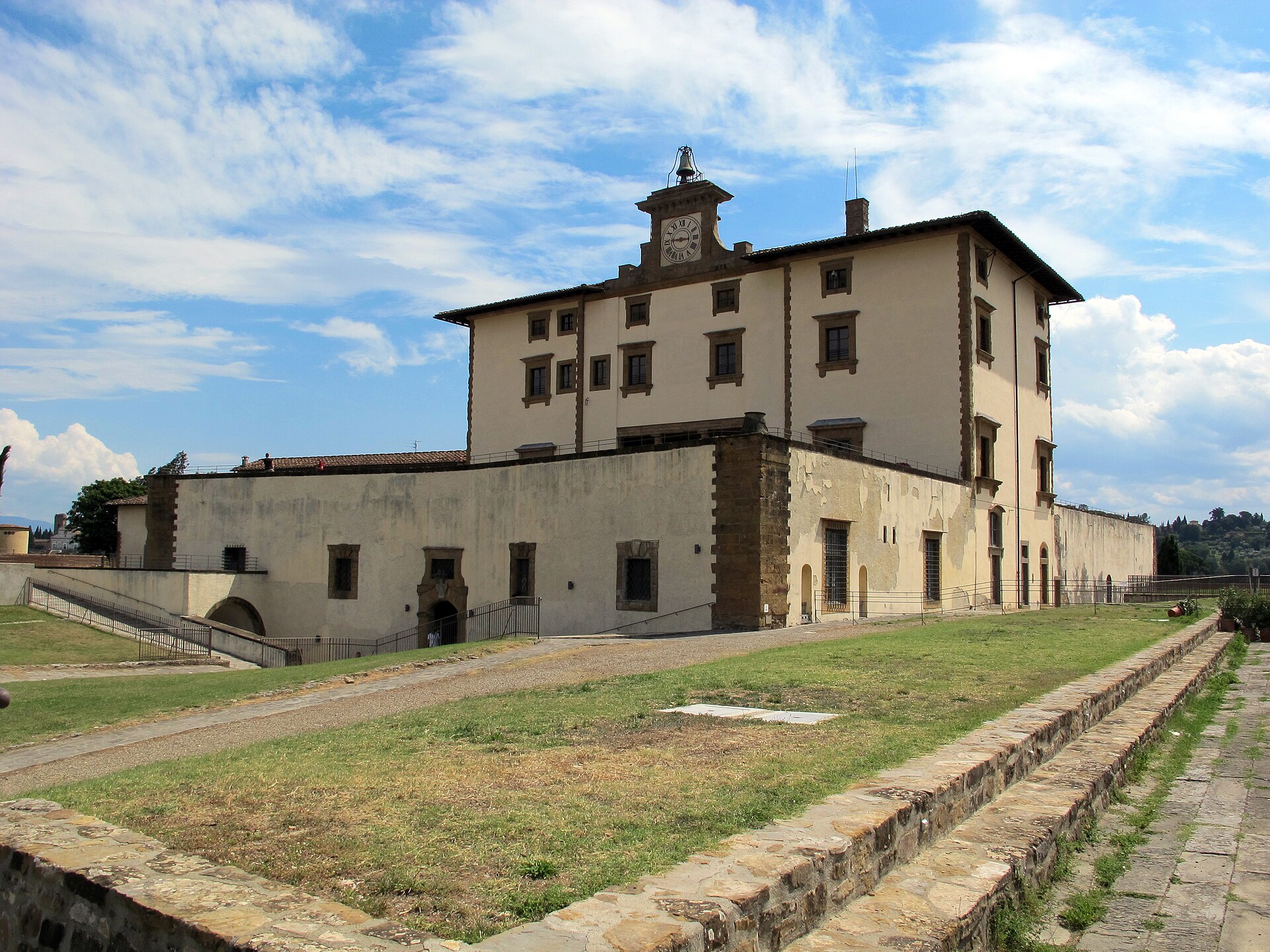
The Forte di Belvedere, officially known as the Fortezza di Santa Maria in San Giorgio del Belvedere, is the second and largest fortress constructed in Florence. Built between 1590 and 1595 by Bernardo Buontalenti under the commission of Grand Duke Ferdinando I de' Medici, the structure was designed to protect the city and the Medici family, serving as a secure retreat and a repository for the family's treasury.
The fortress is strategically positioned on the Boboli Hill, offering panoramic views of the city. It is physically connected to the Palazzo Pitti via the Boboli Gardens and historically linked to the Palazzo Vecchio through the Vasari Corridor. While its military function was short-lived, the site remains a significant example of late Renaissance military architecture and currently serves as a venue for contemporary art exhibitions and cultural events.
Key Facts
- Materials
- Stone, Brick
- Civilization
- Renaissance Florence
- Accessibility
- Accessible via steep paths from the Boboli Gardens or Costa San Giorgio
- Date(s)
- 1590-1595
- Condition
- Well-preserved, used for public exhibitions
- Original Function
- Military defense and Medici treasury
- Key Figures
- Bernardo Buontalenti, Ferdinando I de' Medici
Commission and Design
1590-1595Grand Duke Ferdinando I de' Medici commissioned the architect Bernardo Buontalenti to design a fortress that would dominate the southern hills of Florence. The project was intended to provide a secure stronghold for the Medici family in times of civil unrest.
Strategic Integration
17th CenturyThe fort was integrated into the broader Medici defensive network. Its design allowed for a direct connection to the Palazzo Pitti, ensuring that the Grand Duke could move between the palace and the fortress without entering the city streets.
Modern Transformation
20th Century - PresentFollowing the decline of its military utility, the fortress was repurposed for civic use. It has become a prominent site for large-scale contemporary art installations and cultural exhibitions, while remaining a protected part of the UNESCO World Heritage site of the Historic Centre of Florence.
Cultural Significance
The Forte di Belvedere represents the transition of military architecture into a symbol of dynastic power. Its integration with the Boboli Gardens and the Vasari Corridor highlights the Medici family's desire to control the urban landscape of Florence both physically and visually. Today, it serves as a bridge between the city's Renaissance heritage and its role as a contemporary cultural hub.
Interpretive Notes
Scholarly debates and areas of uncertainty
There is ongoing discussion regarding the extent to which the fortress was intended for defense against external enemies versus its role in suppressing internal dissent among the Florentine population. Some historians argue the fort's orientation suggests it was primarily a tool for domestic control.
Visiting Information
Entry Rules
Open to the public during exhibition periods. Entry is typically free, though specific events may require tickets. Visitors are advised to check the official City of Florence website for current opening status as the site is occasionally closed for maintenance or installation changes.
Best Times to Visit
Late afternoon for sunset views over Florence. Spring and autumn offer the most comfortable weather for the steep walk up from the city center.
Photography
Personal photography is permitted. Commercial photography and drone usage require prior authorization from the municipal authorities.
Preservation Notes
The site features uneven historic paving and steep inclines. Visitors should remain on designated paths to protect the structural integrity of the ramparts and gardens.
Nearby POIs
11 shownSources & Further Reading
- [1]Bernardo Buontalenti and the Fortezza di Belvedere — Amelio Fara. Electa (1995)
- [2]The Architecture of the Italian Renaissance — Peter Murray. Thames & Hudson (1986)
Key Facts
- Materials
- Stone, Brick
- Civilization
- Renaissance Florence
- Accessibility
- Accessible via steep paths from the Boboli Gardens or Costa San Giorgio
- Date(s)
- 1590-1595
- Condition
- Well-preserved, used for public exhibitions
- Original Function
- Military defense and Medici treasury
- Key Figures
- Bernardo Buontalenti, Ferdinando I de' Medici