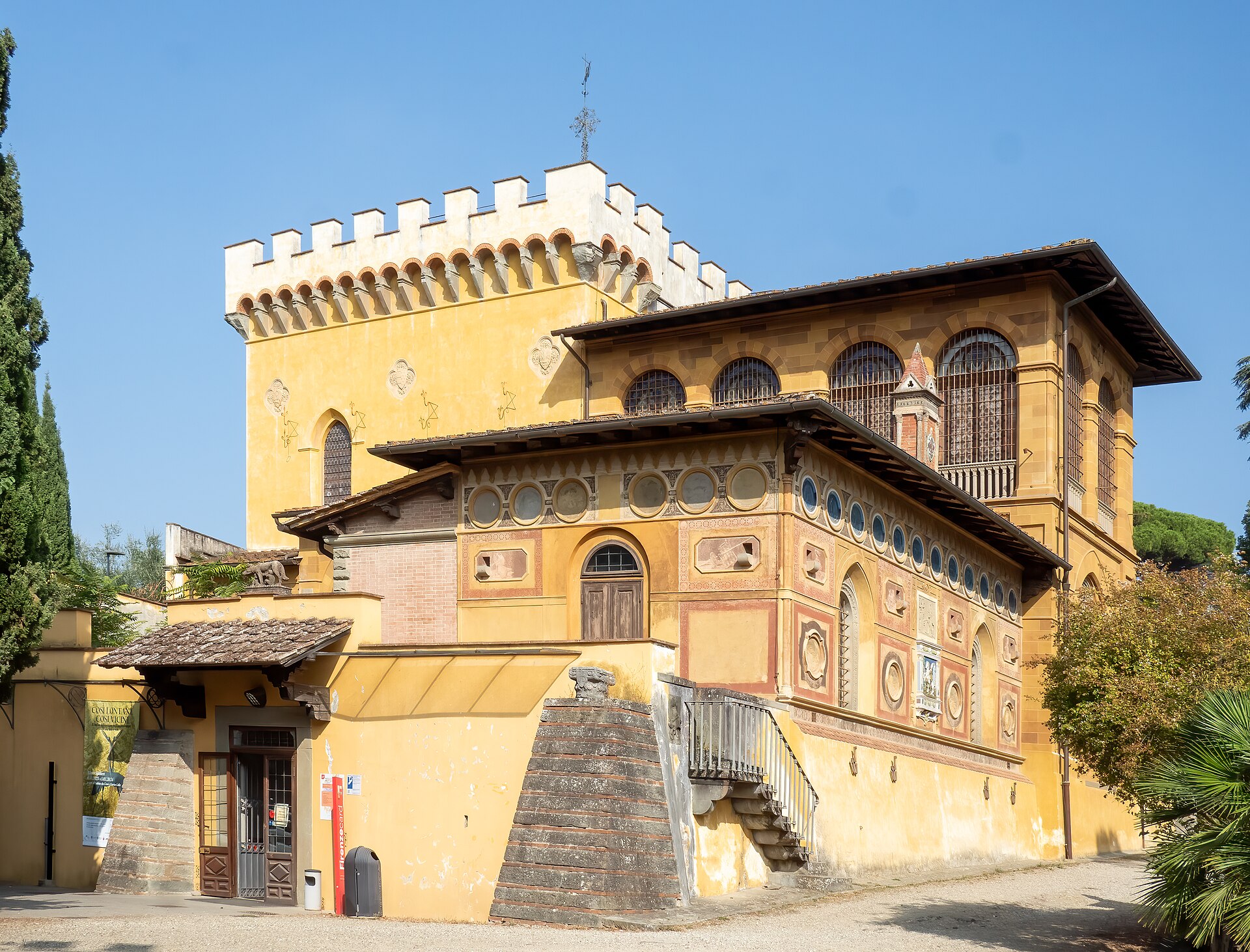
The Stibbert Museum is located in the Villa Montughi in Florence, Italy, and houses an extensive private collection amassed by Frederick Stibbert during the 19th century. The museum is renowned for its vast array of historical arms and armor, featuring over 36,000 artifacts that span both Eastern and Western civilizations.
The collection is displayed in a series of rooms designed to evoke the atmosphere of the period in which the items were used. Beyond the military artifacts, the museum also contains a significant collection of costumes, paintings, tapestries, and furniture, reflecting the eclectic and scholarly interests of its founder.
Key Facts
- Materials
- Stone, Brick, Iron, Steel, Textiles
- Civilization
- European
- Accessibility
- Limited accessibility due to historic architecture
- Date(s)
- 1860s-1880s
- Condition
- Well-preserved, active museum
- Original Function
- Private residence and collection gallery
- Key Figures
- Frederick Stibbert
Formation of the Collection
19th CenturyFrederick Stibbert, an Anglo-Italian collector, dedicated his life to acquiring historical artifacts. He transformed his family villa in Florence into a museum to house his growing collection, which he curated with a focus on historical accuracy and aesthetic presentation.
Legacy and Bequest
1906Upon his death in 1906, Stibbert bequeathed the villa and its entire contents to the city of Florence. The museum was established as a public institution to preserve his life's work and provide educational access to his extensive historical archives.
Modern Preservation
20th Century - PresentThe museum has undergone several restoration projects to maintain the integrity of the villa and the delicate condition of the armor and textile collections. It remains a unique example of a 19th-century 'house museum' that retains its original layout and display philosophy.
Cultural Significance
The Stibbert Museum serves as a vital repository for the study of historical weaponry and military fashion. It provides unique insight into the 19th-century European approach to collecting and the romanticized view of history that characterized the era's private museums.
Interpretive Notes
Scholarly debates and areas of uncertainty
Debates often center on the provenance of certain items within the collection and the challenges of balancing the preservation of the original 19th-century display style with modern museum conservation standards.
Visiting Information
Entry Rules
Open to the public with ticketed entry. Guided tours are available and recommended for a deeper understanding of the collection. Visitors are expected to follow standard museum conduct.
Best Times to Visit
Weekday mornings are generally quieter, allowing for a more focused viewing of the dense displays.
Photography
Personal photography is permitted without flash or tripods. Commercial photography requires prior authorization from the museum administration.
Preservation Notes
The collection is highly sensitive to light and humidity. Visitors are requested not to touch any artifacts or display cases.
Nearby POIs
11 shown- Fortezza da Basso1.3 km
- Museo Nazionale di San Marco1.6 km
- Galleria dell'Accademia di Firenze1.8 km
- Palazzo Medici Riccardi1.9 km
- Basilica di San Lorenzo2 km
- Basilica di Santa Maria Novella2.1 km
- Museo dell'Opera del Duomo2.2 km
- Battistero di San Giovanni2.2 km
- Duomo di Firenze2.2 km
- Museo Marino Marini2.4 km
- Palazzo Strozzi2.4 km
Sources & Further Reading
- [1]The Stibbert Museum: A Guide to the Collection — Simona Di Marco. Museo Stibbert Publications (2010)
- [2]Frederick Stibbert: The Collector and his Museum — Marco Scalini. Centro Di (2006)
Key Facts
- Materials
- Stone, Brick, Iron, Steel, Textiles
- Civilization
- European
- Accessibility
- Limited accessibility due to historic architecture
- Date(s)
- 1860s-1880s
- Condition
- Well-preserved, active museum
- Original Function
- Private residence and collection gallery
- Key Figures
- Frederick Stibbert
Nearby POIs
11 shown- Fortezza da Basso1.3 km
- Museo Nazionale di San Marco1.6 km
- Galleria dell'Accademia di Firenze1.8 km
- Palazzo Medici Riccardi1.9 km
- Basilica di San Lorenzo2 km
- Basilica di Santa Maria Novella2.1 km
- Museo dell'Opera del Duomo2.2 km
- Battistero di San Giovanni2.2 km
- Duomo di Firenze2.2 km
- Museo Marino Marini2.4 km
- Palazzo Strozzi2.4 km