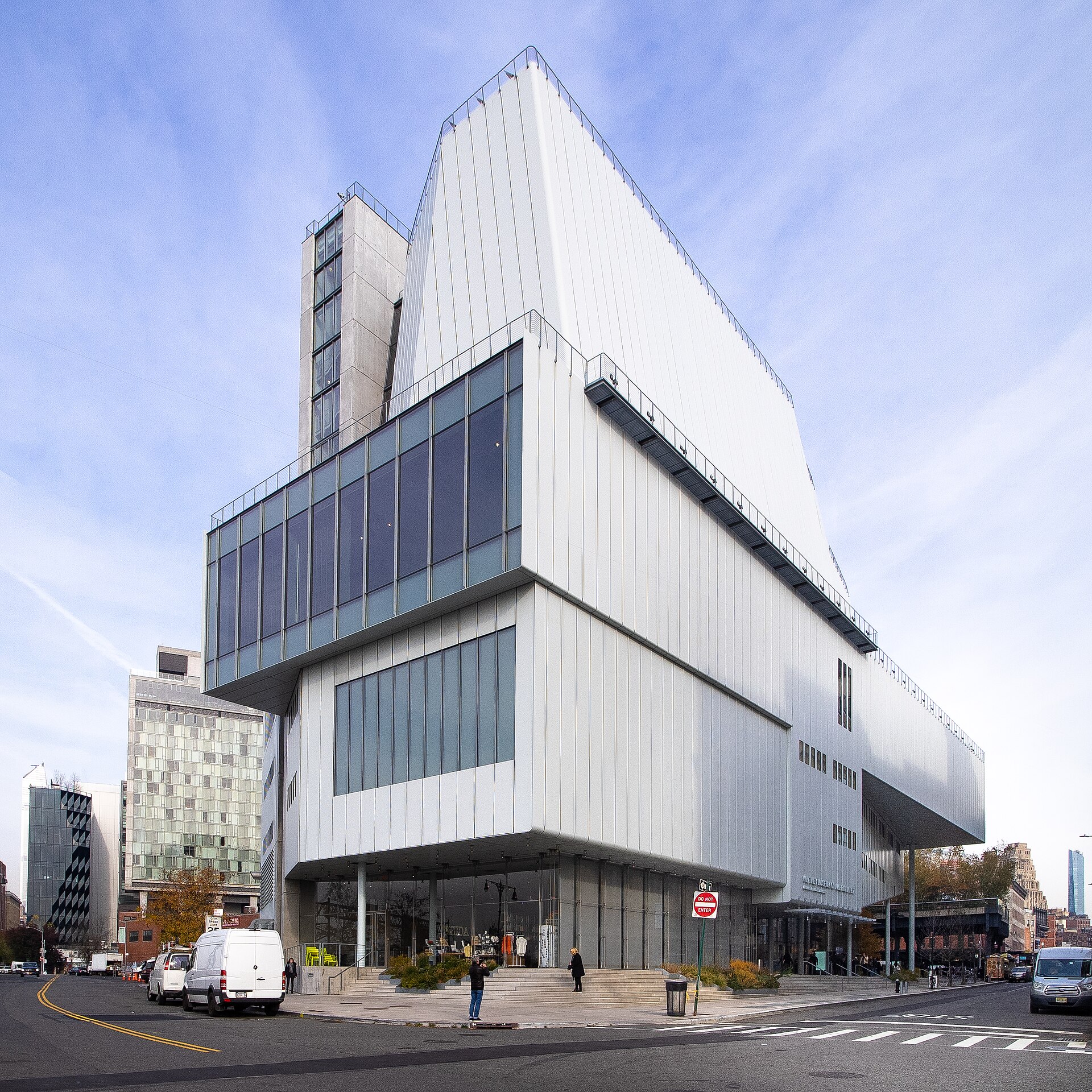
The Whitney Museum of American Art is a prominent art institution located in the Meatpacking District of New York City. Founded in 1930 by sculptor and art patron Gertrude Vanderbilt Whitney, the museum was established to champion the work of living American artists, a mission that continues to define its curatorial focus today.
The museum's current building, designed by architect Renzo Piano and opened in 2015, features a distinctive asymmetrical design with expansive outdoor galleries and terraces overlooking the High Line and the Hudson River. Its collection encompasses over 25,000 works, including paintings, sculptures, drawings, prints, photographs, films, and new media, providing a comprehensive survey of American art from the early 20th century to the present.
Key Facts
- Materials
- Steel, Concrete, Glass
- Civilization
- American
- Accessibility
- Fully wheelchair accessible
- Date(s)
- 2010-2015
- Condition
- Active
- Original Function
- Art Museum
- Key Figures
- Gertrude Vanderbilt Whitney, Renzo Piano, Juliana Force
Founding and Early Years
1930Gertrude Vanderbilt Whitney founded the museum after the Metropolitan Museum of Art rejected her offer to donate her extensive collection of American art. The museum was originally established in Greenwich Village, reflecting her commitment to supporting contemporary artists who were often overlooked by traditional institutions.
The Madison Avenue Era
1966-2014The museum moved to a landmark building on Madison Avenue designed by Marcel Breuer. This Brutalist structure became synonymous with the Whitney for nearly five decades, hosting the museum's signature Biennial exhibitions and expanding its reach within the global art community.
Relocation to the Meatpacking District
2015-PresentIn 2015, the museum relocated to its current facility in the Meatpacking District. The new building significantly increased the museum's exhibition space, allowing for a more dynamic display of its permanent collection and larger-scale contemporary installations.
Cultural Significance
The Whitney Museum is central to the discourse of American art, serving as a primary platform for emerging artists through its recurring Biennial exhibition. It plays a critical role in defining the canon of American modernism and contemporary practice, often highlighting social and political themes through its acquisitions and programming.
Beyond its collection, the museum acts as a cultural anchor for the Meatpacking District, bridging the gap between the historic industrial architecture of the area and the contemporary art scene. Its public programming and educational initiatives continue to influence how American art is interpreted and accessed by a global audience.
Interpretive Notes
Scholarly debates and areas of uncertainty
The museum has faced ongoing debate regarding its definition of 'American art,' particularly concerning the inclusion of artists who are not U.S. citizens but have spent significant portions of their careers in the country. Additionally, the transition from the iconic Breuer building to the Renzo Piano facility sparked discussions about the role of architecture in shaping the visitor experience and the preservation of institutional identity.
Visiting Information
Entry Rules
Open daily except Tuesdays. Tickets are required and can be purchased online in advance. Visitors are subject to security screening upon entry.
Best Times to Visit
Weekday mornings are generally less crowded. The museum offers extended evening hours on select days, which provide a unique view of the city skyline from the outdoor terraces.
Photography
Personal photography is permitted for non-commercial use in most galleries. Flash, tripods, and selfie sticks are prohibited. Some special exhibitions may have specific photography restrictions.
Preservation Notes
Maintain a respectful distance from all artworks. Do not touch surfaces or frames. Food and drink are prohibited within the galleries.
Nearby POIs
11 shownSources & Further Reading
- [1]The Whitney Museum of American Art: A History — Dana Miller. Whitney Museum of American Art (2015)View
- [2]Renzo Piano Building Workshop: Whitney Museum — Renzo Piano. Phaidon Press (2016)
Key Facts
- Materials
- Steel, Concrete, Glass
- Civilization
- American
- Accessibility
- Fully wheelchair accessible
- Date(s)
- 2010-2015
- Condition
- Active
- Original Function
- Art Museum
- Key Figures
- Gertrude Vanderbilt Whitney, Renzo Piano, Juliana Force