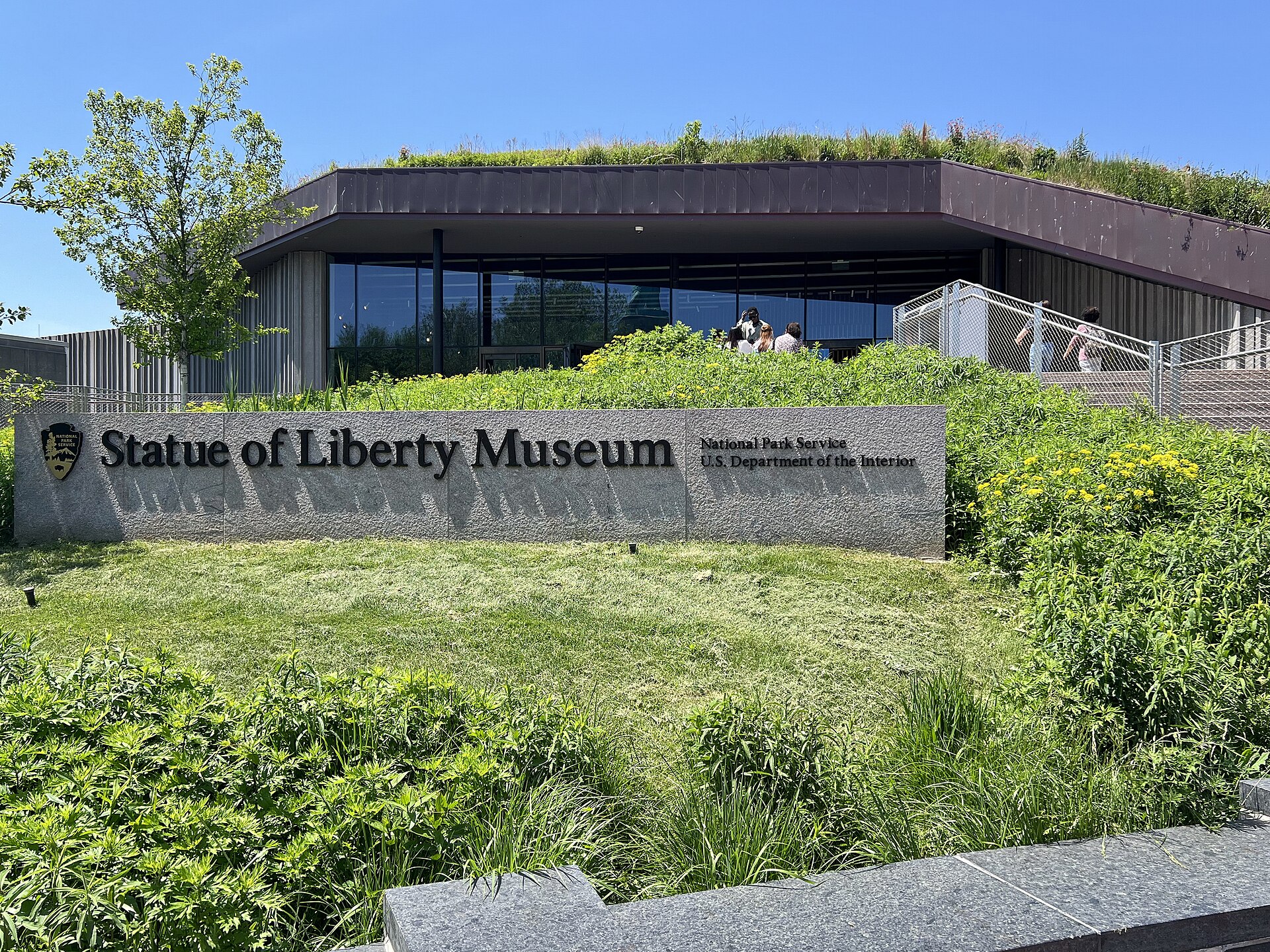
The Statue of Liberty Museum is a cultural institution located on Liberty Island in New York Harbor. Opened in 2019, the facility was designed to house the original 1886 torch and provide a comprehensive educational experience regarding the statue's construction, symbolism, and historical significance as a beacon of freedom and democracy.
The museum building itself is an architectural landmark, featuring a structure that integrates into the island's landscape with a rooftop terrace offering panoramic views of the Statue of Liberty and the Manhattan skyline. It serves as the primary repository for artifacts related to the monument's creation by Frédéric Auguste Bartholdi and Gustave Eiffel.
Key Facts
- Materials
- Copper, Glass, Concrete, Steel
- Civilization
- United States
- Accessibility
- Fully ADA compliant
- Date(s)
- 2017-2019
- Condition
- Excellent, active
- Original Function
- Museum and educational center
- Key Figures
- Frédéric Auguste Bartholdi, Gustave Eiffel, Edouard de Laboulaye
Conceptualization and Need
2010-2016For decades, the original torch of the Statue of Liberty was housed in a small, inaccessible area within the statue's pedestal. The National Park Service and the Statue of Liberty-Ellis Island Foundation identified the need for a larger facility to accommodate visitors and properly display the original torch.
Design and Construction
2017-2019Designed by the architectural firm FXCollaborative, the museum was built to be environmentally sustainable and resilient to the harbor's climate. Construction began in 2017, utilizing materials that echo the copper and stone of the monument.
Opening and Public Access
2019-PresentThe museum officially opened to the public in May 2019. It has since become a central component of the visitor experience on Liberty Island, allowing guests to view the original torch and engage with interactive exhibits detailing the statue's history.
Cultural Significance
The museum plays a vital role in preserving the narrative of the Statue of Liberty as a global symbol of immigration and democratic ideals. By housing the original torch, it provides a tangible connection to the 19th-century craftsmanship that defined the monument's creation.
It serves as a focal point for national discourse on the meaning of liberty, attracting millions of visitors who seek to understand the statue's role in the American experience and its enduring status as a UNESCO World Heritage site's centerpiece.
Interpretive Notes
Scholarly debates and areas of uncertainty
Discussions surrounding the museum often focus on the balance between modern architectural intervention and the preservation of the historic landscape of Liberty Island. Additionally, scholars debate the best methods for interpreting the statue's complex history, particularly regarding the evolution of its symbolism from a celebration of the abolition of slavery to a broader icon of universal freedom.
Visiting Information
Entry Rules
Entry is included with the purchase of a Statue City Cruises ferry ticket to Liberty Island. No separate museum ticket is required. Visitors must pass through security screening before boarding the ferry.
Best Times to Visit
Weekdays during the shoulder seasons (spring and fall) offer the most manageable crowds. Early morning ferries are recommended to avoid the peak afternoon visitor volume.
Photography
Personal photography is permitted throughout the museum. Flash photography is allowed, but tripods and professional lighting equipment require prior authorization from the National Park Service.
Preservation Notes
The museum is a climate-controlled environment designed to protect delicate historical artifacts. Visitors are asked to refrain from touching display cases and to follow all posted signage regarding artifact safety.
Nearby POIs
11 shownKey Facts
- Materials
- Copper, Glass, Concrete, Steel
- Civilization
- United States
- Accessibility
- Fully ADA compliant
- Date(s)
- 2017-2019
- Condition
- Excellent, active
- Original Function
- Museum and educational center
- Key Figures
- Frédéric Auguste Bartholdi, Gustave Eiffel, Edouard de Laboulaye