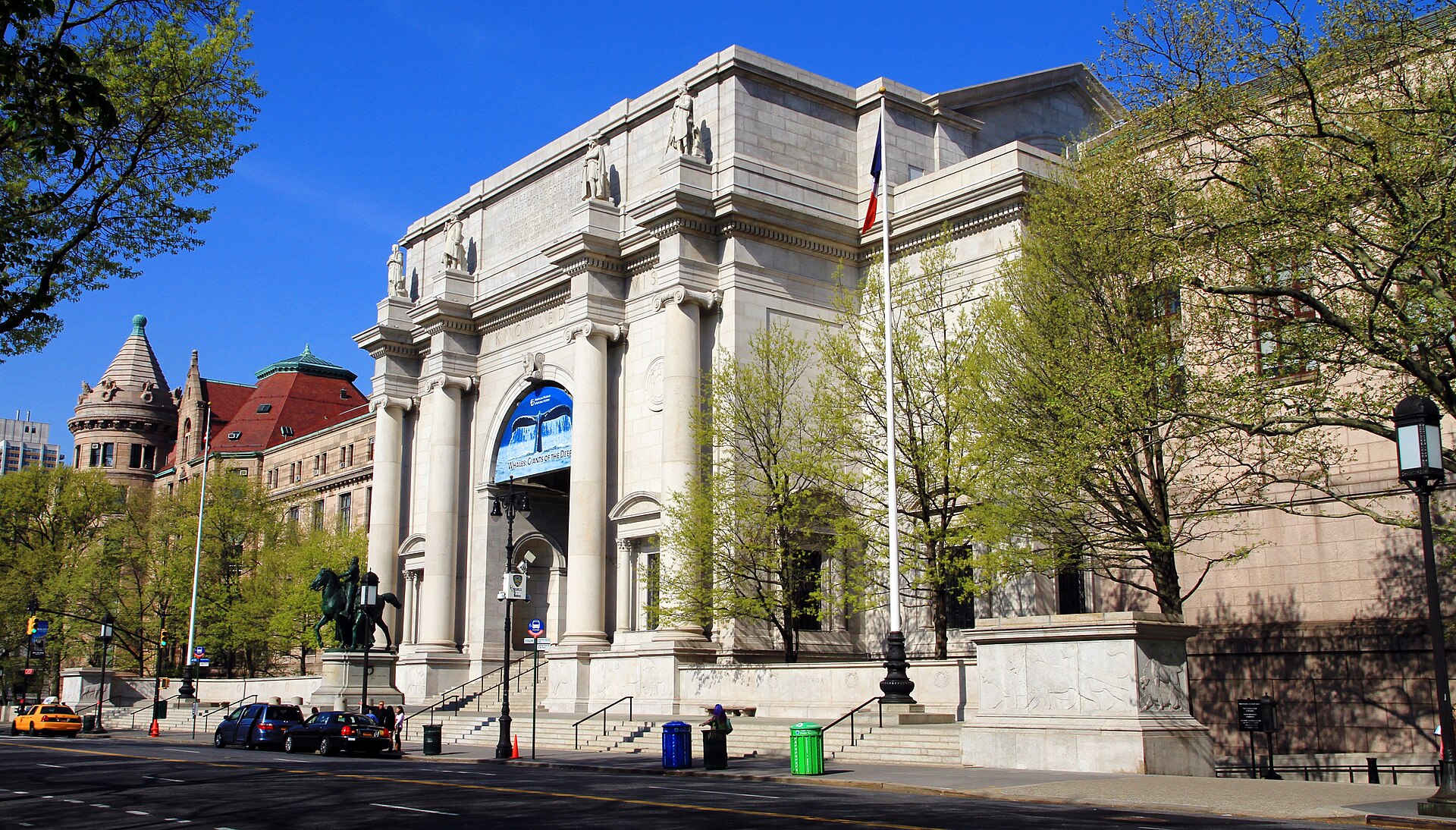
The American Museum of Natural History (AMNH) is one of the world's preeminent scientific and cultural institutions. Located on the Upper West Side of Manhattan, the museum complex consists of 28 interconnected buildings housing 45 permanent exhibition halls, a planetarium, and a library. Its vast collections include over 34 million specimens of plants, animals, fossils, minerals, rocks, meteorites, human remains, and human cultural artifacts.
Founded in 1869, the institution has played a central role in the history of natural science, sponsoring major expeditions and pioneering the use of dioramas to display biological specimens in their natural habitats. It serves as a major center for scientific research, education, and public engagement, attracting millions of visitors annually to explore the diversity of life on Earth and the history of the universe.
Key Facts
- Materials
- Granite, Brick, Steel, Glass
- Civilization
- United States
- Accessibility
- Fully wheelchair accessible
- Date(s)
- 1869-Present
- Condition
- Active, continuously expanding
- Original Function
- Scientific research and public education
- Key Figures
- Albert S. Bickmore, Theodore Roosevelt, Franz Boas, Margaret Mead
Founding and Early Years
1869-1877The museum was founded in 1869 following a proposal by Albert S. Bickmore, who secured support from prominent New Yorkers including Theodore Roosevelt Sr. It was initially housed in the Arsenal building in Central Park before moving to its current location on Manhattan Square.
Expansion and Scientific Growth
1877-1930During this period, the museum expanded rapidly under the leadership of Morris Ketchum Jesup. It became a hub for global exploration, funding expeditions to the North Pole, the American West, and the Gobi Desert, which significantly bolstered its fossil and ethnographic collections.
Modernization and Research
1930-PresentThe museum continued to modernize with the addition of the Hayden Planetarium and the Gilder Center for Science, Education, and Innovation. Today, it maintains a massive research staff and continues to integrate digital technology into its public exhibits.
Cultural Significance
The AMNH is a cornerstone of American scientific culture, serving as a primary site for public science literacy. Its dioramas and fossil halls have influenced generations of visitors, shaping the public's understanding of evolution, biodiversity, and anthropology. The museum's role in the history of anthropology, particularly through the work of figures like Franz Boas, remains a subject of ongoing institutional reflection.
Beyond its educational role, the museum is a landmark of New York City architecture, representing various styles from Romanesque Revival to modern glass-and-stone design. It remains a vital repository for global cultural heritage and biological data.
Interpretive Notes
Scholarly debates and areas of uncertainty
The museum has faced significant scholarly and public debate regarding the repatriation of human remains and cultural artifacts. Like many large institutions, it is actively reviewing its collections to address ethical concerns regarding the acquisition of items from Indigenous communities and colonial contexts.
Visiting Information
Entry Rules
Open daily. Tickets are required for entry and can be reserved online. Visitors are subject to security screening upon arrival. Large bags and backpacks are not permitted in the galleries.
Best Times to Visit
Weekday mornings are generally the quietest times to visit. Avoid school holidays and weekends if seeking a less crowded experience.
Photography
Personal photography is permitted for non-commercial use. Flash, tripods, and selfie sticks are prohibited in all galleries.
Preservation Notes
Do not touch exhibits or glass cases. Maintain a quiet environment in the galleries to respect other visitors and the integrity of the displays.
Nearby POIs
11 shown- Metropolitan Museum of Art0.9 km
- Frick Collection1.2 km
- Solomon R. Guggenheim Museum1.3 km
- Cooper Hewitt, Smithsonian Design Museum1.4 km
- Museum of Modern Art2.2 km
- Museum of the City of New York2.3 km
- St. Patrick's Cathedral2.5 km
- Cathedral of St. John the Divine2.7 km
- Intrepid Museum2.8 km
- Chrysler Building3.3 km
- Morgan Library & Museum3.6 km
Sources & Further Reading
- [1]The American Museum of Natural History: A History — Douglas J. Preston. St. Martin's Press (1986)
- [2]The Museum of Natural History: A History of the Institution — Colin Salter. Pavilion Books (2018)
Key Facts
- Materials
- Granite, Brick, Steel, Glass
- Civilization
- United States
- Accessibility
- Fully wheelchair accessible
- Date(s)
- 1869-Present
- Condition
- Active, continuously expanding
- Original Function
- Scientific research and public education
- Key Figures
- Albert S. Bickmore, Theodore Roosevelt, Franz Boas, Margaret Mead
Nearby POIs
11 shown- Metropolitan Museum of Art0.9 km
- Frick Collection1.2 km
- Solomon R. Guggenheim Museum1.3 km
- Cooper Hewitt, Smithsonian Design Museum1.4 km
- Museum of Modern Art2.2 km
- Museum of the City of New York2.3 km
- St. Patrick's Cathedral2.5 km
- Cathedral of St. John the Divine2.7 km
- Intrepid Museum2.8 km
- Chrysler Building3.3 km
- Morgan Library & Museum3.6 km