New York City,United States of America
Frick Collection
The Frick Collection is an art museum housed in the former residence of industrialist Henry Clay Frick in New York City. The mansion, known as the Henry Clay Frick House, was designed by architects Carrère and Hastings and completed in 1914. It serves as a permanent home for a significant collection of European paintings, sculptures, and decorative arts spanning from the 14th to the 19th centuries.
The collection is renowned for its intimate presentation, which maintains the domestic character of the original residence. Key holdings include masterpieces by artists such as Rembrandt, Vermeer, Goya, and Gainsborough, alongside an extensive collection of Limoges enamels, Sèvres porcelain, and period furniture. The museum provides a unique environment for viewing art within the context of a Gilded Age mansion.
Key Facts
- Materials
- Indiana limestone, Marble, Oak
- Civilization
- American
- Accessibility
- Wheelchair accessible
- Date(s)
- 1913-1914
- Condition
- Well-preserved, active museum
- Original Function
- Private residence
- Key Figures
- Henry Clay Frick, Thomas Hastings, John M. Carrère
Construction of the Mansion
1913-1914Henry Clay Frick commissioned the architectural firm Carrère and Hastings to design a grand residence on Fifth Avenue. The resulting mansion was intended to house both his family and his rapidly expanding art collection.
Transition to Public Museum
1919-1935Following the death of Henry Clay Frick in 1919, his will stipulated that his residence and art collection should eventually be opened to the public as a museum. The house underwent renovations to adapt the domestic spaces for public exhibition, officially opening as The Frick Collection in 1935.
Modern Expansion and Renovation
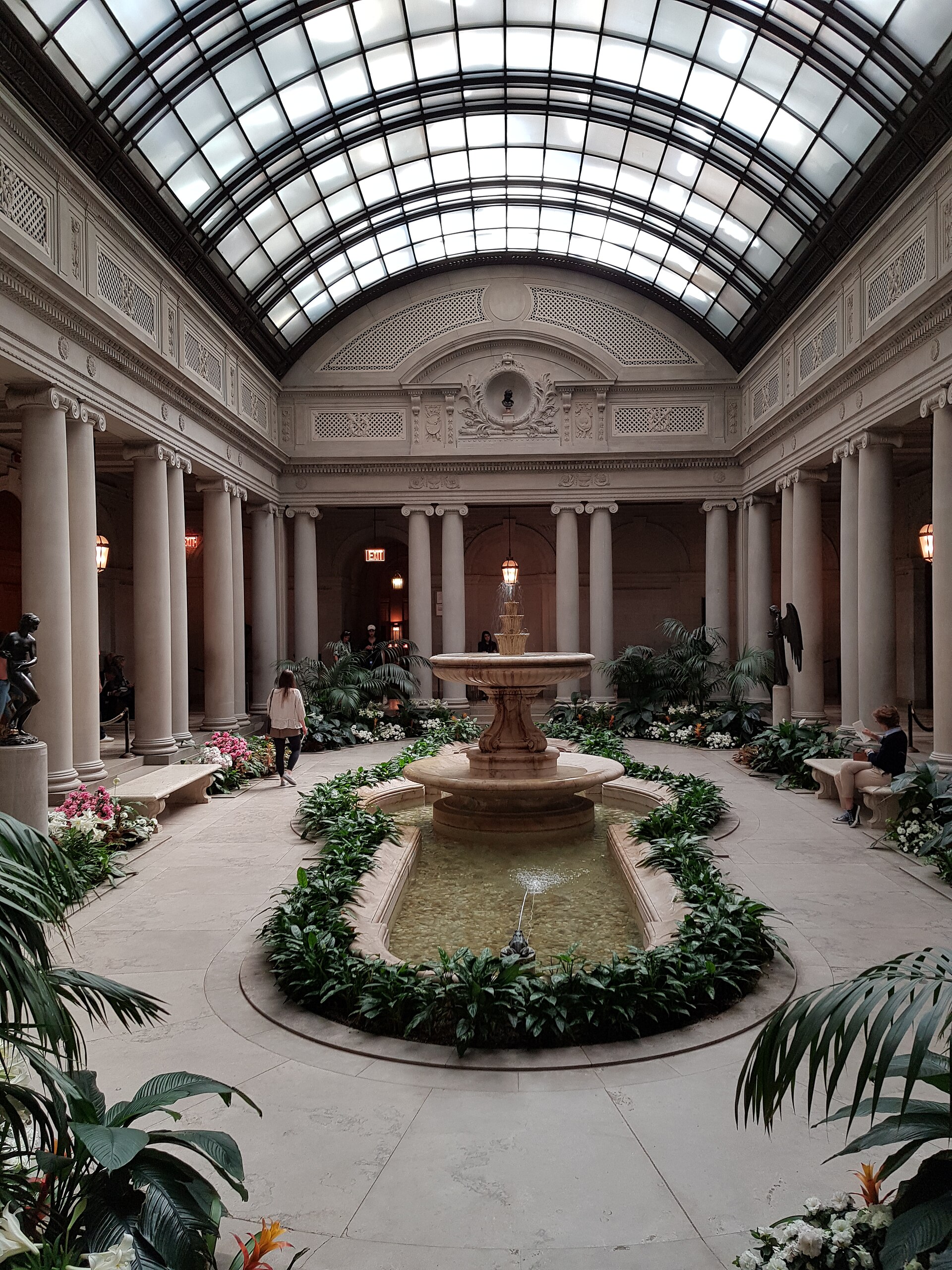
20th-21st centuryThe museum has undergone several expansions, including the addition of the Garden Court and the Music Room. Recent major renovation projects have focused on restoring the historic mansion's architectural details while upgrading climate control and visitor facilities.
Cultural Significance
The Frick Collection is a primary example of the Gilded Age 'house museum' phenomenon in the United States, where private fortunes were used to assemble and preserve European cultural heritage. It represents a shift in American philanthropy, where private collections were transitioned into public trusts to provide educational access to fine art.
Beyond its holdings, the site is significant for its architectural preservation. It remains one of the few remaining examples of the grand Fifth Avenue mansions that once defined the city's residential landscape during the early 20th century.
Interpretive Notes
Scholarly debates and areas of uncertainty
There has been ongoing scholarly and public debate regarding the museum's expansion plans, specifically concerning the balance between modernizing museum infrastructure and preserving the historic integrity of the original mansion and its surrounding gardens.
Visiting Information
Entry Rules
Timed-entry tickets are recommended. The museum is open to the public Tuesday through Sunday. Visitors are required to check large bags and coats. Food and drink are not permitted in the galleries.
Best Times to Visit
Weekday mornings are generally less crowded. The museum is often busiest on weekends and during special temporary exhibitions.
Photography
Non-flash photography is permitted for personal, non-commercial use in most galleries. Tripods and selfie sticks are prohibited.
Preservation Notes
Visitors are asked to maintain a respectful distance from all artworks and furniture. Touching of surfaces is strictly prohibited to protect the historic interiors and delicate decorative art objects.
Nearby POIs
11 shown- Metropolitan Museum of Art1 km
- American Museum of Natural History1.2 km
- Museum of Modern Art1.4 km
- Solomon R. Guggenheim Museum1.5 km
- St. Patrick's Cathedral1.6 km
- Cooper Hewitt, Smithsonian Design Museum1.7 km
- Chrysler Building2.3 km
- Museum of the City of New York2.7 km
- Morgan Library & Museum2.7 km
- Intrepid Museum2.8 km
- Empire State Building3 km
Sources & Further Reading
- [1]
- [2]Henry Clay Frick: An Intimate Portrait — Martha Frick Symington Sanger. Abbeville Press (1998)
Key Facts
- Materials
- Indiana limestone, Marble, Oak
- Civilization
- American
- Accessibility
- Wheelchair accessible
- Date(s)
- 1913-1914
- Condition
- Well-preserved, active museum
- Original Function
- Private residence
- Key Figures
- Henry Clay Frick, Thomas Hastings, John M. Carrère
Nearby POIs
11 shown- Metropolitan Museum of Art1 km
- American Museum of Natural History1.2 km
- Museum of Modern Art1.4 km
- Solomon R. Guggenheim Museum1.5 km
- St. Patrick's Cathedral1.6 km
- Cooper Hewitt, Smithsonian Design Museum1.7 km
- Chrysler Building2.3 km
- Museum of the City of New York2.7 km
- Morgan Library & Museum2.7 km
- Intrepid Museum2.8 km
- Empire State Building3 km