Washington D.C.,United States of America
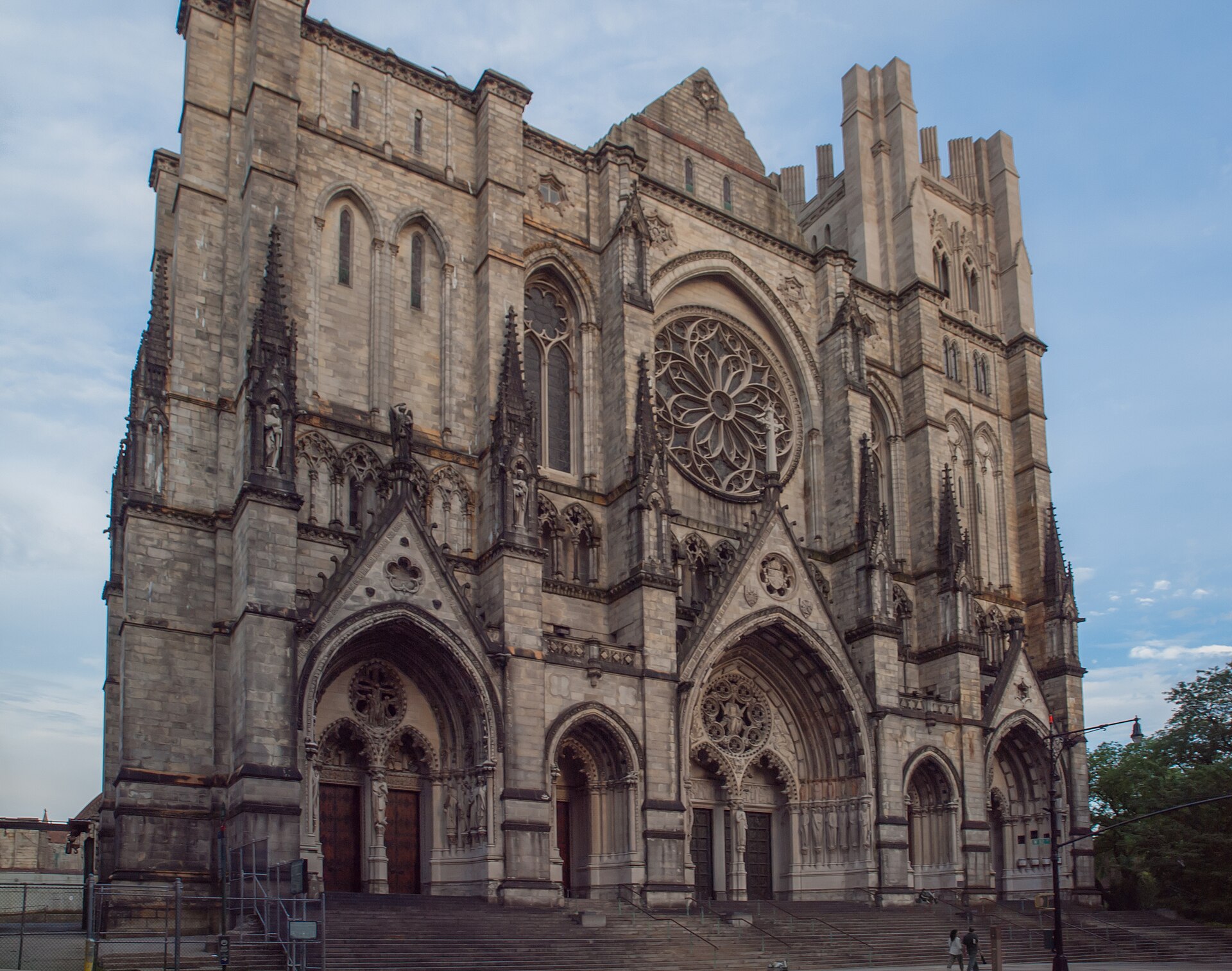
Cathedral of St. John the Divine
The Cathedral of St. John the Divine, located in New York City, serves as the cathedral of the Episcopal Diocese of New York. Designed in a blend of Romanesque and Gothic Revival styles, it is widely recognized as one of the largest church buildings in the world. Construction began in 1892 and has proceeded in stages, leaving the structure famously unfinished, which has earned it the nickname 'St. John the Unfinished.'
The interior is noted for its immense scale, featuring a nave that spans over 600 feet in length and a vaulted ceiling reaching 124 feet. The cathedral functions as a significant cultural and spiritual hub, hosting diverse community programs, art exhibitions, and interfaith events that reflect its role as a 'house of prayer for all people.'
Key Facts
- Materials
- Granite, Indiana limestone
- Civilization
- American
- Accessibility
- Wheelchair accessible
- Date(s)
- 1892-present
- Condition
- Active, partially unfinished
- Original Function
- Cathedral
- Key Figures
- Bishop Henry Codman Potter, Ralph Adams Cram, Heins & LaFarge
Conception and Early Design
1887-1892In 1887, Bishop Henry Codman Potter proposed the construction of a great cathedral in New York. A design competition was held, resulting in the selection of architects Heins & LaFarge, who initially proposed a Byzantine-Romanesque design.
Shift in Architectural Style
1911-1941Following the death of Heins, the architectural firm was replaced by Ralph Adams Cram, who shifted the design toward a more traditional French Gothic style. Construction continued steadily until the outbreak of World War II, at which point work was halted.
Modern Era and Preservation
1979-presentConstruction resumed briefly in the 1980s using traditional stone-cutting techniques, but was again suspended. Today, the cathedral focuses on the preservation of its existing structure and the maintenance of its extensive grounds and community outreach programs.
Cultural Significance
The cathedral is a landmark of New York City, serving as a venue for major civic events, including memorial services and peace vigils. Its 'house of prayer for all people' philosophy has made it a center for progressive social activism and interfaith dialogue, distinguishing it from more traditional ecclesiastical institutions.
Interpretive Notes
Scholarly debates and areas of uncertainty
The primary scholarly debate concerns the completion of the cathedral. Some architectural historians argue that the unfinished state is an essential part of its identity and historical narrative, while others advocate for the completion of the towers and nave according to the original Gothic master plans.
Visiting Information
Entry Rules
Open to the public daily. Admission fees apply for sightseeing tours. Visitors are expected to dress modestly and respect ongoing religious services.
Best Times to Visit
Weekday mornings offer the quietest experience for viewing the architecture. The cathedral grounds are particularly notable during the spring and autumn months.
Photography
Personal photography is permitted without flash or tripods. Professional or commercial photography requires prior authorization from the cathedral administration.
Preservation Notes
The cathedral is an active construction site in some areas; visitors should remain within designated public zones. Touching of delicate stonework and tapestries is prohibited.
Nearby POIs
11 shown- Museum of the City of New York1.5 km
- Cooper Hewitt, Smithsonian Design Museum2.2 km
- Solomon R. Guggenheim Museum2.3 km
- Metropolitan Museum of Art2.7 km
- American Museum of Natural History2.7 km
- Frick Collection3.6 km
- Museum of Modern Art4.9 km
- St. Patrick's Cathedral5.2 km
- Intrepid Museum5.4 km
- Chrysler Building5.9 km
- Morgan Library & Museum6.3 km
Sources & Further Reading
- [1]The Cathedral of St. John the Divine: A History — Robert A.M. Stern. Monacelli Press (2006)
- [2]St. John the Unfinished — Janet Marquardt. Journal of the Society of Architectural Historians (2012)
Key Facts
- Materials
- Granite, Indiana limestone
- Civilization
- American
- Accessibility
- Wheelchair accessible
- Date(s)
- 1892-present
- Condition
- Active, partially unfinished
- Original Function
- Cathedral
- Key Figures
- Bishop Henry Codman Potter, Ralph Adams Cram, Heins & LaFarge
Nearby POIs
11 shown- Museum of the City of New York1.5 km
- Cooper Hewitt, Smithsonian Design Museum2.2 km
- Solomon R. Guggenheim Museum2.3 km
- Metropolitan Museum of Art2.7 km
- American Museum of Natural History2.7 km
- Frick Collection3.6 km
- Museum of Modern Art4.9 km
- St. Patrick's Cathedral5.2 km
- Intrepid Museum5.4 km
- Chrysler Building5.9 km
- Morgan Library & Museum6.3 km