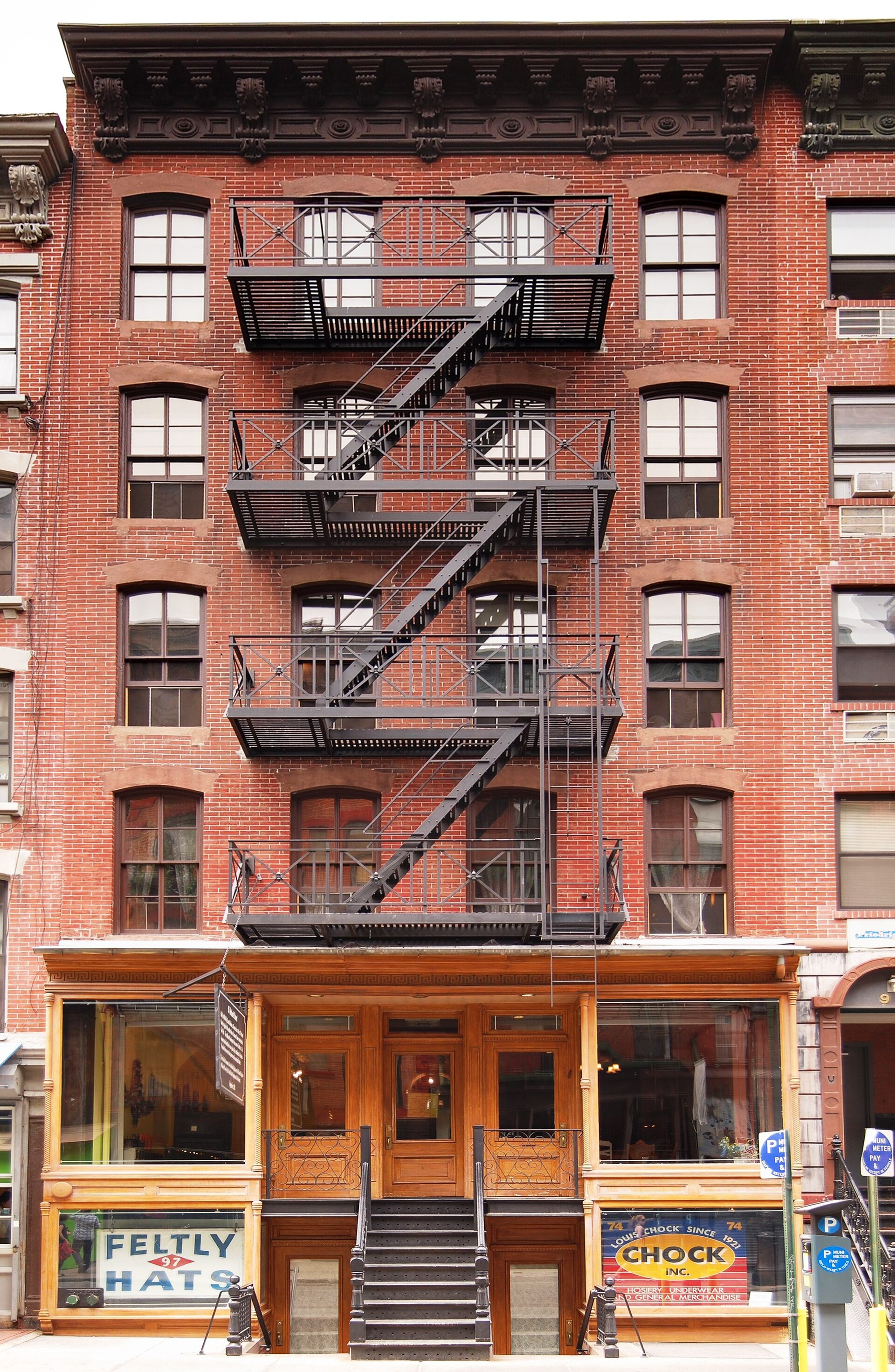
The Lower East Side Tenement Museum is located in two historic tenement buildings at 97 and 103 Orchard Street in New York City. These structures served as homes to an estimated 15,000 working-class immigrants from over 20 nations between 1863 and 2011, when the buildings were shuttered for residential use due to changing safety codes and economic shifts.
Today, the museum preserves and restores specific apartments to reflect the living conditions of various immigrant families during different historical eras. Through guided tours and immersive storytelling, the site documents the social, economic, and cultural contributions of immigrant populations to the development of the American urban landscape.
Key Facts
- Materials
- Brick, Wood, Plaster
- Civilization
- United States
- Accessibility
- Limited; historic buildings lack elevators
- Date(s)
- 1863
- Condition
- Restored and preserved as a historic site
- Original Function
- Residential tenement housing
- Key Figures
- Ruth J. Abram, Anita Jacobson
Construction and Early Use
1863The building at 97 Orchard Street was constructed by Prussian immigrant Lucas Glockner. It was designed to house approximately 20 families, providing small, multi-room apartments that lacked indoor plumbing and adequate ventilation.
Residential Evolution
1863-1935Over seven decades, the building housed waves of immigrants, including Irish, German, Jewish, and Italian families. As urban housing laws evolved, the building underwent various modifications to meet basic sanitary and safety standards.
Closure and Preservation
1935-1988In 1935, the upper floors of 97 Orchard Street were closed to residential use because the landlord did not want to comply with new fire safety regulations. The storefronts remained active, and the building remained largely untouched until its rediscovery by historians in the late 1980s.
Museum Establishment
1988-PresentThe museum was founded in 1988 to preserve the site as a National Historic Site. Extensive research into census records and family histories allowed for the meticulous restoration of apartments to represent the specific lives of former residents.
Cultural Significance
The Tenement Museum is a central institution in the study of American immigration history. It shifts the focus from grand political narratives to the lived experiences of the working class, emphasizing the resilience and cultural adaptation of immigrant communities in New York City.
It serves as a primary site for public discourse on contemporary immigration policy, using historical context to foster empathy and understanding regarding the challenges faced by new arrivals to the United States.
Interpretive Notes
Scholarly debates and areas of uncertainty
Debates exist regarding the ethics of 'poverty tourism' and the representation of marginalized groups. Scholars discuss whether the museum's curated narratives sufficiently capture the complexity of the immigrant experience or if they risk romanticizing the harsh realities of tenement life.
Visiting Information
Entry Rules
Access is by guided tour only. Tickets must be purchased in advance online. Tours have strict capacity limits due to the fragile nature of the historic structures.
Best Times to Visit
Weekday mornings are generally less crowded. The museum is active year-round, though winter months offer a more intimate experience inside the heated historic interiors.
Photography
Photography is permitted in most areas, but flash and tripods are strictly prohibited to protect the historic artifacts and interiors.
Preservation Notes
Visitors must follow guides at all times. Touching artifacts or walls is prohibited. The buildings are historic and do not feature modern accessibility features like elevators.
Nearby POIs
11 shownSources & Further Reading
- [1]The Tenement Museum: A History of 97 Orchard Street — Lower East Side Tenement Museum. Tenement Museum Archives (2015)View
- [2]The Lower East Side: A History of the Immigrant Experience — Hasia R. Diner. New York University Press (2000)
Key Facts
- Materials
- Brick, Wood, Plaster
- Civilization
- United States
- Accessibility
- Limited; historic buildings lack elevators
- Date(s)
- 1863
- Condition
- Restored and preserved as a historic site
- Original Function
- Residential tenement housing
- Key Figures
- Ruth J. Abram, Anita Jacobson