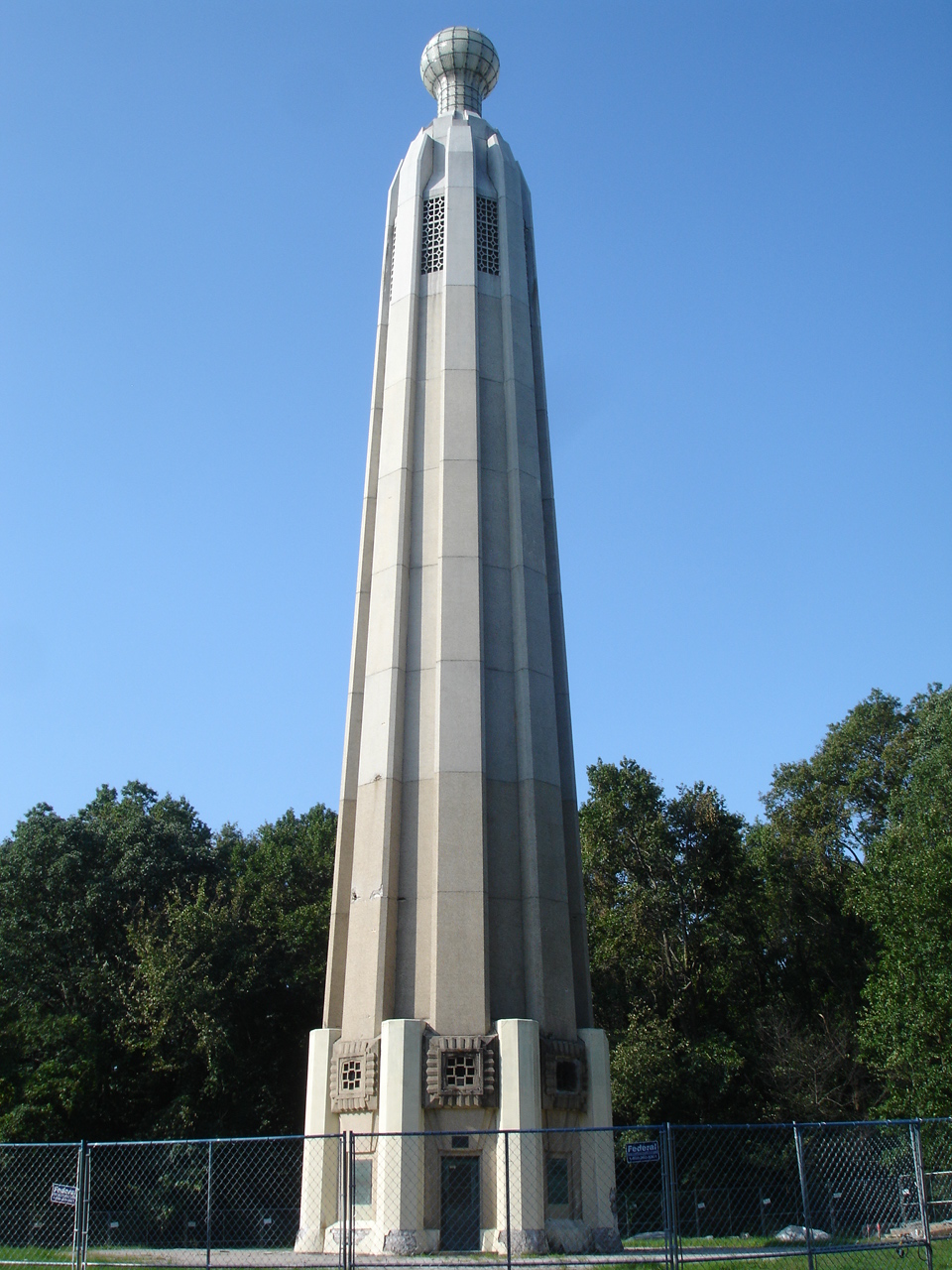
The Thomas Edison Center at Menlo Park is located on the site of the former laboratory where Thomas Alva Edison conducted his most prolific research between 1876 and 1882. It was here that Edison developed the phonograph and perfected the commercially viable incandescent light bulb, earning him the nickname 'The Wizard of Menlo Park.'
The site features the Thomas Alva Edison Memorial Tower, a 131-foot Art Deco structure dedicated in 1938, which stands as a tribute to his contributions to modern technology. The adjacent museum houses a collection of artifacts, including early phonographs, light bulbs, and historical documents detailing the industrial processes developed at the original laboratory complex.
Key Facts
- Materials
- Concrete, Steel, Glass
- Civilization
- American
- Accessibility
- Wheelchair accessible
- Date(s)
- 1937-1938
- Condition
- Preserved as a museum and historic site
- Original Function
- Research Laboratory and Memorial
- Key Figures
- Thomas Alva Edison, Henry Ford
The Menlo Park Laboratory
1876-1882Thomas Edison established his first industrial research laboratory in Menlo Park, New Jersey. This facility pioneered the concept of organized, team-based research and development, leading to the invention of the phonograph in 1877 and the first practical incandescent light bulb in 1879.
Site Abandonment and Memorialization
1882-1937Following Edison's move to larger facilities in West Orange, the Menlo Park laboratory fell into disrepair. In the 1930s, efforts to preserve the legacy of the site culminated in the construction of the Memorial Tower, which was funded by public donations and dedicated in 1938.
Modern Preservation
1938-PresentThe site has been managed as a museum and educational center for decades. It continues to serve as a focal point for historical research regarding the early history of electrical engineering and the impact of Edison's inventions on the Second Industrial Revolution.
Cultural Significance
The site is culturally significant as the birthplace of the modern industrial research laboratory. It represents the transition from individual invention to collaborative, corporate-funded research, a model that remains the standard for technological development today.
For the local community and the broader scientific world, the tower serves as a symbol of American ingenuity. It remains a pilgrimage site for those interested in the history of science and the rapid technological changes that defined the late 19th and early 20th centuries.
Interpretive Notes
Scholarly debates and areas of uncertainty
Debate exists regarding the extent to which the current museum accurately reflects the original laboratory layout, as the original structures were dismantled or relocated long before the memorial tower was built. Scholars often discuss the balance between the site's role as a memorial to Edison's 'genius' versus a critical examination of the collaborative nature of his laboratory team.
Visiting Information
Entry Rules
Open to the public with seasonal hours. Admission fees apply for museum entry. Visitors are encouraged to check the official website for current operating days and group tour availability.
Best Times to Visit
Spring and autumn offer the best weather for exploring the outdoor grounds and the memorial tower base. Weekdays are generally quieter for museum tours.
Photography
Personal photography is permitted in the museum and on the grounds. Commercial photography requires prior authorization from the site administration.
Preservation Notes
The memorial tower is a historic structure; visitors are asked to respect all barriers and signage. Please refrain from touching delicate artifacts within the museum display cases.
Nearby POIs
11 shownSources & Further Reading
- [1]Edison: A Biography — Matthew Josephson. John Wiley & Sons (1992)
- [2]The Wizard of Menlo Park: How Thomas Alva Edison Invented the Modern World — Randall Stross. Crown Publishers (2007)
Key Facts
- Materials
- Concrete, Steel, Glass
- Civilization
- American
- Accessibility
- Wheelchair accessible
- Date(s)
- 1937-1938
- Condition
- Preserved as a museum and historic site
- Original Function
- Research Laboratory and Memorial
- Key Figures
- Thomas Alva Edison, Henry Ford