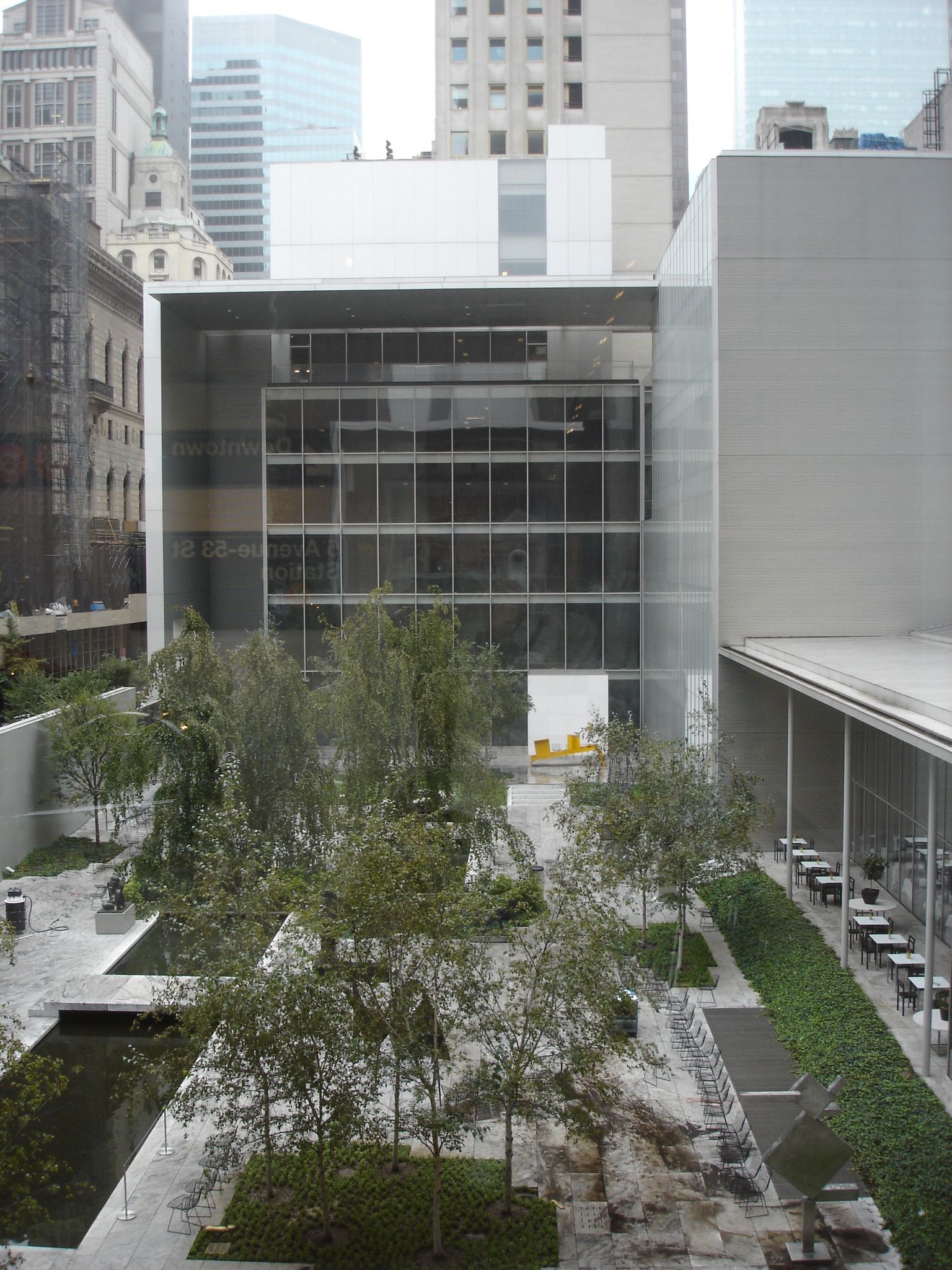
The Museum of Modern Art (MoMA), located in Midtown Manhattan, is one of the most influential institutions dedicated to modern and contemporary art. Founded in 1929 as the first museum devoted to the modern era, it serves as a primary hub for the study and appreciation of painting, sculpture, design, photography, and film.
The museum's collection includes over 200,000 works, ranging from European avant-garde masterpieces to contemporary multimedia installations. The site is housed in a complex that has undergone several expansions, most notably the 2019 renovation by Diller Scofidio + Renfro, which increased gallery space and integrated the building more fluidly into the surrounding urban landscape.
Key Facts
- Materials
- Steel, Glass, Limestone
- Civilization
- United States
- Accessibility
- Fully wheelchair accessible with elevators and sensory-friendly resources
- Date(s)
- 1929
- Condition
- Active, fully operational
- Original Function
- Art Museum
- Key Figures
- Abby Aldrich Rockefeller, Alfred H. Barr Jr., Yoshio Taniguchi
Founding and Early Years
1929MoMA was established by Abby Aldrich Rockefeller and two of her friends, Lillie P. Bliss and Mary Quinn Sullivan. It was the first museum in the United States to be dedicated exclusively to the modern era, operating initially from rented office space before moving to its current site on 53rd Street in 1939.
Architectural Expansion
1939-2004The museum's iconic International Style building was designed by Philip L. Goodwin and Edward Durell Stone. Over the decades, the site underwent multiple expansions, including significant additions by Philip Johnson and a major redesign by Yoshio Taniguchi in 2004, which doubled the museum's exhibition space.
Modern Era and Recent Renovations
2019-PresentIn 2019, the museum completed a major expansion and reconfiguration led by Diller Scofidio + Renfro. This project focused on creating more open, flexible gallery spaces and improving visitor circulation, allowing for a more chronological and interdisciplinary display of the permanent collection.
Cultural Significance
MoMA is widely credited with defining the canon of modern art through its exhibitions and acquisitions. Its influence extends beyond the gallery walls, as its curatorial choices have historically shaped global perceptions of what constitutes 'modern' art, design, and architecture.
The museum serves as a critical cultural anchor in New York City, fostering public engagement with complex contemporary issues through its film programs, educational initiatives, and rotating exhibitions that challenge traditional art-historical narratives.
Interpretive Notes
Scholarly debates and areas of uncertainty
The museum has faced ongoing scholarly debate regarding its historical focus on Western-centric art narratives. Critics and curators have engaged in long-term discussions about how to diversify the collection to better represent global perspectives and marginalized voices within the modern and contemporary art canon.
Visiting Information
Entry Rules
Open daily. Tickets are required and can be purchased online in advance. Visitors must pass through security screening upon entry. Large bags and backpacks are not permitted in the galleries.
Best Times to Visit
Weekday mornings or Friday evenings are generally less crowded. The museum is busiest on weekends and during major exhibition openings.
Photography
Personal photography is permitted for non-commercial use in the galleries, provided no flash, tripods, or selfie sticks are used. Some special exhibitions may prohibit photography entirely.
Preservation Notes
Do not touch any artwork or display cases. Maintain a respectful distance from all installations. Food and drink are strictly prohibited inside the galleries.
Nearby POIs
11 shownSources & Further Reading
- [1]The Museum of Modern Art: The First Fifty Years — Russell Lynes. Harry N. Abrams (1979)
- [2]MoMA: The History of the Museum of Modern Art — John Elderfield. Museum of Modern Art (2004)
Key Facts
- Materials
- Steel, Glass, Limestone
- Civilization
- United States
- Accessibility
- Fully wheelchair accessible with elevators and sensory-friendly resources
- Date(s)
- 1929
- Condition
- Active, fully operational
- Original Function
- Art Museum
- Key Figures
- Abby Aldrich Rockefeller, Alfred H. Barr Jr., Yoshio Taniguchi