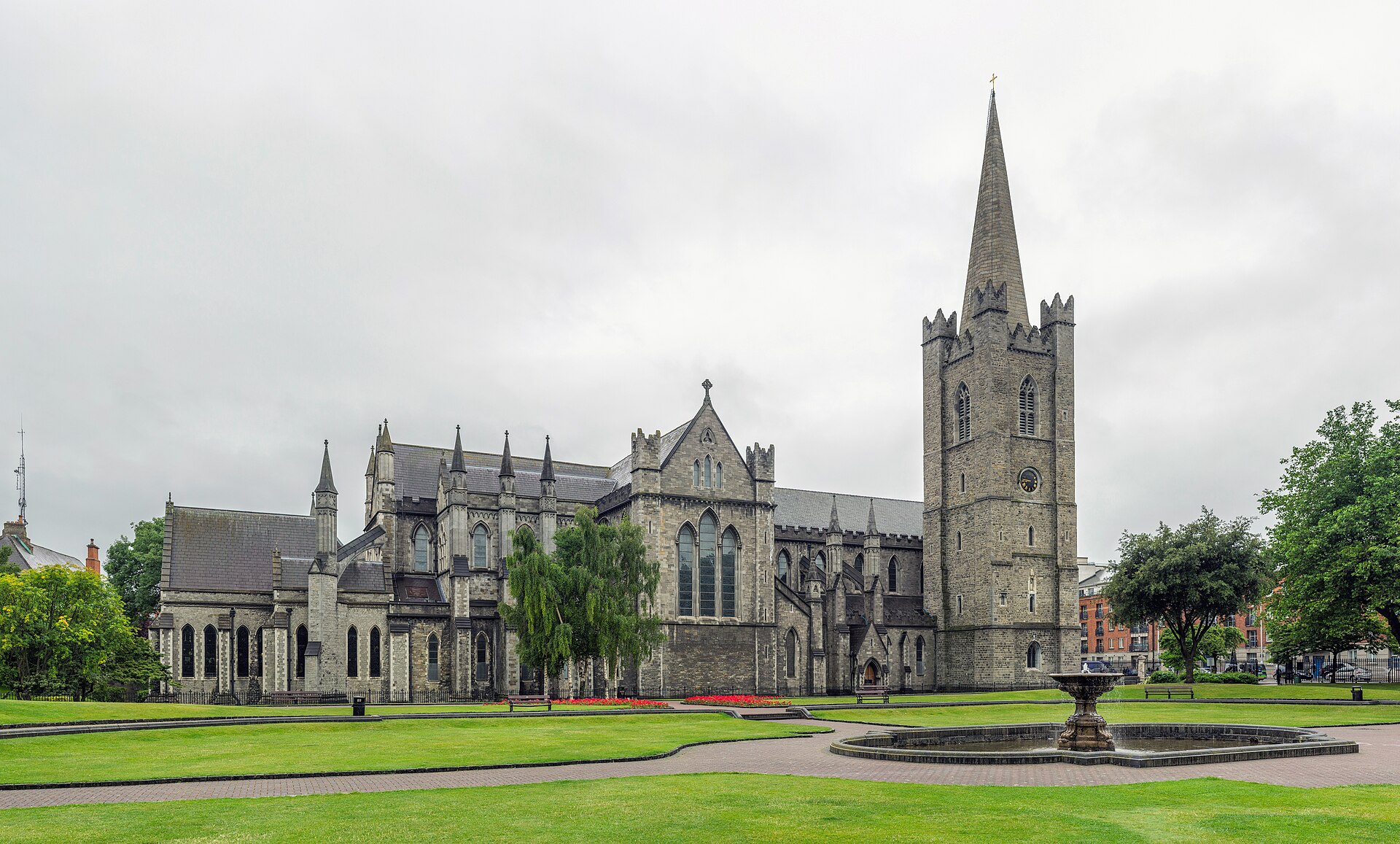
St. Patrick's Cathedral is a prominent Catholic cathedral located on Fifth Avenue in Manhattan, New York City. Designed by architect James Renwick Jr. in the Decorated Neo-Gothic style, it serves as the seat of the Archbishop of New York. Construction began in 1858, though it was interrupted by the American Civil War, and the structure was finally dedicated in 1879.
The cathedral is constructed primarily of white marble quarried in New York and Massachusetts. It features twin spires reaching 330 feet (100 meters) in height, a massive rose window, and an interior capable of seating over 2,000 people. It remains one of the most recognizable religious landmarks in the United States and a center for Catholic life in the city.
Key Facts
- Materials
- White marble, Brick, Stained glass
- Civilization
- American
- Accessibility
- Wheelchair accessible via the 51st Street entrance
- Date(s)
- 1858-1878
- Condition
- Active, fully restored
- Original Function
- Cathedral church
- Key Figures
- Archbishop John Hughes, James Renwick Jr., Cardinal Timothy Dolan
Conception and Construction
1850-1878Archbishop John Hughes announced plans for a new cathedral in 1850 to replace the original St. Patrick's in Lower Manhattan. James Renwick Jr. was selected as the architect. Construction commenced in 1858 but faced significant delays due to the American Civil War, eventually being completed and dedicated in 1879.
Expansion and Additions
1880-1910Following the dedication, several additions were made to the complex. The spires were completed in 1888, and the Lady Chapel, designed by Charles T. Mathews, was added between 1901 and 1906. The cathedral's rectory and archbishop's house were also constructed during this period.
Modern Restoration
2012-2015A comprehensive, multi-year restoration project was undertaken to clean the exterior marble, repair the stained glass windows, and modernize the interior systems. The project successfully addressed decades of environmental wear and pollution damage, ensuring the structural integrity of the landmark.
Cultural Significance
St. Patrick's Cathedral stands as a symbol of the historical influence of the Irish immigrant community in New York City. It serves as a focal point for major religious, civic, and state events, including the annual St. Patrick's Day Parade and funeral masses for prominent public figures.
Interpretive Notes
Scholarly debates and areas of uncertainty
Debates have occasionally surfaced regarding the architectural purity of the cathedral's Neo-Gothic design in the context of 19th-century American urban planning, as well as the ongoing balance between maintaining the site as a historic monument and its function as an active, modern parish church.
Visiting Information
Entry Rules
Open daily to the public. Admission is free. Visitors are expected to maintain a quiet, respectful demeanor. Modest dress is requested.
Best Times to Visit
Weekday mornings before 10:00 AM offer the quietest experience. Avoid midday on weekends when tourist traffic is highest.
Photography
Personal photography is permitted without flash or tripods. Professional photography and videography require prior authorization from the cathedral administration.
Preservation Notes
The cathedral is a designated New York City Landmark. Visitors are asked to refrain from touching the marble surfaces and to remain within designated visitor areas.
Nearby POIs
11 shownSources & Further Reading
- [1]St. Patrick's Cathedral: The History of the Cathedral — Archdiocese of New York. Official Cathedral Archives (2020)View
- [2]The Architecture of James Renwick Jr. — Rosalie Thorne McKenna. Journal of the Society of Architectural Historians (1952)
Key Facts
- Materials
- White marble, Brick, Stained glass
- Civilization
- American
- Accessibility
- Wheelchair accessible via the 51st Street entrance
- Date(s)
- 1858-1878
- Condition
- Active, fully restored
- Original Function
- Cathedral church
- Key Figures
- Archbishop John Hughes, James Renwick Jr., Cardinal Timothy Dolan