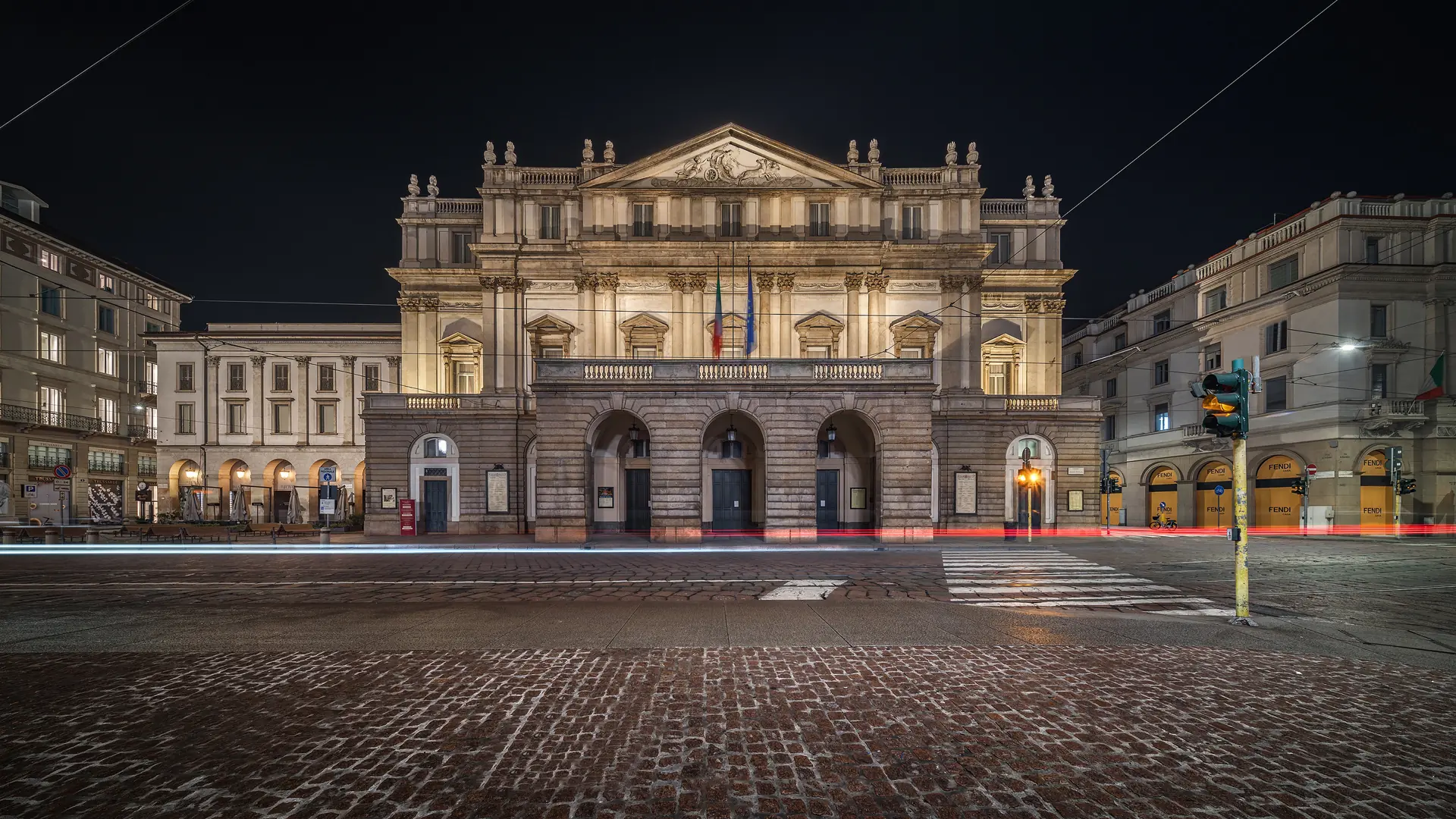
The Museo Teatrale alla Scala is a specialized museum and library located within the historic Teatro alla Scala in Milan. Established in 1913, the museum houses an extensive collection of artifacts related to the history of the opera house and the broader evolution of Italian theatrical arts, including costumes, stage designs, musical instruments, and portraits of legendary performers.
The museum also maintains a significant library, the Livia Simoni Library, which contains over 150,000 volumes, including rare manuscripts, librettos, and historical documents. Visitors are provided with a unique opportunity to view the theater's auditorium from the boxes, offering a perspective on one of the world's most prestigious operatic venues.
Key Facts
- Materials
- Marble, Wood, Glass, Textiles
- Civilization
- Italian
- Accessibility
- Wheelchair accessible via elevator
- Date(s)
- 1913
- Condition
- Well-preserved, active museum and research center
- Original Function
- Theatrical museum and archive
- Key Figures
- Giuseppe Verdi, Arturo Toscanini, Maria Callas, Livia Simoni
Foundation and Collection
1913The museum was inaugurated in 1913 following the acquisition of the private collection of Jules Sambon by the Italian state. This initial purchase formed the core of the museum's holdings, which were subsequently expanded through donations and acquisitions related to the history of La Scala.
Expansion and Integration
20th CenturyThroughout the 20th century, the museum grew significantly, integrating the Livia Simoni Library and expanding its focus to include the history of Italian opera and ballet. It became a vital repository for the legacy of figures like Giuseppe Verdi and Arturo Toscanini.
Modernization
21st CenturyRecent renovations have focused on improving visitor access and digitizing the extensive archives. The museum continues to serve as a bridge between the historical legacy of the theater and contemporary operatic production.
Cultural Significance
The museum serves as the primary custodian of the memory of Teatro alla Scala, an institution that has defined the global standard for opera since its opening in 1778. It preserves the material culture of the 'Golden Age' of Italian opera, providing essential context for the artistic achievements that occurred on the stage of La Scala.
Beyond its role as a museum, it acts as a critical research hub for musicologists and historians. Its collection of librettos and scores is considered one of the most important in the world, ensuring that the history of Italian musical theater remains accessible to future generations.
Interpretive Notes
Scholarly debates and areas of uncertainty
Debates often center on the balance between preserving the museum as a static historical archive versus its role as an active, evolving component of the modern La Scala theater complex. There is also ongoing scholarly discussion regarding the provenance and attribution of certain 18th-century stage design sketches held in the collection.
Visiting Information
Entry Rules
Open daily. Tickets can be purchased online or at the museum entrance. The museum may close or have restricted access to the theater boxes during rehearsals or performances.
Best Times to Visit
Weekday mornings are generally quieter. Check the La Scala performance schedule in advance, as access to the theater boxes is restricted during rehearsals.
Photography
Photography is permitted for personal use without flash. Tripods and professional equipment require prior authorization.
Preservation Notes
Maintain a respectful distance from all displays. Do not touch the costumes or manuscripts. Flash photography is strictly prohibited to prevent light damage to sensitive historical documents and textiles.
Nearby POIs
11 shown- Museo Poldi Pezzoli0.2 km
- Duomo di Milano0.4 km
- Pinacoteca di Brera0.5 km
- Palazzo Reale di Milano0.5 km
- Bagatti Valsecchi Museum0.5 km
- Palazzo Morando0.6 km
- Chiesa di San Maurizio al Monastero Maggiore0.8 km
- Castello Sforzesco0.9 km
- Basilica di Sant'Ambrogio1.2 km
- Museo Civico di Storia Naturale di Milano1.2 km
- Triennale di Milano1.3 km
Sources & Further Reading
- [1]Museo Teatrale alla Scala: Official Guide — Giampiero Tintori. Electa (1985)
- [2]The History of La Scala — John Rosselli. Cambridge University Press (1991)
Key Facts
- Materials
- Marble, Wood, Glass, Textiles
- Civilization
- Italian
- Accessibility
- Wheelchair accessible via elevator
- Date(s)
- 1913
- Condition
- Well-preserved, active museum and research center
- Original Function
- Theatrical museum and archive
- Key Figures
- Giuseppe Verdi, Arturo Toscanini, Maria Callas, Livia Simoni
Nearby POIs
11 shown- Museo Poldi Pezzoli0.2 km
- Duomo di Milano0.4 km
- Pinacoteca di Brera0.5 km
- Palazzo Reale di Milano0.5 km
- Bagatti Valsecchi Museum0.5 km
- Palazzo Morando0.6 km
- Chiesa di San Maurizio al Monastero Maggiore0.8 km
- Castello Sforzesco0.9 km
- Basilica di Sant'Ambrogio1.2 km
- Museo Civico di Storia Naturale di Milano1.2 km
- Triennale di Milano1.3 km