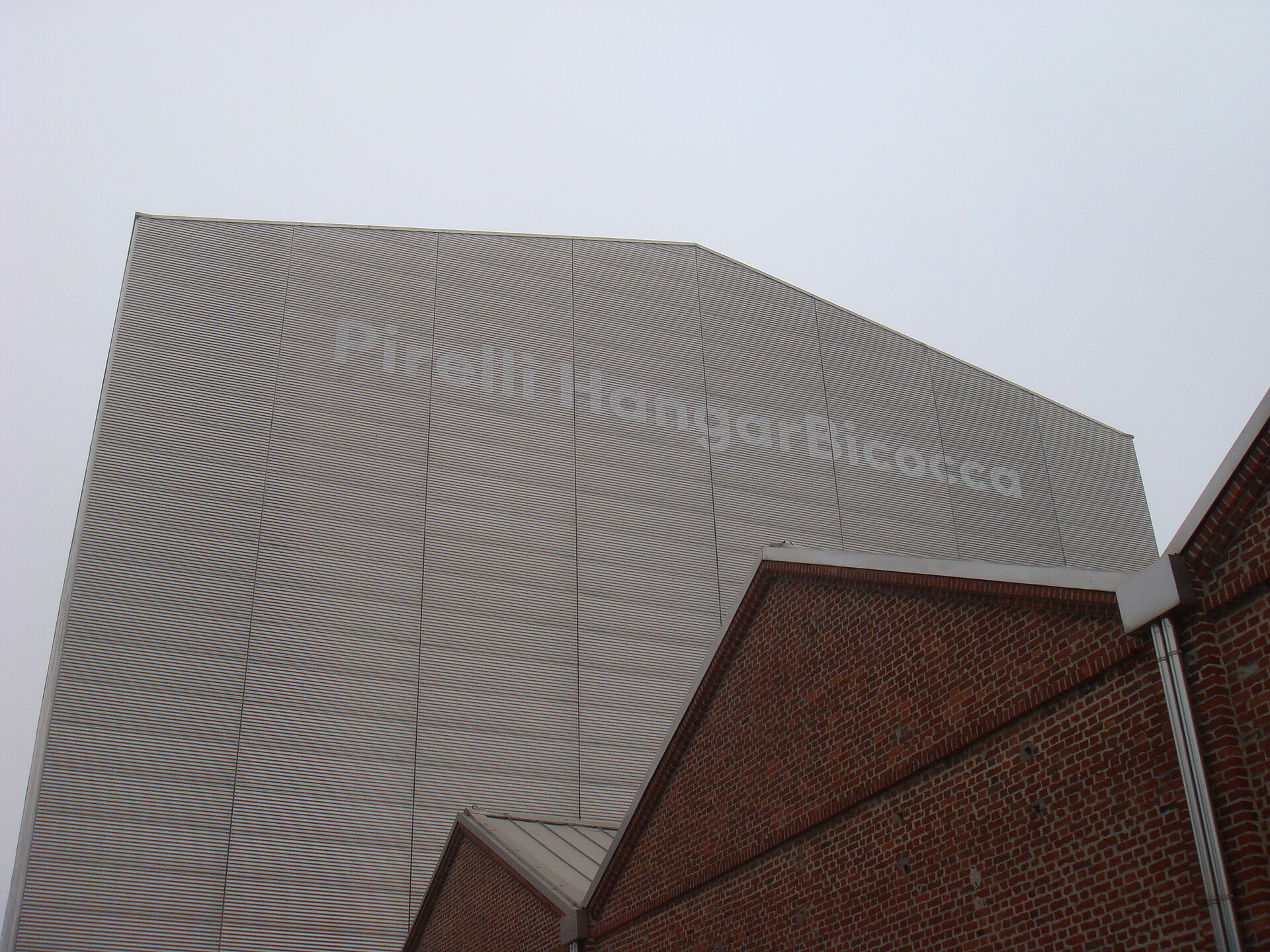
Pirelli HangarBicocca is a non-profit foundation based in Milan, housed in a former industrial plant that once belonged to the Ansaldo-Breda company. Spanning over 10,900 square meters, the space is one of the largest continuous exhibition areas in Europe, dedicated to the production and promotion of contemporary art.
The site is characterized by its industrial architecture, featuring high ceilings and vast, open floor plans that allow for large-scale installations. It is perhaps best known for housing Anselm Kiefer's permanent installation, 'The Seven Heavenly Palaces', which consists of seven towering concrete towers that dominate the main nave of the building.
Key Facts
- Materials
- Steel, Concrete, Glass
- Civilization
- Modern Industrial
- Accessibility
- Fully wheelchair accessible
- Date(s)
- 1903-1905
- Condition
- Restored and repurposed as an art gallery
- Original Function
- Locomotive and electrical machinery factory
- Key Figures
- Anselm Kiefer, Vicente Todolí
Industrial Origins
Early 20th CenturyThe structure was originally built by the Breda company in the early 1900s to serve as a factory for the production of locomotives and electrical machinery. It played a significant role in the industrial development of the Bicocca district in Milan.
Deindustrialization and Abandonment
Late 20th CenturyFollowing the decline of heavy industry in the area, the factory ceased operations. The site remained largely abandoned for several years, serving as a relic of Milan's industrial past before being acquired for redevelopment.
Conversion to Art Space
2004-PresentIn 2004, the site was converted into an exhibition space for contemporary art. Under the support of Pirelli, the hangar underwent extensive renovations to preserve its industrial character while meeting the requirements of a modern art institution.
Cultural Significance
Pirelli HangarBicocca serves as a vital hub for contemporary art in Italy, bridging the gap between Milan's industrial heritage and its modern cultural identity. By repurposing a factory into a gallery, the institution highlights the aesthetic potential of industrial architecture and provides a unique venue for site-specific works that would be impossible to display in traditional museum settings.
Interpretive Notes
Scholarly debates and areas of uncertainty
Discussions often center on the tension between the 'white cube' gallery aesthetic and the preservation of the site's industrial 'patina'. Scholars debate whether the heavy industrial history of the building enhances or distracts from the contemporary artworks displayed within.
Visiting Information
Entry Rules
Admission is free, but booking a time slot online is recommended. The space is closed on Mondays, Tuesdays, and Wednesdays.
Best Times to Visit
Weekday mornings are generally quieter. The space is particularly atmospheric during late afternoon when natural light filters through the high industrial windows.
Photography
Personal photography is permitted for non-commercial use. Tripods and professional lighting equipment require prior authorization.
Preservation Notes
Visitors are requested not to touch the artworks or the structural elements of the building. Maintain a respectful distance from the installations.
Nearby POIs
11 shown- Cimitero Monumentale di Milano5.2 km
- Museo Civico di Storia Naturale di Milano5.7 km
- Pinacoteca di Brera6.2 km
- Bagatti Valsecchi Museum6.2 km
- Palazzo Morando6.2 km
- Museo Poldi Pezzoli6.4 km
- Museo Teatrale alla Scala6.6 km
- Castello Sforzesco6.6 km
- Triennale di Milano6.6 km
- Duomo di Milano6.8 km
- Palazzo Reale di Milano6.9 km
Sources & Further Reading
- [1]HangarBicocca: The Architecture of Art — Andrea Branzi. Skira (2012)
- [2]Anselm Kiefer: The Seven Heavenly Palaces — Vicente Todolí. Pirelli HangarBicocca Publications (2015)View
Key Facts
- Materials
- Steel, Concrete, Glass
- Civilization
- Modern Industrial
- Accessibility
- Fully wheelchair accessible
- Date(s)
- 1903-1905
- Condition
- Restored and repurposed as an art gallery
- Original Function
- Locomotive and electrical machinery factory
- Key Figures
- Anselm Kiefer, Vicente Todolí
Nearby POIs
11 shown- Cimitero Monumentale di Milano5.2 km
- Museo Civico di Storia Naturale di Milano5.7 km
- Pinacoteca di Brera6.2 km
- Bagatti Valsecchi Museum6.2 km
- Palazzo Morando6.2 km
- Museo Poldi Pezzoli6.4 km
- Museo Teatrale alla Scala6.6 km
- Castello Sforzesco6.6 km
- Triennale di Milano6.6 km
- Duomo di Milano6.8 km
- Palazzo Reale di Milano6.9 km