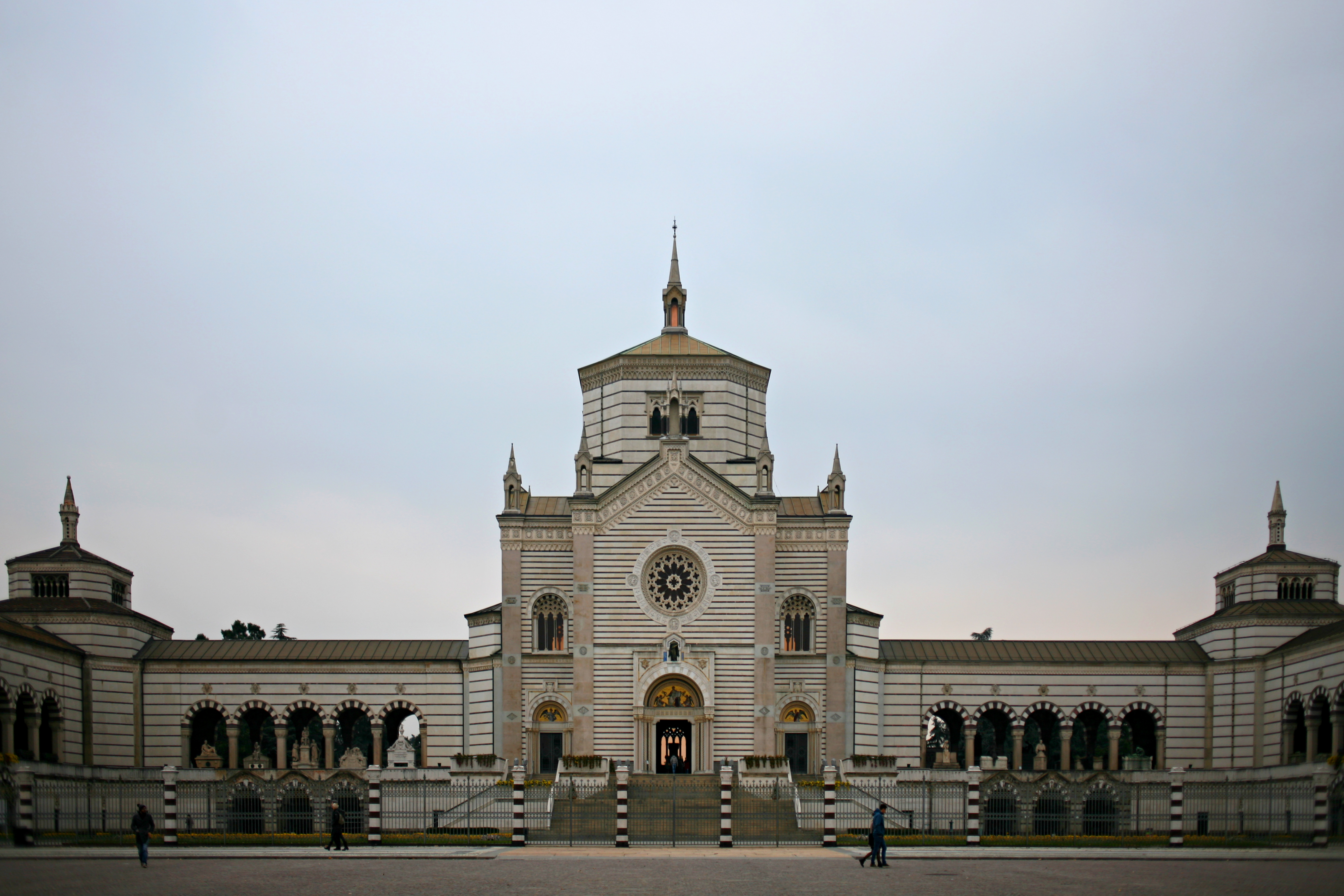
The Cimitero Monumentale di Milano is one of the two largest cemeteries in Milan, Italy, renowned for its vast collection of artistic tombs, sculptures, and elaborate funerary architecture. Opened in 1866, it was designed by architect Carlo Maciachini to consolidate the city's scattered burial grounds into a single, grand site that reflected the wealth and status of Milanese society during the industrial expansion.
The cemetery serves as an open-air museum, featuring a diverse array of styles ranging from Neo-Romanesque and Neo-Gothic to Art Nouveau and contemporary designs. It is the final resting place for many of Italy's most prominent figures, including writers, musicians, and industrialists, whose elaborate monuments often serve as significant examples of Italian funerary art.
Key Facts
- Materials
- Marble, Bronze, Stone, Granite
- Civilization
- Italian
- Accessibility
- Accessible paths throughout the main sections
- Date(s)
- 1863-1866
- Condition
- Active, well-preserved
- Original Function
- Municipal cemetery
- Key Figures
- Carlo Maciachini, Alessandro Manzoni, Arturo Toscanini
Conception and Design
1860sFollowing the unification of Italy, Milan sought to modernize its urban infrastructure. Carlo Maciachini won the competition to design the new cemetery, aiming to create a monumental space that would demonstrate the city's civic pride and artistic sophistication.
Expansion and Artistic Growth
Late 19th - Early 20th CenturyAs the cemetery grew, it became a showcase for the elite to commission works from leading sculptors and architects. The addition of the Famedio (Hall of Fame) and the expansion of the Jewish and non-Catholic sections solidified its status as a cultural landmark.
Modern Preservation
20th Century - PresentToday, the site is managed by the Municipality of Milan. It is protected as a site of historical and artistic interest, with ongoing restoration efforts focused on preserving the delicate marble sculptures and intricate metalwork from environmental degradation.
Cultural Significance
The Cimitero Monumentale is a vital component of Milanese cultural heritage, representing the intersection of death, art, and social status. It documents the history of the city's bourgeoisie and intellectual elite, serving as a physical archive of the aesthetic trends that defined Milan from the late 19th century onward.
Beyond its artistic value, the cemetery is a place of civic memory. The Famedio, which houses the remains of distinguished citizens, reinforces the site's role in maintaining the collective identity of Milan and Italy, hosting annual ceremonies that honor those who have contributed to the nation's progress.
Interpretive Notes
Scholarly debates and areas of uncertainty
There is ongoing academic discussion regarding the balance between the site's function as an active burial ground and its role as a tourist destination. Scholars debate the ethics of 'dark tourism' in relation to the commercialization of funerary art and the preservation of private family tombs that have lost their original maintenance support.
Visiting Information
Entry Rules
Open Tuesday to Sunday, 8:00 to 18:00. Entry is free. Visitors are expected to maintain a respectful demeanor as it is an active cemetery. No specific dress code is enforced, but modest attire is recommended.
Best Times to Visit
Weekday mornings are best to avoid weekend crowds. Spring and autumn offer the most comfortable temperatures for walking the extensive grounds.
Photography
Personal photography is permitted for non-commercial use. Tripods and professional equipment require prior authorization from the municipal office.
Preservation Notes
Do not touch the sculptures or climb on tomb structures. Stay on the designated pathways to avoid damaging the historic paving and landscaping.
Nearby POIs
11 shown- Triennale di Milano1.5 km
- Castello Sforzesco1.6 km
- Pinacoteca di Brera1.6 km
- Museo Poldi Pezzoli2.1 km
- Bagatti Valsecchi Museum2.1 km
- Museo Teatrale alla Scala2.1 km
- Chiesa di San Maurizio al Monastero Maggiore2.2 km
- Basilica di Santa Maria delle Grazie2.2 km
- Palazzo Morando2.2 km
- Museo Civico di Storia Naturale di Milano2.2 km
- Duomo di Milano2.5 km
Sources & Further Reading
- [1]Il Cimitero Monumentale di Milano: Guida storico-artistica — Giovanna Ginex. Silvana Editoriale (2006)
- [2]Cimitero Monumentale: Storia e Arte — Comune di Milano. Municipality of Milan Official Archives (2020)
Key Facts
- Materials
- Marble, Bronze, Stone, Granite
- Civilization
- Italian
- Accessibility
- Accessible paths throughout the main sections
- Date(s)
- 1863-1866
- Condition
- Active, well-preserved
- Original Function
- Municipal cemetery
- Key Figures
- Carlo Maciachini, Alessandro Manzoni, Arturo Toscanini
Nearby POIs
11 shown- Triennale di Milano1.5 km
- Castello Sforzesco1.6 km
- Pinacoteca di Brera1.6 km
- Museo Poldi Pezzoli2.1 km
- Bagatti Valsecchi Museum2.1 km
- Museo Teatrale alla Scala2.1 km
- Chiesa di San Maurizio al Monastero Maggiore2.2 km
- Basilica di Santa Maria delle Grazie2.2 km
- Palazzo Morando2.2 km
- Museo Civico di Storia Naturale di Milano2.2 km
- Duomo di Milano2.5 km