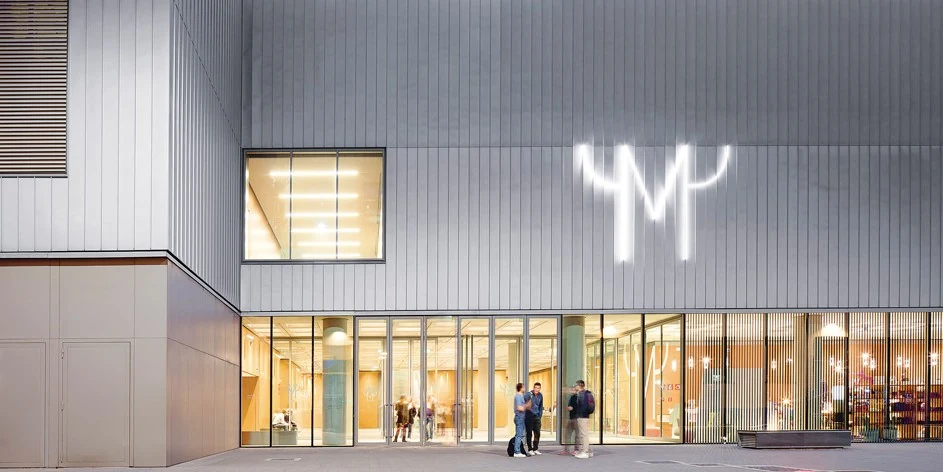
The Museo delle Culture (MUDEC) is a multidisciplinary museum and exhibition center located in the Tortona district of Milan. Housed within the former Ansaldo industrial complex, the museum was designed by British architect David Chipperfield and inaugurated in 2015. The structure is characterized by its dramatic, luminous central hall, which serves as a hub for diverse cultural activities and temporary exhibitions.
The museum is dedicated to the study and display of ethnographic collections from five continents, alongside international art. Its mission focuses on the intersection of different cultures, utilizing the city's historical collections to foster dialogue and interdisciplinary research. The architecture itself reflects the site's industrial heritage, blending restored factory elements with modern, geometric forms.
Key Facts
- Materials
- Glass, Steel, Zinc, Concrete
- Civilization
- Contemporary Italian
- Accessibility
- Fully wheelchair accessible
- Date(s)
- 2015
- Condition
- Active museum
- Original Function
- Industrial plant (Ansaldo)
- Key Figures
- David Chipperfield
Industrial Origins
Early 20th CenturyThe site was originally part of the Ansaldo industrial area, a significant manufacturing hub in Milan that played a key role in the city's industrial development during the early 1900s.
Urban Regeneration
2000-2014Following the decline of the industrial sector, the Municipality of Milan initiated a project to transform the abandoned factory into a cultural space. David Chipperfield Architects was selected to lead the redevelopment, focusing on preserving the industrial character while introducing a new, modern architectural language.
Inauguration and Present
2015-PresentMUDEC officially opened to the public in 2015. It has since become a central institution for ethnographic research and international art exhibitions in Milan, hosting a permanent collection and rotating temporary displays.
Cultural Significance
MUDEC serves as a bridge between Milan's industrial past and its contemporary identity as a global hub for art and design. By focusing on ethnographic collections, it challenges traditional museum narratives, encouraging visitors to engage with global cultures through a lens of interdisciplinary research and contemporary social issues.
Interpretive Notes
Scholarly debates and areas of uncertainty
The museum has been the subject of debate regarding the display of ethnographic objects in a contemporary art context. Scholars discuss the balance between aesthetic presentation and the ethical responsibility of representing non-Western cultures, particularly concerning the provenance and colonial history of the collections.
Visiting Information
Entry Rules
Open daily. Tickets are required for temporary exhibitions, while access to the central hall and specific areas may vary. Visitors are encouraged to book tickets online in advance. Standard museum conduct applies.
Best Times to Visit
Weekdays during the morning or late afternoon to avoid peak weekend crowds. The museum is particularly popular during major temporary exhibition openings.
Photography
Personal photography is generally permitted in public areas without flash. Specific restrictions may apply within temporary exhibition galleries; please check signage upon entry.
Preservation Notes
The building is a protected example of industrial conversion. Visitors are asked to respect the architectural features and follow all safety guidelines regarding the handling of artifacts.
Nearby POIs
11 shown- Basilica di San Vittore al Corpo1.4 km
- Museo Nazionale Scienza e Tecnologia Leonardo da Vinci1.4 km
- Basilica di Sant'Ambrogio1.6 km
- Basilica di Santa Maria delle Grazie1.7 km
- Chiesa di San Maurizio al Monastero Maggiore2 km
- Triennale di Milano2.4 km
- Castello Sforzesco2.5 km
- Palazzo Reale di Milano2.6 km
- Duomo di Milano2.7 km
- Museo Teatrale alla Scala2.8 km
- Museo Poldi Pezzoli3 km
Key Facts
- Materials
- Glass, Steel, Zinc, Concrete
- Civilization
- Contemporary Italian
- Accessibility
- Fully wheelchair accessible
- Date(s)
- 2015
- Condition
- Active museum
- Original Function
- Industrial plant (Ansaldo)
- Key Figures
- David Chipperfield
Nearby POIs
11 shown- Basilica di San Vittore al Corpo1.4 km
- Museo Nazionale Scienza e Tecnologia Leonardo da Vinci1.4 km
- Basilica di Sant'Ambrogio1.6 km
- Basilica di Santa Maria delle Grazie1.7 km
- Chiesa di San Maurizio al Monastero Maggiore2 km
- Triennale di Milano2.4 km
- Castello Sforzesco2.5 km
- Palazzo Reale di Milano2.6 km
- Duomo di Milano2.7 km
- Museo Teatrale alla Scala2.8 km
- Museo Poldi Pezzoli3 km