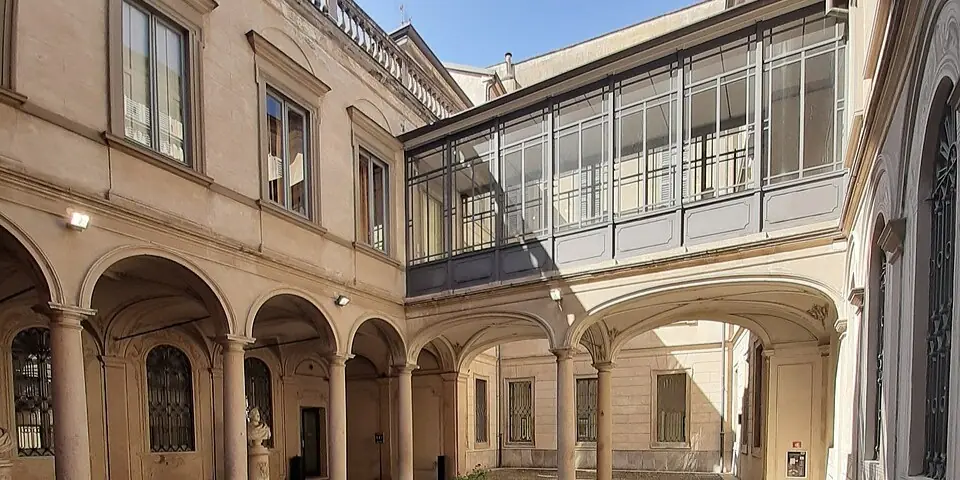
Palazzo Morando is a historic aristocratic residence located in the heart of Milan, serving as a significant example of 18th-century Lombard architecture. Originally constructed as a private home for the Casati Attanasio family, the building features a series of preserved period rooms that reflect the lifestyle and aesthetic preferences of the Milanese nobility during the Enlightenment.
Today, the palace functions as the Museo di Palazzo Morando | Costume Moda Immagine. It houses an extensive collection of historical costumes, fashion accessories, and paintings that document the urban evolution of Milan. The museum provides a comprehensive look at the city's social history, bridging the gap between its architectural heritage and its global reputation as a center for fashion and design.
Key Facts
- Materials
- Brick, Stucco, Marble
- Civilization
- Italian
- Accessibility
- Wheelchair accessible with elevator
- Date(s)
- 1733
- Condition
- Well-preserved museum
- Original Function
- Aristocratic residence
- Key Figures
- Gian Giacomo Attendolo Bolognini, Lydia Caprara
Origins and Construction
1733The palace was commissioned by the Casati Attanasio family in the early 18th century. It was designed to showcase the wealth and status of the family, featuring a grand staircase and ornate reception rooms typical of the period.
The Attendolo Bolognini Era
19th CenturyIn the 19th century, the palace became the residence of the Counts Attendolo Bolognini. During this time, the interiors were updated to reflect the evolving tastes of the Milanese elite, incorporating neoclassical elements.
Donation and Museum Conversion
1945-2010Following the donation of the palace to the City of Milan by Lydia Caprara, the widow of Count Gian Giacomo Attendolo Bolognini, the building was repurposed as a museum. It underwent significant restoration to house the city's collections of historical costumes and urban iconography.
Cultural Significance
Palazzo Morando is a vital repository of Milanese identity, preserving both the physical structure of an 18th-century noble home and the intangible history of the city's fashion evolution. It serves as a bridge between the traditional aristocratic past and the modern industrial identity of Milan as a fashion capital.
Interpretive Notes
Scholarly debates and areas of uncertainty
There is ongoing academic discussion regarding the attribution of specific architectural modifications made during the 19th-century renovations, as records from the period are incomplete.
Visiting Information
Entry Rules
Open Tuesday to Sunday. Tickets can be purchased at the entrance. Visitors are requested to leave large bags in the cloakroom.
Best Times to Visit
Weekday mornings to avoid weekend crowds and school groups.
Photography
Personal photography is permitted without flash or tripods. Professional photography requires prior authorization from the museum administration.
Preservation Notes
Visitors are asked to refrain from touching the historic furniture and textiles. The museum maintains strict climate control to protect the delicate costume collection.
Nearby POIs
11 shown- Bagatti Valsecchi Museum0.1 km
- Museo Poldi Pezzoli0.3 km
- Museo Teatrale alla Scala0.6 km
- Duomo di Milano0.7 km
- Museo Civico di Storia Naturale di Milano0.7 km
- Pinacoteca di Brera0.7 km
- Palazzo Reale di Milano0.7 km
- Castello Sforzesco1.3 km
- Chiesa di San Maurizio al Monastero Maggiore1.4 km
- Basilica di Sant'Ambrogio1.7 km
- Triennale di Milano1.8 km
Sources & Further Reading
- [1]
- [2]Le dimore storiche di Milano — Maria Teresa Binaghi Olivari. Electa (2005)
Key Facts
- Materials
- Brick, Stucco, Marble
- Civilization
- Italian
- Accessibility
- Wheelchair accessible with elevator
- Date(s)
- 1733
- Condition
- Well-preserved museum
- Original Function
- Aristocratic residence
- Key Figures
- Gian Giacomo Attendolo Bolognini, Lydia Caprara
Nearby POIs
11 shown- Bagatti Valsecchi Museum0.1 km
- Museo Poldi Pezzoli0.3 km
- Museo Teatrale alla Scala0.6 km
- Duomo di Milano0.7 km
- Museo Civico di Storia Naturale di Milano0.7 km
- Pinacoteca di Brera0.7 km
- Palazzo Reale di Milano0.7 km
- Castello Sforzesco1.3 km
- Chiesa di San Maurizio al Monastero Maggiore1.4 km
- Basilica di Sant'Ambrogio1.7 km
- Triennale di Milano1.8 km