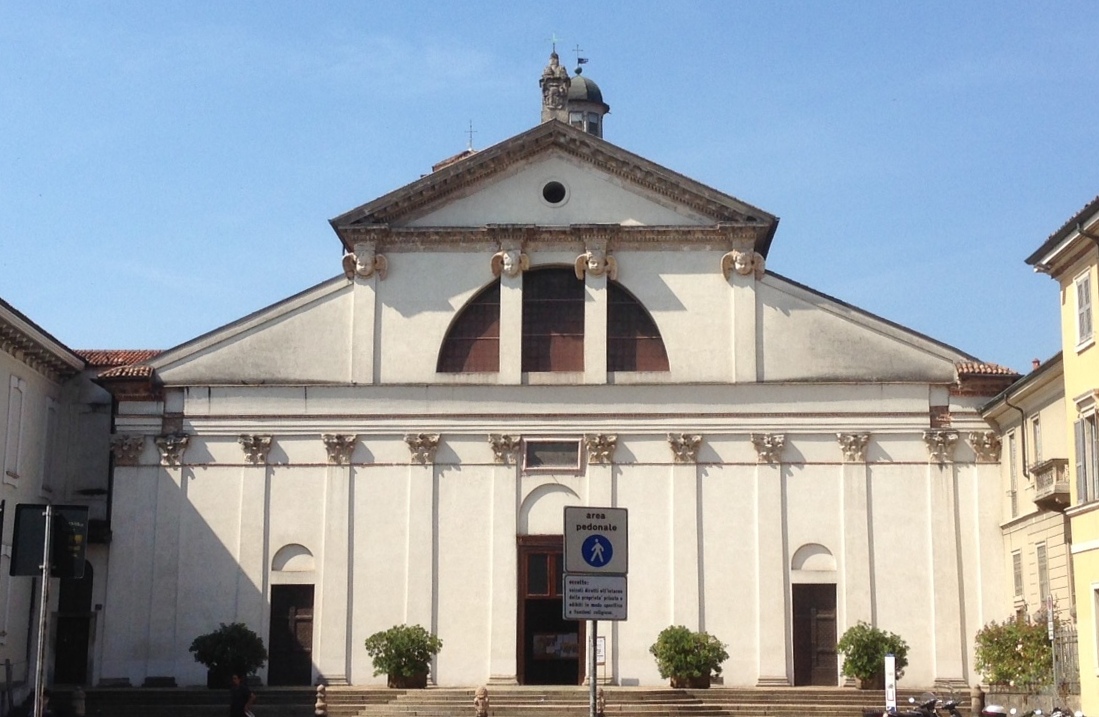
The Basilica di San Vittore al Corpo is a significant religious site in Milan, located on the site of the ancient imperial mausoleum of Maximian. The current structure, dating primarily to the 16th century, was built as part of an Olivetan monastery complex and stands as a prime example of Lombard Renaissance and Mannerist architecture.
The interior is renowned for its elaborate 17th-century frescoes and stucco work, which cover nearly every surface of the nave and chapels. The basilica serves as a repository for significant religious art and maintains its historical connection to the early Christian history of Milan, housing the remains of Saint Victor in its crypt.
Key Facts
- Materials
- Brick, Stucco, Marble, Frescoes
- Civilization
- Italian
- Accessibility
- Ground level access
- Date(s)
- 1507-1670
- Condition
- Well-preserved, active parish church
- Original Function
- Monastic church
- Key Figures
- Saint Victor, Vincenzo Seregni
Early Christian Origins
4th centuryThe site was originally associated with the imperial mausoleum of the Roman Emperor Maximian. It was later dedicated to Saint Victor, a martyr who served in the Roman army and was executed in Milan during the Diocletianic Persecution.
Olivetan Reconstruction
16th centuryIn 1507, the Olivetan monks began a massive reconstruction of the existing medieval church. The architect Vincenzo Seregni was instrumental in designing the new layout, which followed the classical proportions favored during the Renaissance.
Baroque Decoration
17th centuryDuring the 17th century, the interior underwent a dramatic transformation. The walls and ceilings were adorned with extensive frescoes by artists such as Daniele Crespi and Camillo Procaccini, creating the dense, ornate aesthetic characteristic of the Lombard Baroque.
Modern Era
19th century - presentFollowing the suppression of the monasteries in the 19th century, the complex was repurposed for various civic uses, including military barracks. The church was eventually restored to its religious function and continues to serve as a parish church today.
Cultural Significance
The basilica is a vital link to Milan's imperial past, bridging the gap between the Roman era and the city's later development as a center of religious art. It represents the transition from the austere Renaissance style to the theatricality of the Baroque, reflecting the shifting theological and aesthetic priorities of the Counter-Reformation in Lombardy.
Interpretive Notes
Scholarly debates and areas of uncertainty
There is ongoing academic discussion regarding the exact layout of the original Roman mausoleum that predates the church. While archaeological evidence confirms the site's imperial origins, the precise dimensions and architectural relationship between the mausoleum and the early Christian basilica remain subjects of investigation.
Visiting Information
Entry Rules
Open to the public daily. Entry is free. Visitors are requested to maintain silence and respect ongoing religious services. Modest dress is required.
Best Times to Visit
Weekday mornings or afternoons outside of mass times for quiet viewing of the frescoes.
Photography
Personal photography is permitted without flash. Tripods and professional equipment require prior authorization.
Preservation Notes
The frescoes are highly sensitive to light and humidity. Please refrain from using flash and do not touch the walls or decorative elements.
Nearby POIs
11 shown- Museo Nazionale Scienza e Tecnologia Leonardo da Vinci0.1 km
- Basilica di Santa Maria delle Grazie0.4 km
- Basilica di Sant'Ambrogio0.5 km
- Chiesa di San Maurizio al Monastero Maggiore0.8 km
- Triennale di Milano1.1 km
- Castello Sforzesco1.1 km
- Mudec1.4 km
- Museo Teatrale alla Scala1.6 km
- Duomo di Milano1.6 km
- Palazzo Reale di Milano1.7 km
- Pinacoteca di Brera1.7 km
Sources & Further Reading
- [1]Milano: Guida alle chiese — Maria Teresa Fiorio. Electa (2006)
- [2]The Architecture of the Italian Renaissance — Christoph L. Frommel. Thames & Hudson (2007)
Key Facts
- Materials
- Brick, Stucco, Marble, Frescoes
- Civilization
- Italian
- Accessibility
- Ground level access
- Date(s)
- 1507-1670
- Condition
- Well-preserved, active parish church
- Original Function
- Monastic church
- Key Figures
- Saint Victor, Vincenzo Seregni
Nearby POIs
11 shown- Museo Nazionale Scienza e Tecnologia Leonardo da Vinci0.1 km
- Basilica di Santa Maria delle Grazie0.4 km
- Basilica di Sant'Ambrogio0.5 km
- Chiesa di San Maurizio al Monastero Maggiore0.8 km
- Triennale di Milano1.1 km
- Castello Sforzesco1.1 km
- Mudec1.4 km
- Museo Teatrale alla Scala1.6 km
- Duomo di Milano1.6 km
- Palazzo Reale di Milano1.7 km
- Pinacoteca di Brera1.7 km