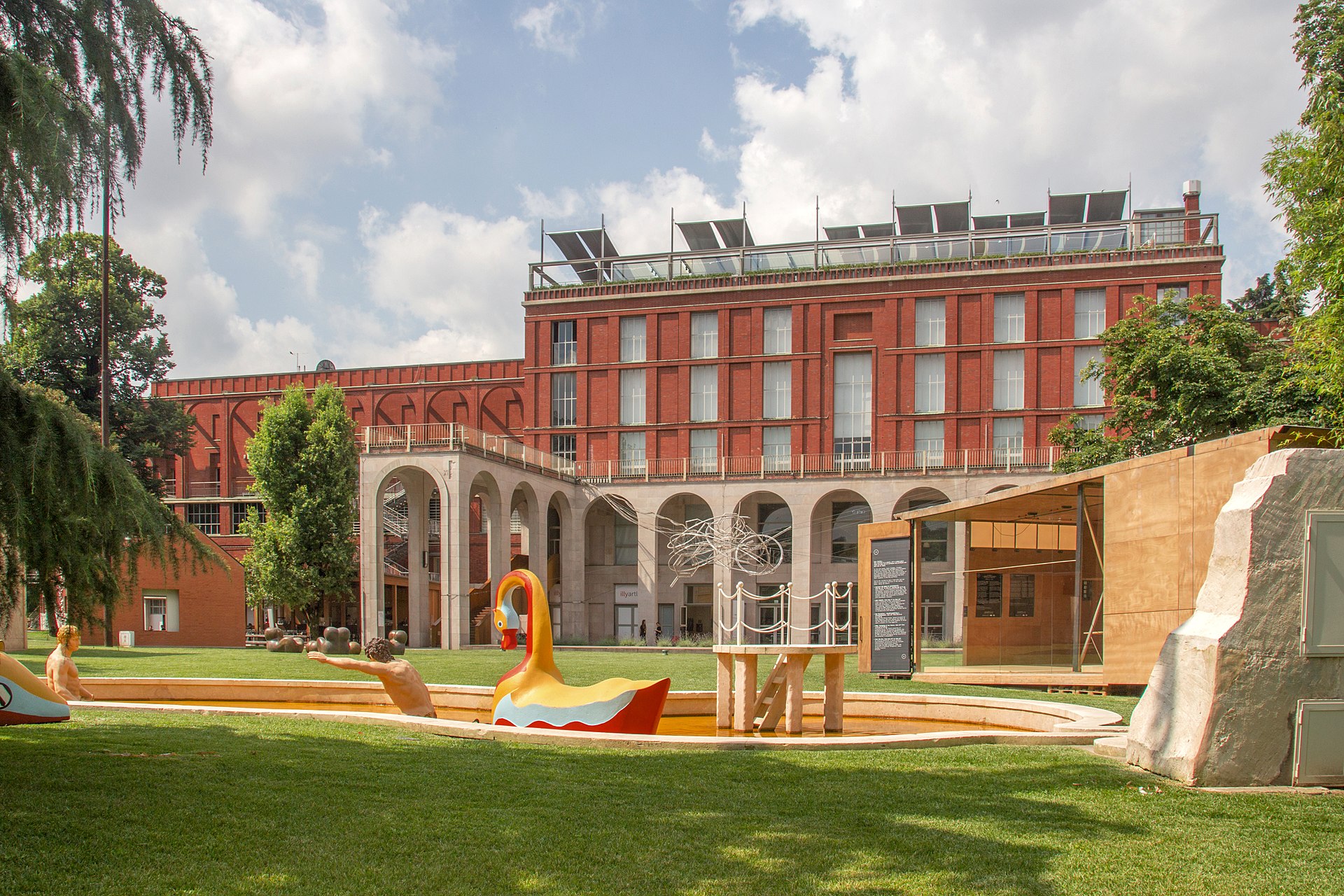
The Triennale di Milano is a design and art museum located within the Palazzo dell'Arte in Parco Sempione. Designed by architect Giovanni Muzio and constructed between 1931 and 1933, the building serves as a permanent institution for the exhibition of Italian design, architecture, and visual arts. It is renowned for hosting the Triennale exhibitions, which have historically showcased international trends in decorative arts and industrial design.
The institution functions as a multidisciplinary hub, housing the Triennale Design Museum, a theater, and extensive archives. Its architectural style reflects the transition between neoclassical influences and the rationalist movement of the early 20th century, serving as a significant landmark for Milanese cultural life and global design discourse.
Key Facts
- Materials
- Reinforced concrete, Brick, Stone cladding
- Civilization
- Italian
- Accessibility
- Fully accessible with elevators and ramps
- Date(s)
- 1931-1933
- Condition
- Active museum and cultural center
- Original Function
- Exhibition hall for the Triennale di Milano
- Key Figures
- Giovanni Muzio, Stefano Boeri
Foundation and Construction
1931-1933The Palazzo dell'Arte was commissioned to house the Triennale exhibitions, which had previously been held in Monza. Giovanni Muzio was selected as the architect, creating a structure that balanced monumental scale with functional exhibition spaces.
Post-War Evolution
1945-1990Following World War II, the Triennale became a critical venue for the development of the 'Made in Italy' design movement. It hosted influential exhibitions that defined the aesthetic and industrial standards of the Italian economic miracle.
Modern Institutionalization
2007-PresentIn 2007, the Triennale Design Museum was established as a permanent entity within the palace. The institution continues to curate rotating exhibitions and maintains a significant archive of 20th-century design history.
Cultural Significance
The Triennale di Milano is central to the identity of Milan as a global capital of design. It serves as a bridge between historical industrial production and contemporary artistic innovation, influencing how design is documented and displayed internationally.
Interpretive Notes
Scholarly debates and areas of uncertainty
Debates often center on the tension between the museum's role as a historical archive and its function as a commercial platform for contemporary design brands. Scholars also discuss the architectural legacy of Muzio's work in the context of the political climate of the 1930s.
Visiting Information
Entry Rules
Open Tuesday to Sunday. Tickets are required for entry to the museum and specific exhibitions. Visitors are encouraged to book online to ensure availability.
Best Times to Visit
Weekdays during the morning to avoid weekend crowds. The surrounding Parco Sempione is best visited in spring or autumn.
Photography
Personal photography is permitted in most areas without flash or tripods. Professional photography requires prior authorization from the press office.
Preservation Notes
The building is a protected historical site. Visitors are requested to refrain from touching exhibits and to follow all signage regarding restricted areas.
Nearby POIs
11 shown- Castello Sforzesco0.5 km
- Basilica di Santa Maria delle Grazie0.7 km
- Chiesa di San Maurizio al Monastero Maggiore0.9 km
- Museo Nazionale Scienza e Tecnologia Leonardo da Vinci1.1 km
- Basilica di Sant'Ambrogio1.1 km
- Basilica di San Vittore al Corpo1.1 km
- Pinacoteca di Brera1.1 km
- Museo Teatrale alla Scala1.3 km
- Museo Poldi Pezzoli1.5 km
- Cimitero Monumentale di Milano1.5 km
- Duomo di Milano1.6 km
Sources & Further Reading
- [1]Giovanni Muzio: The Palazzo dell'Arte — Fulvio Irace. Electa (2003)
- [2]Triennale di Milano: A History of Design — Silvana Annicchiarico. Triennale Electa (2017)
Key Facts
- Materials
- Reinforced concrete, Brick, Stone cladding
- Civilization
- Italian
- Accessibility
- Fully accessible with elevators and ramps
- Date(s)
- 1931-1933
- Condition
- Active museum and cultural center
- Original Function
- Exhibition hall for the Triennale di Milano
- Key Figures
- Giovanni Muzio, Stefano Boeri
Nearby POIs
11 shown- Castello Sforzesco0.5 km
- Basilica di Santa Maria delle Grazie0.7 km
- Chiesa di San Maurizio al Monastero Maggiore0.9 km
- Museo Nazionale Scienza e Tecnologia Leonardo da Vinci1.1 km
- Basilica di Sant'Ambrogio1.1 km
- Basilica di San Vittore al Corpo1.1 km
- Pinacoteca di Brera1.1 km
- Museo Teatrale alla Scala1.3 km
- Museo Poldi Pezzoli1.5 km
- Cimitero Monumentale di Milano1.5 km
- Duomo di Milano1.6 km