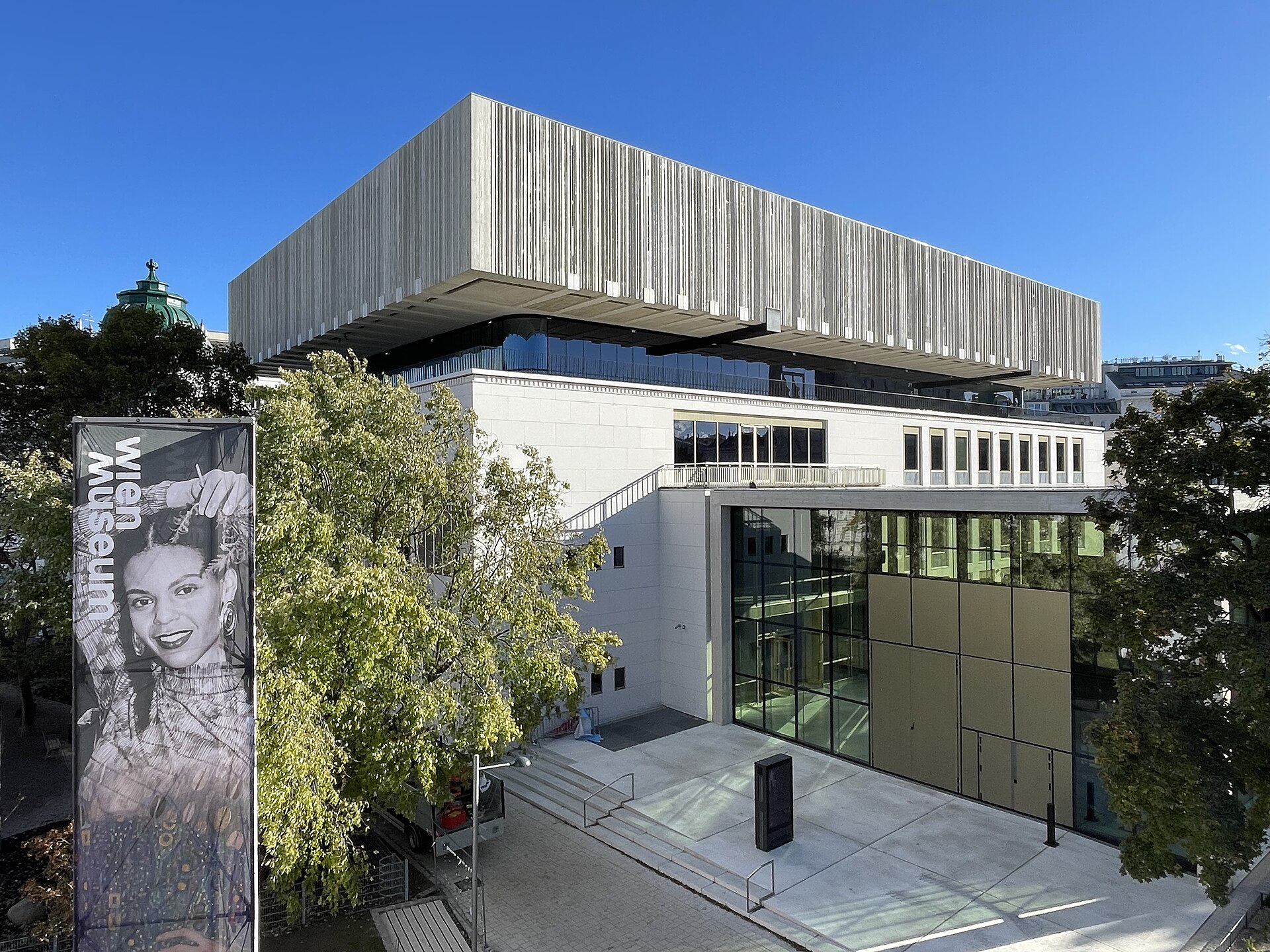
The Vienna Museum, known as the Wien Museum, is a municipal institution dedicated to the history, art, and cultural development of Vienna. Located primarily at Karlsplatz, the museum houses an extensive collection that spans from the city's prehistoric origins through the Roman era and into the modern day. Its holdings include archaeological finds, fine art, and artifacts documenting the daily life and political evolution of the Austrian capital.
The institution operates as a network of sites, with the main building at Karlsplatz serving as the central hub. Following a major architectural expansion and renovation completed in 2023, the museum now features a prominent floating concrete structure that provides panoramic views of the city while housing its permanent exhibition, 'Vienna. My History.'
Key Facts
- Materials
- Concrete, Glass, Steel
- Civilization
- Austrian
- Accessibility
- Fully wheelchair accessible
- Date(s)
- 1954-1959 (Original), 2020-2023 (Renovation)
- Condition
- Fully renovated and active
- Original Function
- Municipal historical museum
- Key Figures
- Oswald Haerdtl, Roland Rainer
Foundation and Early Collections
1887-1950sThe museum's roots lie in the historical collections of the City of Vienna, which were previously housed in the Rathaus. The need for a dedicated space led to the decision to construct a purpose-built museum building on Karlsplatz.
The Haerdtl Building
1954-1959Designed by architect Oswald Haerdtl, the original museum building was a hallmark of post-war Viennese modernism. It opened in 1959 and served as the primary repository for the city's historical artifacts for over six decades.
Modernization and Expansion
2020-2023To accommodate growing collections and modern visitor requirements, the museum underwent a comprehensive renovation and expansion. The project added a new upper level, effectively doubling the exhibition space while preserving the original modernist structure.
Cultural Significance
The Vienna Museum serves as the primary memory institution for the city, bridging the gap between academic history and public identity. It plays a critical role in documenting the transformation of Vienna from an imperial capital to a modern metropolis, reflecting the diverse social, political, and artistic currents that have shaped the city.
Interpretive Notes
Scholarly debates and areas of uncertainty
Discussions often center on the museum's role in addressing the city's complex 20th-century history, particularly the National Socialist period and the subsequent process of denazification and memory culture in post-war Austria.
Visiting Information
Entry Rules
Open Tuesday to Sunday. Admission to the permanent exhibition is free of charge, while special exhibitions may require a ticket. Visitors are requested to leave large bags in the provided lockers.
Best Times to Visit
Weekday mornings are generally quieter. The museum is a popular destination during the winter months and rainy days.
Photography
Non-commercial photography is permitted without flash or tripods. Professional photography requires prior authorization.
Preservation Notes
Maintain a respectful distance from artifacts and display cases. Flash photography is prohibited to protect light-sensitive historical documents and textiles.
Nearby POIs
11 shownSources & Further Reading
- [1]
Key Facts
- Materials
- Concrete, Glass, Steel
- Civilization
- Austrian
- Accessibility
- Fully wheelchair accessible
- Date(s)
- 1954-1959 (Original), 2020-2023 (Renovation)
- Condition
- Fully renovated and active
- Original Function
- Municipal historical museum
- Key Figures
- Oswald Haerdtl, Roland Rainer