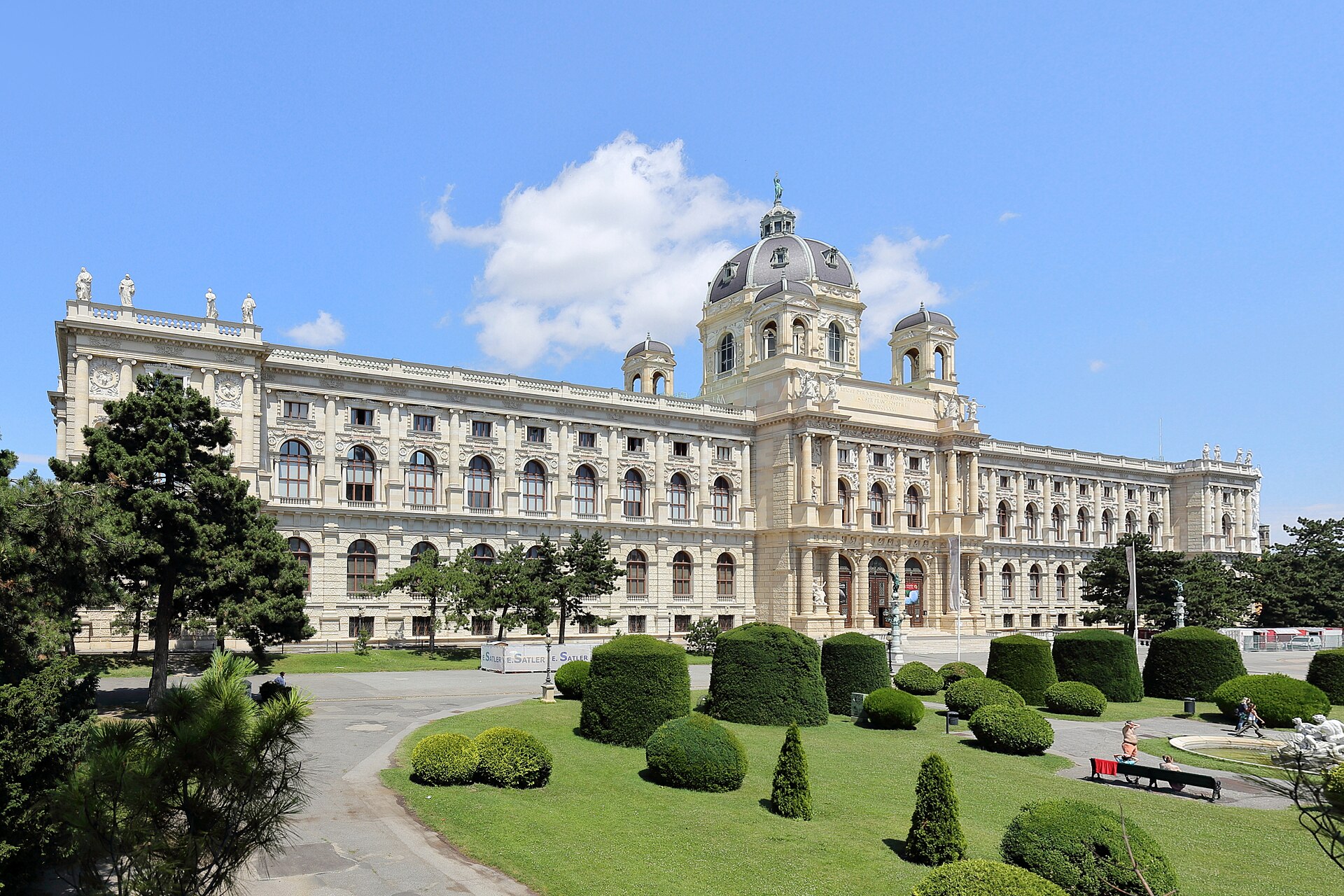
The Naturhistorisches Museum (Natural History Museum) in Vienna is one of the most significant natural history museums globally. Established to house the extensive imperial collections of the Habsburgs, the building itself is a masterpiece of Historicist architecture, designed by Gottfried Semper and Karl von Hasenauer. It opened to the public in 1889 and stands as a counterpart to the Kunsthistorisches Museum across the Maria-Theresien-Platz.
The museum holds approximately 30 million objects, ranging from prehistoric artifacts and meteorites to diverse zoological and botanical specimens. Its collection includes world-renowned items such as the Venus of Willendorf and an extensive display of dinosaur skeletons, serving as both a public exhibition space and a major center for non-university scientific research in Austria.
Key Facts
- Materials
- Sandstone, Marble, Stucco
- Civilization
- Austro-Hungarian
- Accessibility
- Fully wheelchair accessible
- Date(s)
- 1871-1889
- Condition
- Well-preserved, active research institution
- Original Function
- Imperial Museum
- Key Figures
- Emperor Franz Joseph I, Gottfried Semper, Karl von Hasenauer
Imperial Origins
18th CenturyThe core of the collection began with the acquisition of the Jean de Baillou collection by Emperor Franz Stephan of Lorraine in 1750. This private cabinet of curiosities formed the foundation for the imperial natural history holdings.
Construction of the Palace
1871-1889To accommodate the rapidly growing imperial collections, Emperor Franz Joseph I commissioned the construction of two grand museums on the Ringstraße. The Natural History Museum was built to mirror the Art History Museum, reflecting the imperial commitment to science and culture.
Modern Scientific Era
20th Century - PresentThroughout the 20th century, the museum expanded its research capabilities, becoming a vital hub for taxonomy, geology, and anthropology. Recent renovations have modernized exhibition halls while preserving the original 19th-century architectural integrity.
Cultural Significance
The museum serves as a symbol of the scientific enlightenment and imperial ambition of the Austro-Hungarian Empire. It remains a cornerstone of Viennese cultural life, bridging the gap between historical imperial legacy and contemporary scientific inquiry.
Interpretive Notes
Scholarly debates and areas of uncertainty
Debates often center on the provenance of colonial-era acquisitions within the ethnographic and biological collections, with ongoing efforts to review and document the history of these items in accordance with modern ethical standards.
Visiting Information
Entry Rules
Open daily except Tuesdays. Tickets can be purchased online or at the entrance. No food or drink allowed in the galleries.
Best Times to Visit
Weekday mornings are generally quieter. Avoid weekends and school holidays to experience the galleries with fewer crowds.
Photography
Non-commercial photography is permitted without flash or tripods. Professional photography requires prior authorization.
Preservation Notes
Maintain a respectful distance from all displays. Do not touch the glass cases or artifacts. The building is a protected historical monument.
Nearby POIs
11 shownSources & Further Reading
- [1]The Natural History Museum Vienna: A Guide to the Collections — Christian Köberl. Verlag des Naturhistorischen Museums (2012)View
- [2]The Ringstraße: A History of Vienna's Grand Boulevard — Renate Wagner-Rieger. Böhlau Verlag (1969)
Key Facts
- Materials
- Sandstone, Marble, Stucco
- Civilization
- Austro-Hungarian
- Accessibility
- Fully wheelchair accessible
- Date(s)
- 1871-1889
- Condition
- Well-preserved, active research institution
- Original Function
- Imperial Museum
- Key Figures
- Emperor Franz Joseph I, Gottfried Semper, Karl von Hasenauer