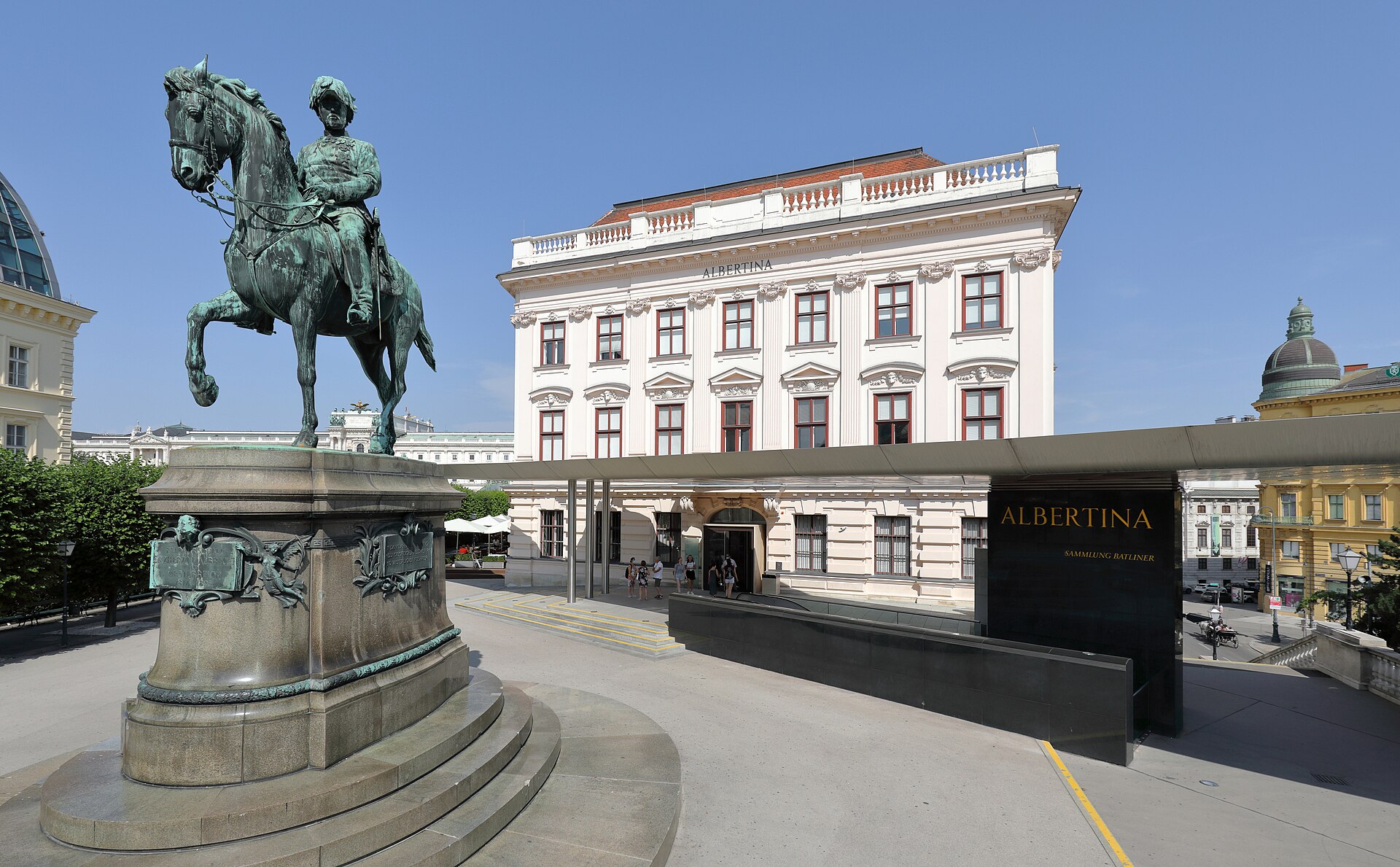
The Albertina is a major museum located in the heart of Vienna, housed in the largest residential palace of the Habsburgs. It is internationally renowned for its extensive graphic arts collection, which includes over one million prints and 65,000 drawings, ranging from late Gothic to contemporary works.
The museum building itself is a significant example of Neoclassical architecture, originally constructed as the Palais Tarouca-de Sylva in the 1740s. It was later expanded and served as the residence of Duke Albert of Saxe-Teschen, who founded the collection in 1776. Today, the museum hosts rotating exhibitions of modern and contemporary art alongside its permanent displays of historic state rooms.
Key Facts
- Materials
- Stone, Brick, Stucco
- Civilization
- Austrian
- Accessibility
- Fully wheelchair accessible with elevators
- Date(s)
- 1742-1745
- Condition
- Well-preserved, active museum
- Original Function
- Residential Palace
- Key Figures
- Duke Albert of Saxe-Teschen, Archduke Charles, Maria Christina of Austria
Founding and Early Years
1776The collection was established by Duke Albert of Saxe-Teschen in Brussels. Following the French Revolutionary Wars, the Duke moved his collection to Vienna, where it was housed in the palace that would eventually bear his name.
Habsburg Residence
19th CenturyThe palace served as the primary residence for Archduke Charles, the victor of the Battle of Aspern-Essling. During this time, the building was significantly expanded and became a center of Viennese social and political life.
Transition to Public Museum
1919-1920Following the collapse of the Austro-Hungarian Empire, the palace and its collections were transferred to the Republic of Austria. The graphic collection was merged with the former imperial court library's print collection.
Modern Expansion
2003-PresentThe museum underwent a major architectural renovation led by Hans Hollein, which included the addition of the iconic 'Soravia Wing' cantilevered roof, modernizing the facility to accommodate large-scale international exhibitions.
Cultural Significance
The Albertina is central to the cultural identity of Vienna, bridging the gap between the city's imperial past and its role as a modern art hub. Its graphic collection is considered one of the most important in the world, providing a comprehensive history of European art on paper.
Beyond the art, the restored state rooms offer visitors a glimpse into the lifestyle of the Habsburg nobility, making the site a dual-purpose institution that preserves both fine art and architectural heritage.
Interpretive Notes
Scholarly debates and areas of uncertainty
Debates often center on the balance between the museum's role as a historic palace and its function as a contemporary exhibition space. The 2003 architectural intervention by Hans Hollein sparked significant public and scholarly discussion regarding the appropriateness of modern additions to historic Neoclassical structures.
Visiting Information
Entry Rules
Open daily from 10:00 to 18:00, with extended hours on Wednesdays and Fridays until 21:00. Tickets can be purchased online or at the museum entrance. No large bags or backpacks are permitted in the galleries; lockers are available.
Best Times to Visit
Weekday mornings are generally quieter. The museum is busiest during major temporary exhibitions, so booking time slots in advance is recommended.
Photography
Non-commercial photography is permitted in the galleries without flash or tripods. Photography is strictly prohibited in certain special exhibition areas as indicated by signage.
Preservation Notes
Maintain a safe distance from all artworks. The climate-controlled environment is strictly regulated to protect sensitive paper-based collections; please refrain from bringing food or drink into the exhibition halls.
Nearby POIs
11 shownSources & Further Reading
- [1]The Albertina: The History of the Collection — Klaus Albrecht Schröder. Prestel Publishing (2003)View
- [2]Vienna's Imperial Palaces — Richard Kurdiovsky. Christian Brandstätter Verlag (2008)
Key Facts
- Materials
- Stone, Brick, Stucco
- Civilization
- Austrian
- Accessibility
- Fully wheelchair accessible with elevators
- Date(s)
- 1742-1745
- Condition
- Well-preserved, active museum
- Original Function
- Residential Palace
- Key Figures
- Duke Albert of Saxe-Teschen, Archduke Charles, Maria Christina of Austria