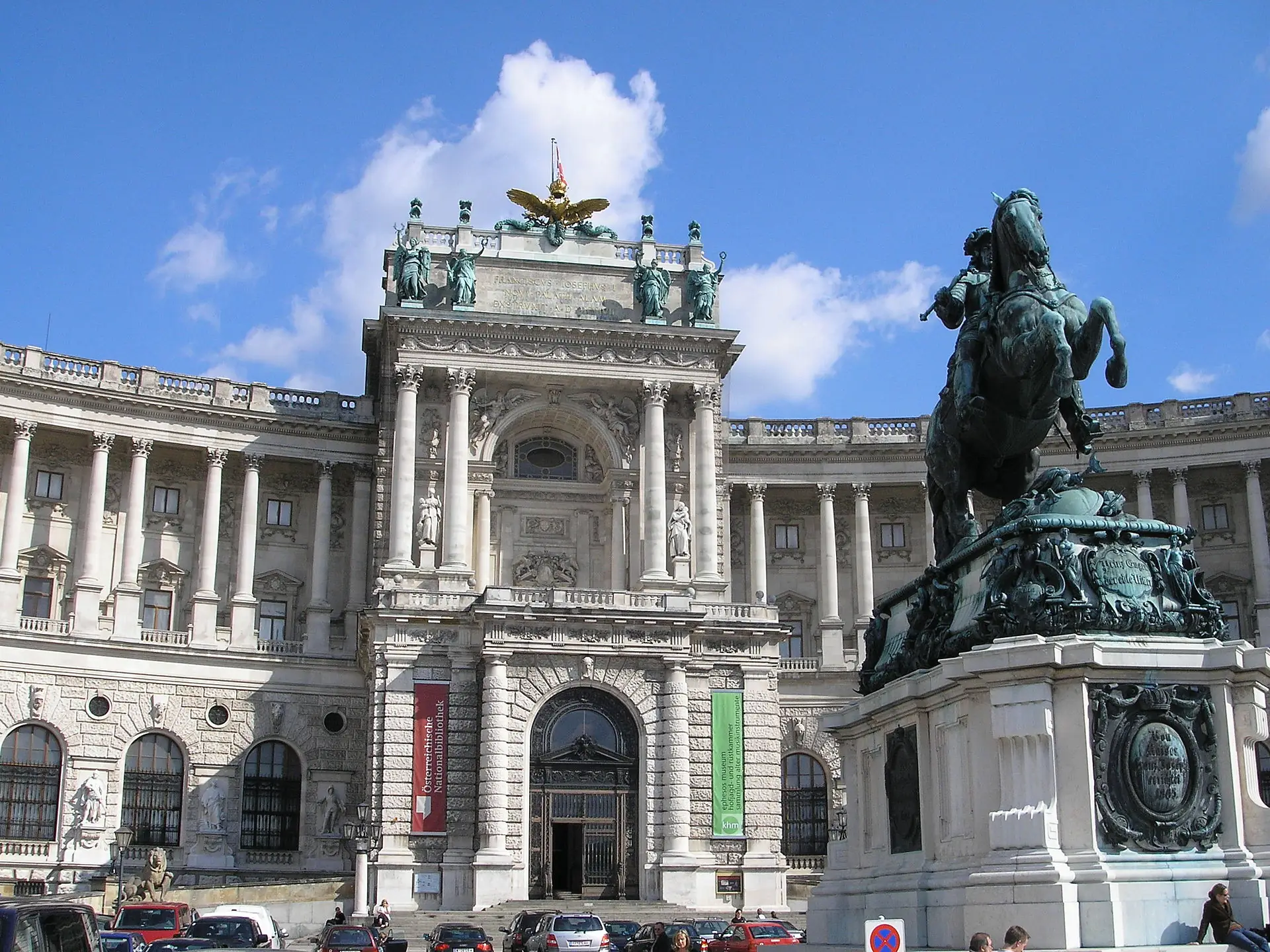
The Austrian National Library, located in the Neue Burg wing of the Hofburg Palace in Vienna, is the largest library in Austria. Its most famous section, the State Hall (Prunksaal), is a masterpiece of Baroque architecture, commissioned by Emperor Charles VI and completed in 1735. The library serves as the primary repository for the nation's literary and historical heritage.
With a collection exceeding 12 million items, the institution preserves a vast array of manuscripts, incunabula, maps, papyri, and musical scores. The State Hall itself features a magnificent frescoed dome by Daniel Gran and houses approximately 200,000 volumes, serving both as a functional research facility and a significant historical monument.
Key Facts
- Materials
- Marble, Stucco, Wood, Gold leaf
- Civilization
- Austrian Empire
- Accessibility
- Wheelchair accessible
- Date(s)
- 1723-1735
- Condition
- Active, well-preserved
- Original Function
- Imperial Court Library
- Key Figures
- Emperor Charles VI, Johann Bernhard Fischer von Erlach, Daniel Gran
Imperial Origins
14th-17th centuryThe library's roots trace back to the medieval Habsburg court library, which was significantly expanded by various emperors, most notably Maximilian I, who acquired numerous rare manuscripts and books.
Baroque Expansion
1723-1735Emperor Charles VI commissioned the construction of the current State Hall to house the growing imperial collection. Designed by Johann Bernhard Fischer von Erlach and completed by his son Joseph Emanuel, it remains one of the most significant secular Baroque interiors in Europe.
Modernization and Growth
19th-20th centuryFollowing the fall of the monarchy in 1918, the institution was renamed the Austrian National Library. It continued to expand its collections, incorporating significant archives and specialized libraries throughout the 20th century.
Cultural Significance
The Austrian National Library is a cornerstone of Austrian cultural identity, representing the intellectual legacy of the Habsburg dynasty. It functions as a bridge between the imperial past and modern academic research, maintaining the 'Memory of Austria' through its extensive preservation programs.
The State Hall is widely recognized as a symbol of Baroque splendor, influencing architectural design and library aesthetics for centuries. It remains a focal point for cultural tourism in Vienna and a testament to the importance of the written word in European history.
Interpretive Notes
Scholarly debates and areas of uncertainty
Debates often center on the ethics of provenance regarding collections acquired during the imperial era and the challenges of digitizing millions of fragile, historical documents while maintaining public access to the physical originals.
Visiting Information
Entry Rules
The State Hall is open to the public for a fee. Visitors must follow standard museum conduct; food and drink are prohibited in the library halls.
Best Times to Visit
Weekday mornings are generally quieter. The library is particularly popular during the winter months when indoor cultural activities are preferred.
Photography
Non-commercial photography is permitted without flash or tripods. Professional photography requires prior authorization.
Preservation Notes
Strict climate control is maintained to protect the ancient parchment and paper collections. Visitors are requested not to touch the books or the historical furniture.
Nearby POIs
11 shownSources & Further Reading
- [1]
- [2]Baroque Architecture in Central Europe — John Stathatos. Yale University Press (2012)
Key Facts
- Materials
- Marble, Stucco, Wood, Gold leaf
- Civilization
- Austrian Empire
- Accessibility
- Wheelchair accessible
- Date(s)
- 1723-1735
- Condition
- Active, well-preserved
- Original Function
- Imperial Court Library
- Key Figures
- Emperor Charles VI, Johann Bernhard Fischer von Erlach, Daniel Gran