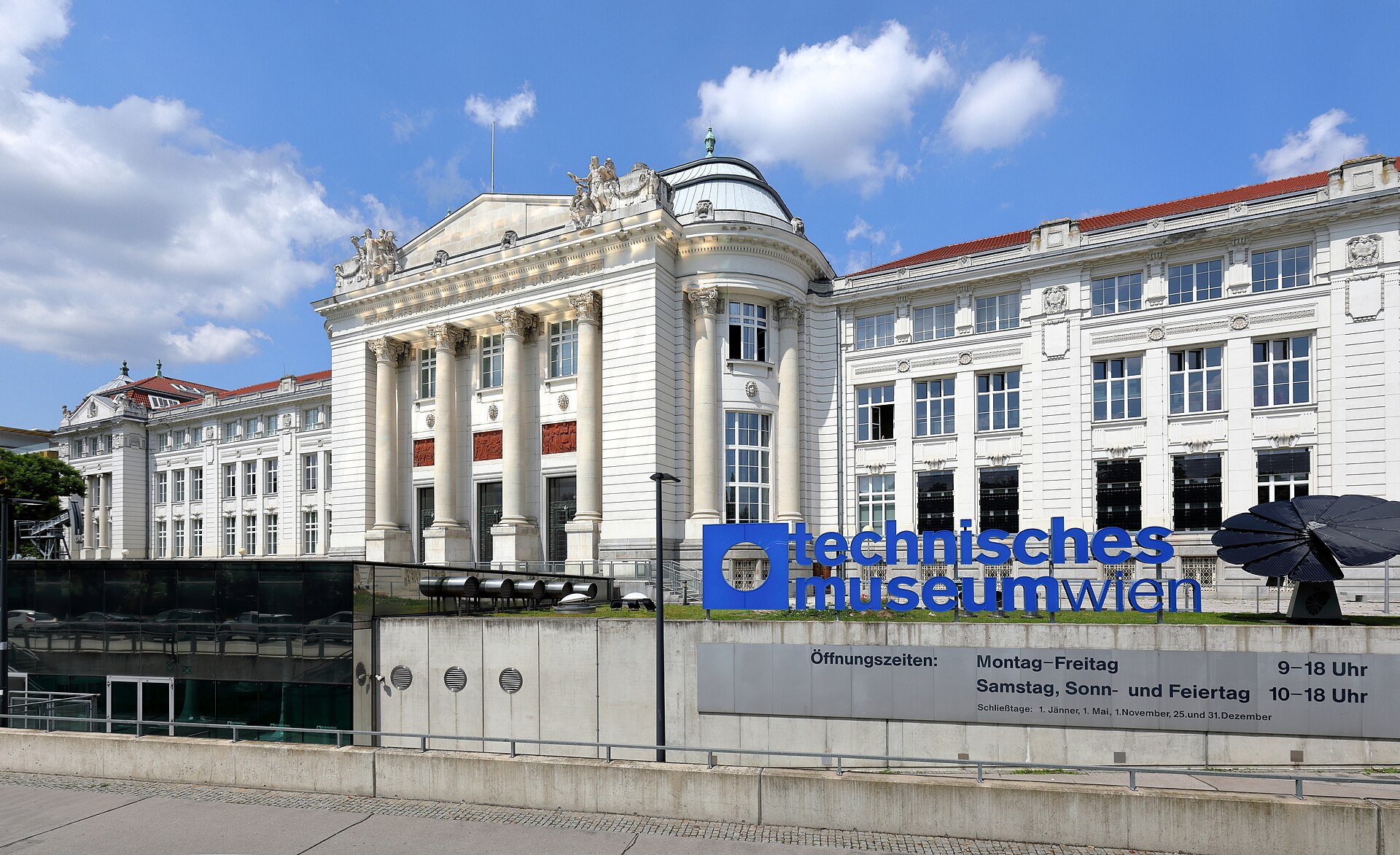
The Technisches Museum Wien (Vienna Museum of Science and Technology) is a major institution dedicated to the history of technology and its social, economic, and cultural impact. Located in the 14th district of Vienna, the museum is housed in a monumental building designed by Hans Schneider and opened in 1918 by Emperor Franz Joseph I. Its extensive collections span the evolution of industrialization, energy production, and transportation, with a particular emphasis on Austria's contributions to global scientific advancement.
The museum's permanent exhibition covers a vast array of subjects, including heavy machinery, rail transport, aviation, and information technology. It also features one of Austria's most significant collections of historical musical instruments and specialized displays on the development of household technology and media. The institution serves as both a repository of technical heritage and an interactive space for public education on contemporary scientific issues.
Key Facts
- Materials
- Brick, Steel, Glass, Stone
- Civilization
- Austrian
- Accessibility
- Fully wheelchair accessible
- Date(s)
- 1909-1918
- Condition
- Well-preserved, active museum
- Original Function
- Museum of Industry and Technology
- Key Figures
- Emperor Franz Joseph I, Hans Schneider
Founding and Architecture
1908-1918The museum was established to commemorate the 60th anniversary of the reign of Emperor Franz Joseph I. Construction began in 1909 based on the designs of architect Hans Schneider, resulting in a grand building that reflects the architectural style of the late Austro-Hungarian Empire.
Interwar and Post-War Development
1919-1990Throughout the 20th century, the museum expanded its collection significantly, incorporating artifacts from the rapidly changing industrial landscape. It survived the Second World War with relatively minor damage and continued to serve as a primary educational resource for technical history in Austria.
Modernization and Renovation
1999-presentThe museum underwent a major structural renovation and modernization project in the late 1990s, reopening in 1999 with a new glass roof and updated exhibition concepts. Today, it focuses on interactive learning and the integration of digital media into its historical displays.
Cultural Significance
The museum acts as a central pillar of Austrian technical heritage, documenting the transition from an agrarian society to an industrial powerhouse. It plays a vital role in the national discourse on innovation and the history of engineering, providing a bridge between historical industrial achievements and modern scientific challenges.
Interpretive Notes
Scholarly debates and areas of uncertainty
Discussions within the museum community often center on the balance between preserving static historical artifacts and the need for interactive, hands-on exhibits to engage younger audiences. There is also ongoing academic debate regarding the representation of colonial-era industrial history and the ethical sourcing of early technological artifacts.
Visiting Information
Entry Rules
Open daily. Tickets can be purchased online or at the entrance. No specific dress code. Large bags must be stored in lockers.
Best Times to Visit
Weekday mornings are generally quieter. The museum is popular with school groups, so visiting after 14:00 on weekdays or during weekends can offer a different experience.
Photography
Personal photography is permitted for non-commercial use. Flash and tripods are generally prohibited to protect sensitive artifacts.
Preservation Notes
Visitors are requested not to touch exhibits unless explicitly marked as interactive. Please follow all signage regarding restricted areas.
Nearby POIs
11 shownSources & Further Reading
- [1]Technisches Museum Wien: Geschichte und Architektur — Peter Donhauser. Technisches Museum Wien Publications (2018)View
- [2]Industrial Heritage in Austria — Wolfgang Kos. Vienna Historical Society (2015)
Key Facts
- Materials
- Brick, Steel, Glass, Stone
- Civilization
- Austrian
- Accessibility
- Fully wheelchair accessible
- Date(s)
- 1909-1918
- Condition
- Well-preserved, active museum
- Original Function
- Museum of Industry and Technology
- Key Figures
- Emperor Franz Joseph I, Hans Schneider