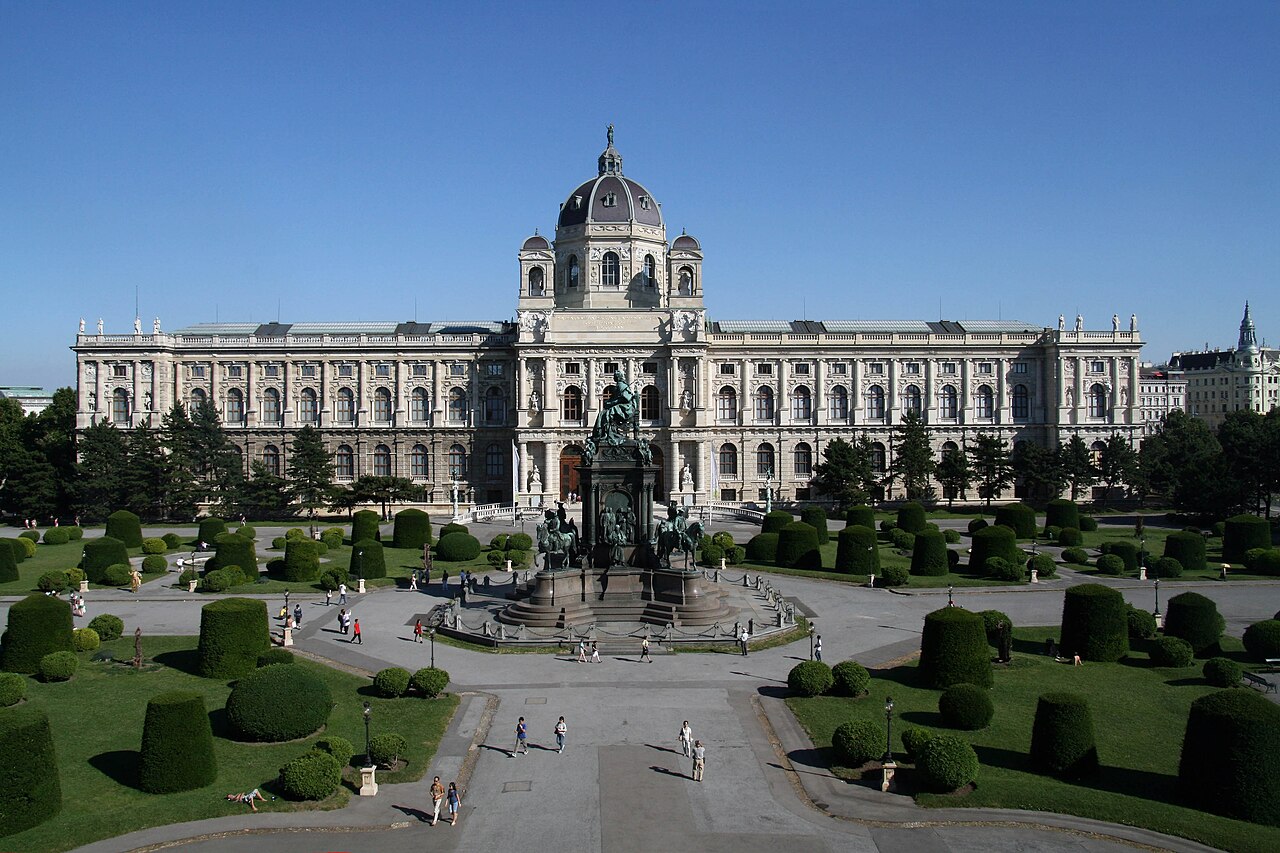
The Kunsthistorisches Museum in Vienna is the largest art museum in Austria and one of the most significant in the world. It was commissioned by Emperor Franz Joseph I to house the extensive and diverse collections of the House of Habsburg, which had been accumulated over centuries by various monarchs and archdukes.
The building itself is a masterpiece of Historicist architecture, designed by Gottfried Semper and Karl von Hasenauer. Opened in 1891, the museum features a grand staircase adorned with frescoes by Gustav Klimt and his collaborators, serving as a monumental setting for its vast holdings of European painting, sculpture, and decorative arts.
Key Facts
- Materials
- Sandstone, Marble, Stucco
- Civilization
- Austro-Hungarian
- Accessibility
- Fully wheelchair accessible
- Date(s)
- 1871-1891
- Condition
- Active museum
- Original Function
- Imperial art gallery
- Key Figures
- Emperor Franz Joseph I, Gottfried Semper, Karl von Hasenauer, Gustav Klimt
Imperial Origins
16th-18th CenturyThe collection originated from the private holdings of the Habsburg dynasty, including the cabinets of curiosities of Archduke Ferdinand II and the extensive acquisitions of Emperor Rudolf II. These collections were initially housed in various imperial residences before being consolidated.
Construction of the Museum
1871-1891Following the demolition of the Vienna city walls, the Ringstraße project provided space for new cultural institutions. Architects Gottfried Semper and Karl von Hasenauer were commissioned to build a museum that would reflect the imperial grandeur of the Austro-Hungarian Empire.
Modern Era
20th Century-PresentAfter the fall of the monarchy in 1918, the museum transitioned from an imperial institution to a state-run entity. It survived the turmoil of the World Wars and has since undergone extensive modernization, including the integration of the Imperial Treasury and the Ephesos Museum.
Cultural Significance
The museum serves as a primary repository of European cultural history, reflecting the global reach and artistic patronage of the Habsburg dynasty. It is central to Vienna's identity as a cultural capital, preserving works by masters such as Bruegel, Raphael, and Vermeer.
Beyond its role as a gallery, the building is a landmark of the Ringstraße era, symbolizing the late 19th-century effort to codify and display imperial history to the public. It remains a focal point for international art historical research and tourism.
Interpretive Notes
Scholarly debates and areas of uncertainty
Debates often center on the provenance of specific pieces acquired during the imperial period, particularly regarding the ethics of historical collection practices. Additionally, the role of the museum in representing the 'Habsburg Myth' versus the complex political realities of the former empire remains a subject of academic discourse.
Visiting Information
Entry Rules
Open Tuesday to Sunday. Tickets can be purchased online or at the entrance. Large bags must be stored in lockers. Photography is permitted for private use without flash or tripods.
Best Times to Visit
Weekday mornings are generally quieter. The museum is particularly busy during the winter holiday season and summer tourist months.
Photography
No flash, tripods, or selfie sticks allowed. Commercial photography requires prior written permission.
Preservation Notes
Maintain a respectful distance from all artworks. Climate control is strictly regulated; please do not touch surfaces or display cases.
Nearby POIs
11 shownSources & Further Reading
- [1]The Kunsthistorisches Museum Vienna: The Imperial and Royal Collections — Sabine Haag. Scala Publishers (2012)View
- [2]Vienna's Ringstrasse: Architecture and Urbanism — Renate Wagner-Rieger. Böhlau Verlag (1970)
Key Facts
- Materials
- Sandstone, Marble, Stucco
- Civilization
- Austro-Hungarian
- Accessibility
- Fully wheelchair accessible
- Date(s)
- 1871-1891
- Condition
- Active museum
- Original Function
- Imperial art gallery
- Key Figures
- Emperor Franz Joseph I, Gottfried Semper, Karl von Hasenauer, Gustav Klimt