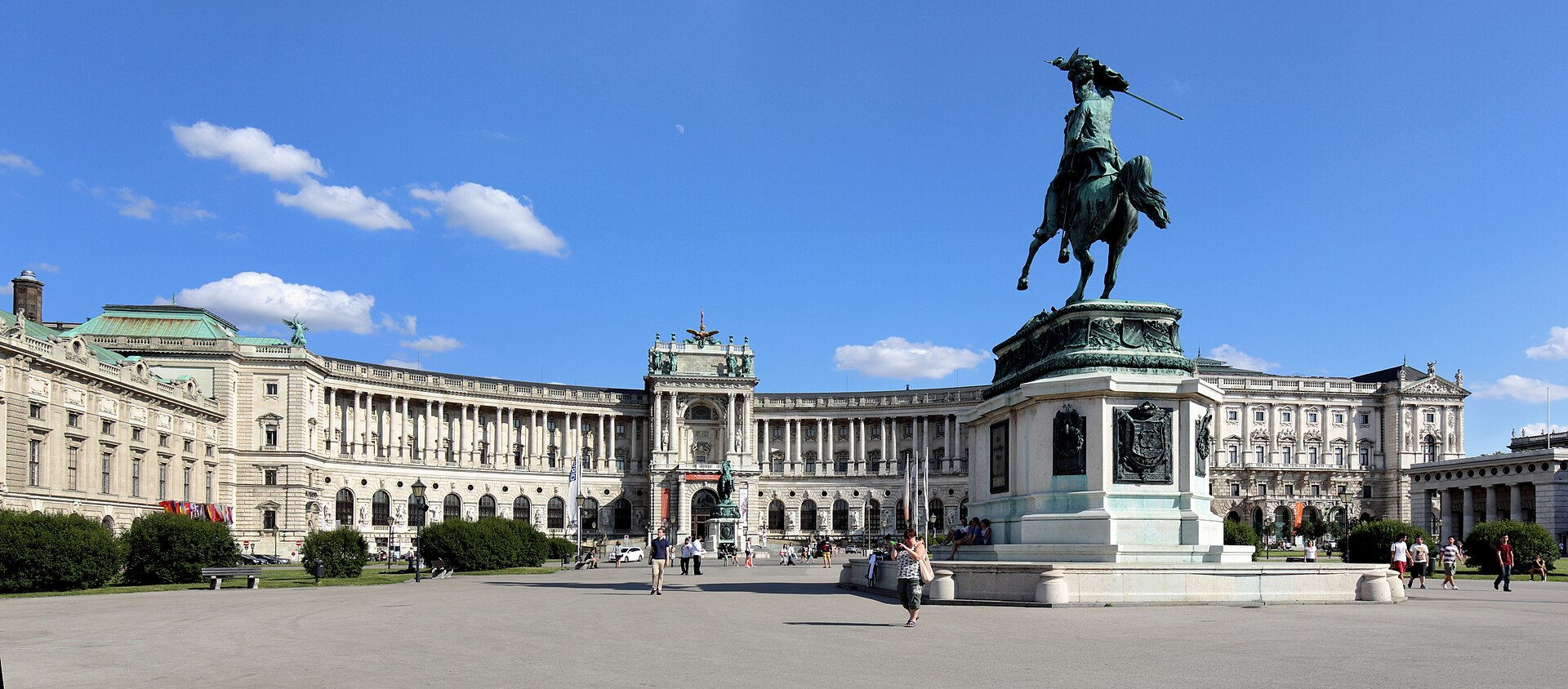
The Hofburg is a sprawling palace complex in the center of Vienna that served as the principal winter residence of the Habsburg dynasty for over six centuries. Its architecture reflects the evolving power and aesthetic preferences of the Holy Roman Emperors and later the Austrian monarchs, resulting in a diverse collection of wings, courtyards, and gardens constructed between the 13th and 20th centuries.
Today, the complex functions as the official seat of the President of Austria and houses numerous cultural institutions, including the Austrian National Library, the Spanish Riding School, and several museums dedicated to imperial history. It remains one of the most significant historical sites in Central Europe, documenting the political and cultural trajectory of the Habsburg Empire.
Key Facts
- Materials
- Stone, Brick, Stucco, Marble
- Civilization
- Austrian / Habsburg Empire
- Accessibility
- Partially accessible; some historic areas have limited elevator access
- Date(s)
- 1279 - 1913
- Condition
- Well-preserved, active government and cultural site
- Original Function
- Imperial residence and administrative center
- Key Figures
- Maria Theresa, Franz Joseph I, Empress Elisabeth
Medieval Origins
13th centuryThe earliest parts of the Hofburg date back to the 13th century, beginning as a medieval fortress. The Schweizerhof (Swiss Courtyard) and the Gothic chapel remain as the oldest surviving sections of the original structure.
Imperial Expansion
16th - 18th centuryAs the Habsburgs consolidated power, the palace was expanded significantly. The Renaissance-style Amalienburg and the Baroque Leopoldine Wing were added, reflecting the growing prestige of the dynasty as they transformed the fortress into a grand imperial residence.
The Baroque and Neoclassical Era
18th - 19th centuryThe complex saw major additions including the Imperial Library (Prunksaal) and the Winter Riding School. The 19th century brought the construction of the Neue Burg, a massive Neoclassical wing intended to be part of a larger 'Imperial Forum' that remained unfinished.
Modern Transformation
20th century - presentFollowing the collapse of the Austro-Hungarian Empire in 1918, the Hofburg transitioned from an imperial residence to a public space. It now serves as the official workplace of the Austrian President and a major hub for international tourism and research.
Cultural Significance
The Hofburg is the physical embodiment of the Habsburg legacy, which shaped the political and social landscape of Central Europe for centuries. It serves as a symbol of Austrian national identity, bridging the gap between the imperial past and the modern democratic state.
Beyond its political role, the palace is a repository of European high culture. The presence of the Spanish Riding School and the extensive imperial collections within the complex ensures that it remains a focal point for the preservation of classical equestrian arts, music, and historical scholarship.
Interpretive Notes
Scholarly debates and areas of uncertainty
There is ongoing academic discussion regarding the 'Imperial Forum' project of the late 19th century. Scholars debate whether the unfinished nature of the Neue Burg was primarily due to financial constraints or a fundamental shift in architectural ideology as the empire faced increasing political instability.
Visiting Information
Entry Rules
The complex is open daily. Individual museums and institutions within the Hofburg have separate ticket requirements and operating hours. Security screening is mandatory for entry into the Presidential Chancellery area.
Best Times to Visit
Weekdays during the shoulder seasons (April-May or September-October) to avoid peak summer tourist crowds. Early morning visits are recommended for the Sisi Museum and Imperial Apartments.
Photography
Photography is permitted in most public courtyards and exterior areas. Interior photography rules vary by specific museum; flash and tripods are generally prohibited inside all exhibition spaces.
Preservation Notes
The site is subject to constant conservation efforts due to the age of the various wings. Visitors are requested to respect all barriers and refrain from touching historic tapestries or furniture.
Nearby POIs
11 shownSources & Further Reading
- [1]The Hofburg: A History of the Imperial Palace — Richard Kurdiovsky. Brandstätter Verlag (2008)
- [2]Habsburg Splendor: The Art of the Austrian Court — Anne-Marie Springer. Kunsthistorisches Museum (2015)
Key Facts
- Materials
- Stone, Brick, Stucco, Marble
- Civilization
- Austrian / Habsburg Empire
- Accessibility
- Partially accessible; some historic areas have limited elevator access
- Date(s)
- 1279 - 1913
- Condition
- Well-preserved, active government and cultural site
- Original Function
- Imperial residence and administrative center
- Key Figures
- Maria Theresa, Franz Joseph I, Empress Elisabeth