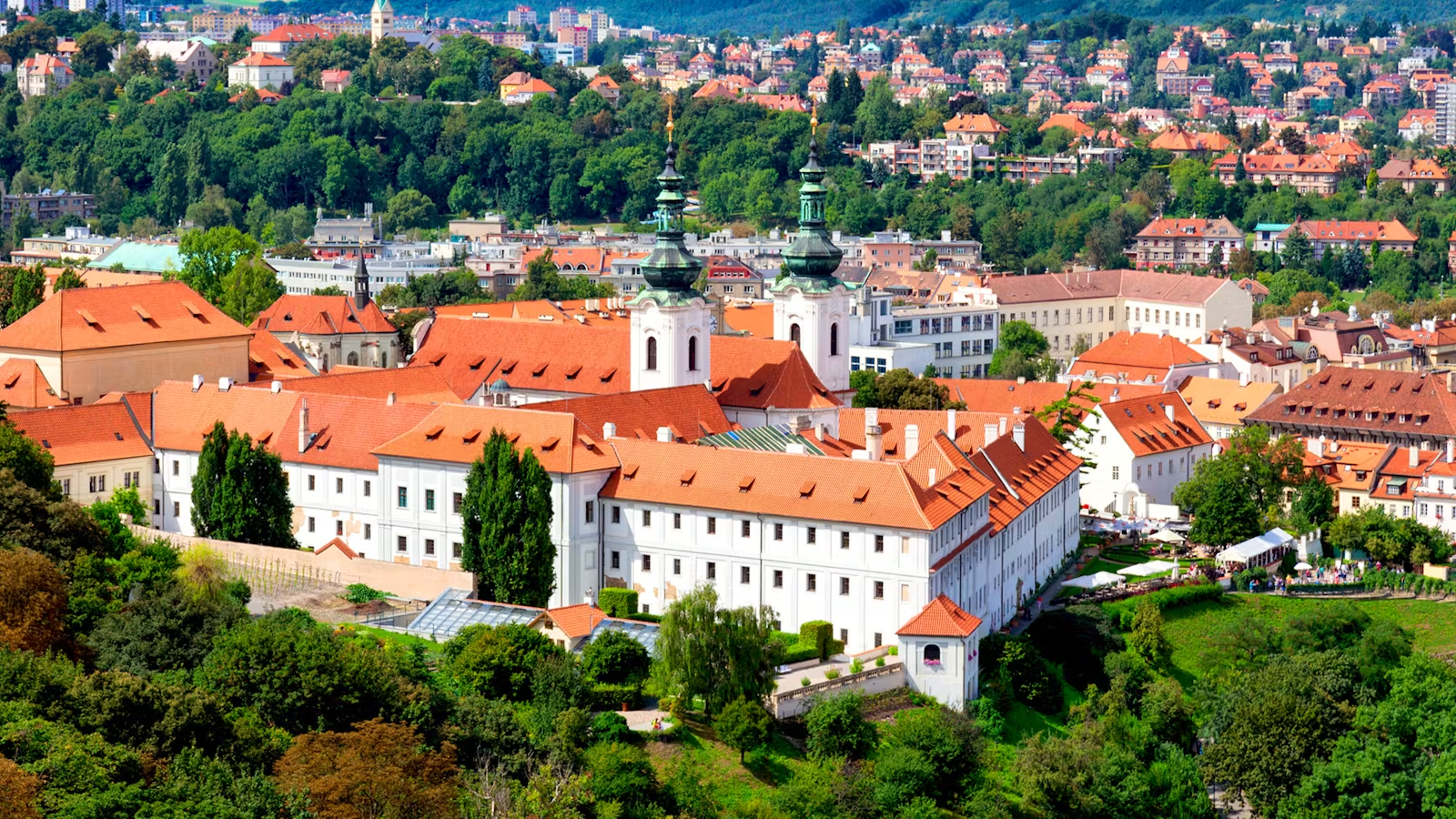
Strahov Monastery is a Premonstratensian abbey founded in 1143 on a hill overlooking Prague. Established under the patronage of Prince Vladislaus II and Bishop Jindřich Zdík, it became one of the most important religious and intellectual centers in Bohemia. The monastery complex includes the Basilica of the Assumption of the Virgin Mary, convent buildings, gardens, and the renowned Strahov Library. Although damaged by fires and wartime conflict over the centuries, the monastery was repeatedly rebuilt and expanded, particularly in the Baroque period. Today it remains an active monastic community while also functioning as a major cultural and historical site open to visitors.
Key Facts
- Materials
- Stone masonry, Brick, Stucco, Timber roofing
- Civilization
- Kingdom of Bohemia
- Accessibility
- Partial wheelchair access; historic interiors include stairs
- Date(s)
- Founded 1143 CE
- Condition
- Active monastery with preserved Baroque interiors
- Original Function
- Premonstratensian monastery
- Key Figures
- Vladislaus II of Bohemia, Jindřich Zdík
Foundation & Early Romanesque Phase
12th centuryStrahov Monastery was founded in 1143 for the Premonstratensian order, also known as the Norbertines. The initial Romanesque structures established the monastery as a religious and scholarly institution closely tied to the ruling Přemyslid dynasty.
Gothic Expansion
13th–14th centuriesAs Prague grew in political and ecclesiastical importance, the monastery expanded. Gothic modifications and rebuilding followed periods of fire and instability, strengthening both its architectural presence and its intellectual role within medieval Bohemia.
Hussite Wars & Reconstruction
15th centuryThe monastery suffered significant damage during the Hussite Wars in the early 15th century, when monastic institutions were targeted. Many buildings were destroyed, and collections were dispersed. Subsequent reconstruction restored the religious community and its scholarly activities.
Baroque Transformation & Library
17th–18th centuriesMajor Baroque renovations reshaped the monastery after the Thirty Years’ War. The Theological Hall (1670s) and the Philosophical Hall (late 18th century) were constructed, creating one of Central Europe’s most important historic library interiors. The richly decorated ceilings and extensive manuscript collections reflect the intellectual ambitions of the order.
Modern Era
19th century–presentThe monastery survived the reforms of Emperor Joseph II and later political upheavals, including the Nazi occupation and Communist rule, when monastic communities were suppressed. After 1989, religious life was fully restored. Today the abbey functions both as an active monastery and a cultural institution welcoming visitors.
Cultural Significance
Strahov Monastery has long served as both a spiritual center and a center of scholarship in the Czech lands. Its library, housing medieval manuscripts, early printed books, and scientific works, reflects the Premonstratensian order’s emphasis on education and theological study. Perched above Prague near Prague Castle, the monastery forms part of the historic skyline and monastic landscape that shaped the city’s religious identity. It has witnessed political and confessional conflicts, reforms, and state transformations, remaining a continuous religious presence across nearly nine centuries.
Interpretive Notes
Scholarly debates and areas of uncertainty
Scholars continue to examine the extent of the monastery’s medieval manuscript losses during the Hussite Wars, as documentation from the period is incomplete. Reconstruction of its early library holdings relies partly on later inventories and secondary references. There is also academic discussion regarding the interpretation of the Baroque fresco programs in the Philosophical Hall, particularly their allegorical representation of knowledge and Enlightenment-era intellectual currents within a monastic setting.
Visiting Information
Entry Rules
Open daily; ticketed entry required for the Strahov Library and selected exhibition areas. The basilica may have restricted access during liturgical services. Combination tickets available for galleries and special exhibitions.
Best Times to Visit
Morning hours offer quieter access to the library halls. Midday can coincide with tour groups arriving from Prague Castle. Visiting alongside nearby historic sites allows efficient route planning through the Hradčany district.
Photography
Photography inside the library halls is restricted and typically requires a special photography ticket. Flash and tripods prohibited. Drone use not permitted.
Preservation Notes
Visitors must remain behind barriers in the historic library halls. Do not touch books, frescoes, or furnishings. Some areas remain part of an active monastic enclosure and are not accessible to the public.
Nearby POIs
11 shownSources & Further Reading
- [1]
- [2]The Premonstratensian Order in Central Europe — Norbert Backmund. Premonstratensian Historical Institute (1982)
- [3]Baroque Architecture in Bohemia — Pavel Vlček. Karolinum Press (2009)
Key Facts
- Materials
- Stone masonry, Brick, Stucco, Timber roofing
- Civilization
- Kingdom of Bohemia
- Accessibility
- Partial wheelchair access; historic interiors include stairs
- Date(s)
- Founded 1143 CE
- Condition
- Active monastery with preserved Baroque interiors
- Original Function
- Premonstratensian monastery
- Key Figures
- Vladislaus II of Bohemia, Jindřich Zdík