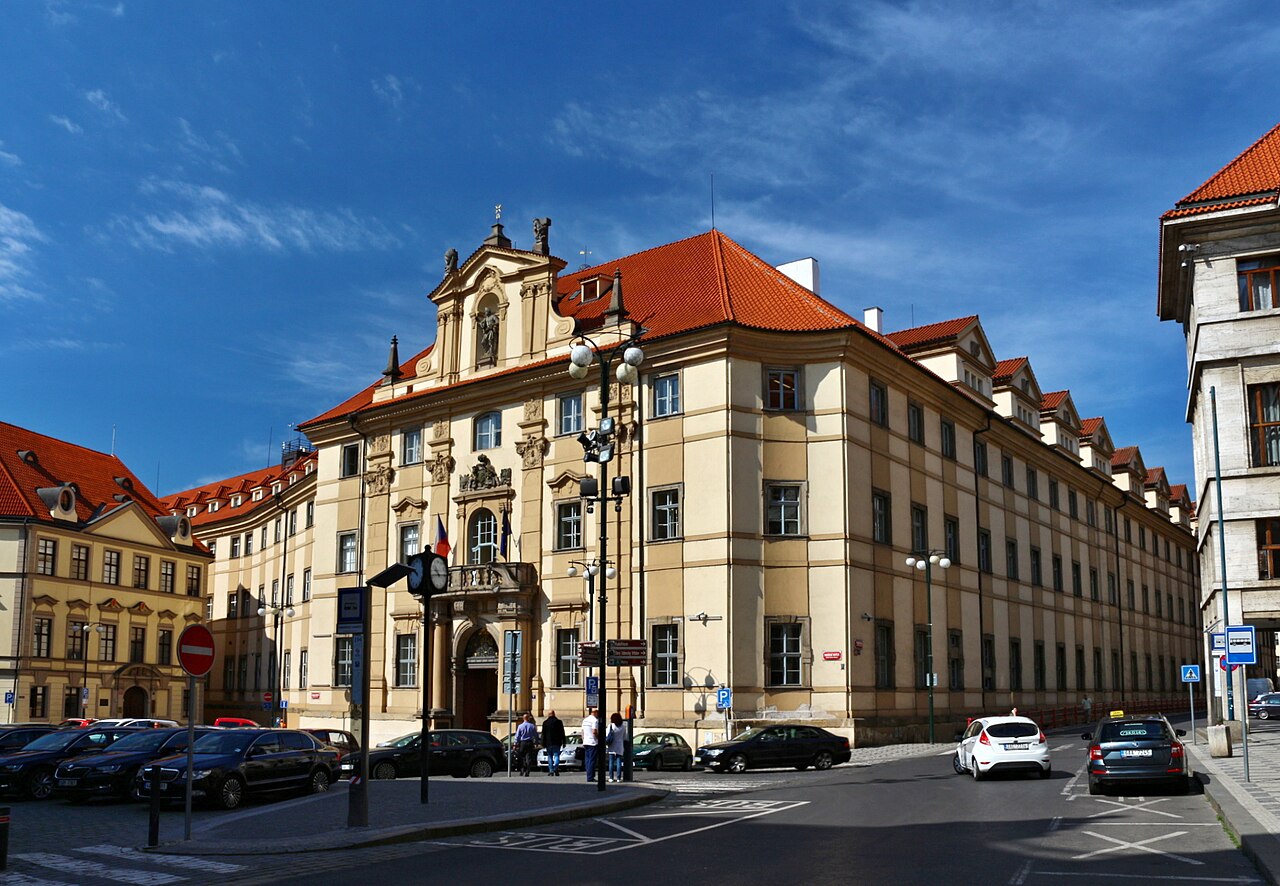
The Klementinum is a historic complex of buildings in Prague’s Old Town, originally established in the mid-16th century as a Jesuit college. Built on the site of the former Dominican monastery of St. Clement, the complex expanded over two centuries into one of the largest architectural ensembles in Europe. It functioned as a major center of education, scholarship, and scientific research within the Kingdom of Bohemia. After the suppression of the Jesuit order in 1773, the complex was transferred to state control and later became associated with the National Library. Today the Klementinum houses the National Library of the Czech Republic and is known for its Baroque Library Hall and Astronomical Tower, both open to visitors.
Key Facts
- Materials
- Stone masonry, Brick, Stucco, Tile roofing
- Civilization
- Kingdom of Bohemia / Habsburg Monarchy
- Accessibility
- Limited accessibility; historic staircases and tower access involve steps
- Date(s)
- Mid-16th century–18th century
- Condition
- Preserved historic complex housing the National Library
- Original Function
- Jesuit college and university complex
- Key Figures
- Jesuit Order, Emperor Ferdinand I
Jesuit Foundation
1556–17th centuryThe Jesuits were invited to Prague in 1556 and soon established a college at the site of the former Dominican monastery of St. Clement. With strong support from the Habsburg rulers, the institution expanded rapidly, becoming a central hub for Counter-Reformation education and scholarship in Bohemia.
Baroque Expansion
17th–18th centuriesThroughout the 17th and early 18th centuries, the Klementinum was rebuilt and expanded in the Baroque style. Churches, lecture halls, courtyards, and the Astronomical Tower were added. The Baroque Library Hall, completed in 1722, became one of the most architecturally significant interiors in Prague.
Suppression of the Jesuits & State Control
1773–19th centuryFollowing Pope Clement XIV’s suppression of the Jesuit order in 1773, the complex was secularized. It was incorporated into state educational and library institutions, eventually becoming closely associated with what would become the National Library of the Czech Republic.
Modern Role
20th century–presentDuring the 20th century, the Klementinum remained a central scholarly institution despite political upheavals. Today it houses the National Library and continues to function as a major research center. Selected historic interiors, including the Library Hall and Astronomical Tower, are accessible through guided tours.
Cultural Significance
The Klementinum reflects the central role of the Jesuit order in shaping education, theology, and scientific inquiry in early modern Bohemia. As a major Counter-Reformation institution, it contributed to the re-Catholicization of the region following the Battle of White Mountain in 1620. In its later role as the seat of the National Library, the complex became associated with Czech intellectual and literary heritage. The Baroque Library Hall, with its fresco program celebrating knowledge and learning, symbolizes the continuity of scholarship from the early modern period to the present.
Interpretive Notes
Scholarly debates and areas of uncertainty
Scholars debate the degree to which Jesuit educational practices at the Klementinum shaped local intellectual culture versus reinforcing centralized Habsburg religious policy. While the college promoted scientific research, it also functioned within a confessional framework tied to Counter-Reformation objectives. There is also discussion concerning restoration approaches in the Library Hall, particularly how to preserve delicate frescoes and historic volumes while accommodating modern conservation standards.
Visiting Information
Entry Rules
Open daily for guided tours of the Library Hall and Astronomical Tower; ticketed entry required. Access to reading rooms is limited to registered researchers. Portions of the complex remain administrative and are not open to the public.
Best Times to Visit
Morning and late afternoon tours typically have fewer participants. Climbing the Astronomical Tower involves numerous steps; avoid peak midday hours during summer due to heat.
Photography
Photography permitted in designated areas; flash and tripods prohibited. Some interiors may restrict photography during guided tours. Drone use not permitted.
Preservation Notes
Visitors must remain with guided groups in restricted areas. Do not touch books, globes, or frescoed surfaces. The Astronomical Tower staircase is narrow; follow posted safety instructions.
Nearby POIs
11 shownSources & Further Reading
- [1]
- [2]The Jesuits and the Czech Lands — Thomas Worcester. Cambridge University Press (2017)
- [3]Baroque Architecture in Central Europe — Václav Ledvinka. Karolinum Press (2012)
Key Facts
- Materials
- Stone masonry, Brick, Stucco, Tile roofing
- Civilization
- Kingdom of Bohemia / Habsburg Monarchy
- Accessibility
- Limited accessibility; historic staircases and tower access involve steps
- Date(s)
- Mid-16th century–18th century
- Condition
- Preserved historic complex housing the National Library
- Original Function
- Jesuit college and university complex
- Key Figures
- Jesuit Order, Emperor Ferdinand I