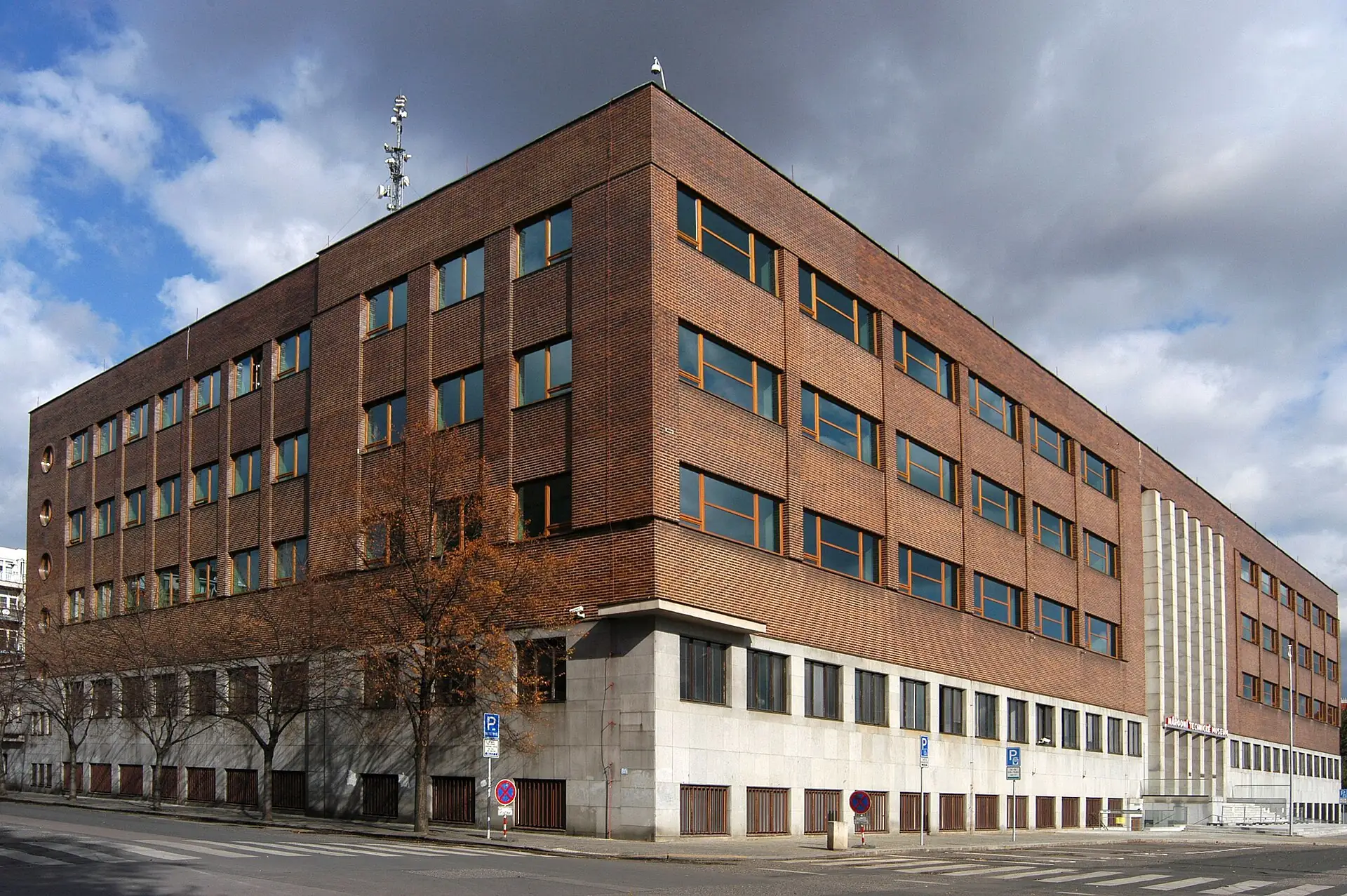
The Prague National Technical Museum (Národní technické muzeum) is the largest institution in the Czech Republic dedicated to the history of science, technology, and industry. Founded in 1908, the museum documents the technological development of the Czech lands and Central Europe, with collections spanning transportation, engineering, architecture, photography, astronomy, and applied sciences. The main functionalist building in the Letná district was constructed between 1938 and 1941 according to designs by architect Milan Babuška. After periods of closure and renovation in the late 20th and early 21st centuries, the museum reopened in 2011 with expanded permanent exhibitions and modernized facilities.
Key Facts
- Materials
- Reinforced concrete, Steel, Glass, Stone cladding
- Civilization
- Kingdom of Bohemia / Czechoslovakia
- Accessibility
- Wheelchair accessible; elevators and step-free access available
- Date(s)
- 1938–1941 (main building); institution founded 1908
- Condition
- Fully operational museum with restored and expanded exhibitions
- Original Function
- Museum of science and technology
- Key Figures
- Milan Babuška
Foundation & Early Vision
1908–1930sThe museum was founded in 1908 amid rapid industrialization in the Czech lands, then part of the Austro-Hungarian Empire. Its mission was to preserve industrial heritage and promote scientific knowledge. Early collections focused on machinery, transportation, and engineering achievements reflecting the region’s strong manufacturing base.
Construction of the Letná Building
1938–1941The main museum building in Letná was constructed on the eve of the Second World War. Designed in a functionalist style, it incorporated large exhibition halls capable of displaying aircraft, locomotives, and automobiles. The central Transport Hall became one of its defining architectural features.
War, Occupation & Communist Period
1939–1989During the Nazi occupation and later under Communist rule, the museum continued to operate but within changing political contexts. Exhibitions were occasionally reframed to align with state ideology, though core collections documenting technical innovation remained intact.
Renovation & Modern Expansion
1990s–presentFollowing the political transformation of 1989, the museum underwent modernization and structural renovation. A major reconstruction from 2003 to 2011 upgraded infrastructure, restored exhibition spaces, and expanded thematic galleries. Today it serves both as a public museum and as a research institution preserving technical heritage.
Cultural Significance
The Prague National Technical Museum reflects the central role of industry and engineering in Czech national development, particularly during the late 19th and early 20th centuries when the region became one of the most industrialized parts of the Habsburg Empire. Exhibits emphasize innovation in transportation, mechanical engineering, and applied sciences. Its collections contribute to public understanding of how technological progress shaped social and economic life. By preserving industrial artifacts and scientific instruments, the museum situates Czech technical achievements within broader European and global contexts.
Interpretive Notes
Scholarly debates and areas of uncertainty
Scholarly discussion often addresses how technical museums interpret industrial heritage in post-socialist societies. In the Czech context, historians debate how exhibitions from the Communist period framed technological progress within ideological narratives and how these interpretations have been revised since 1989. There is also ongoing curatorial discussion about balancing large-scale artifact display with interactive, digital interpretation methods in contemporary museum practice.
Visiting Information
Entry Rules
Open daily except Monday; ticketed entry required. Reduced admission for students, seniors, and children. Combination tickets available for permanent and temporary exhibitions.
Best Times to Visit
Weekday mornings generally offer lower visitor numbers. The large Transport Hall is busiest on weekends and during school holidays.
Photography
Personal photography permitted without flash or tripods. Commercial filming and drone use require prior authorization.
Preservation Notes
Do not climb on vehicles or machinery. Follow marked paths and staff instructions. Some large exhibits are suspended overhead; remain within designated viewing zones.
Nearby POIs
11 shownSources & Further Reading
- [1]
- [2]Industrial Heritage in the Czech Lands — Zdeněk Hojda. Karolinum Press (2010)
- [3]Technology and Culture in Central Europe — David Crowley. Bloomsbury Academic (2013)
Key Facts
- Materials
- Reinforced concrete, Steel, Glass, Stone cladding
- Civilization
- Kingdom of Bohemia / Czechoslovakia
- Accessibility
- Wheelchair accessible; elevators and step-free access available
- Date(s)
- 1938–1941 (main building); institution founded 1908
- Condition
- Fully operational museum with restored and expanded exhibitions
- Original Function
- Museum of science and technology
- Key Figures
- Milan Babuška