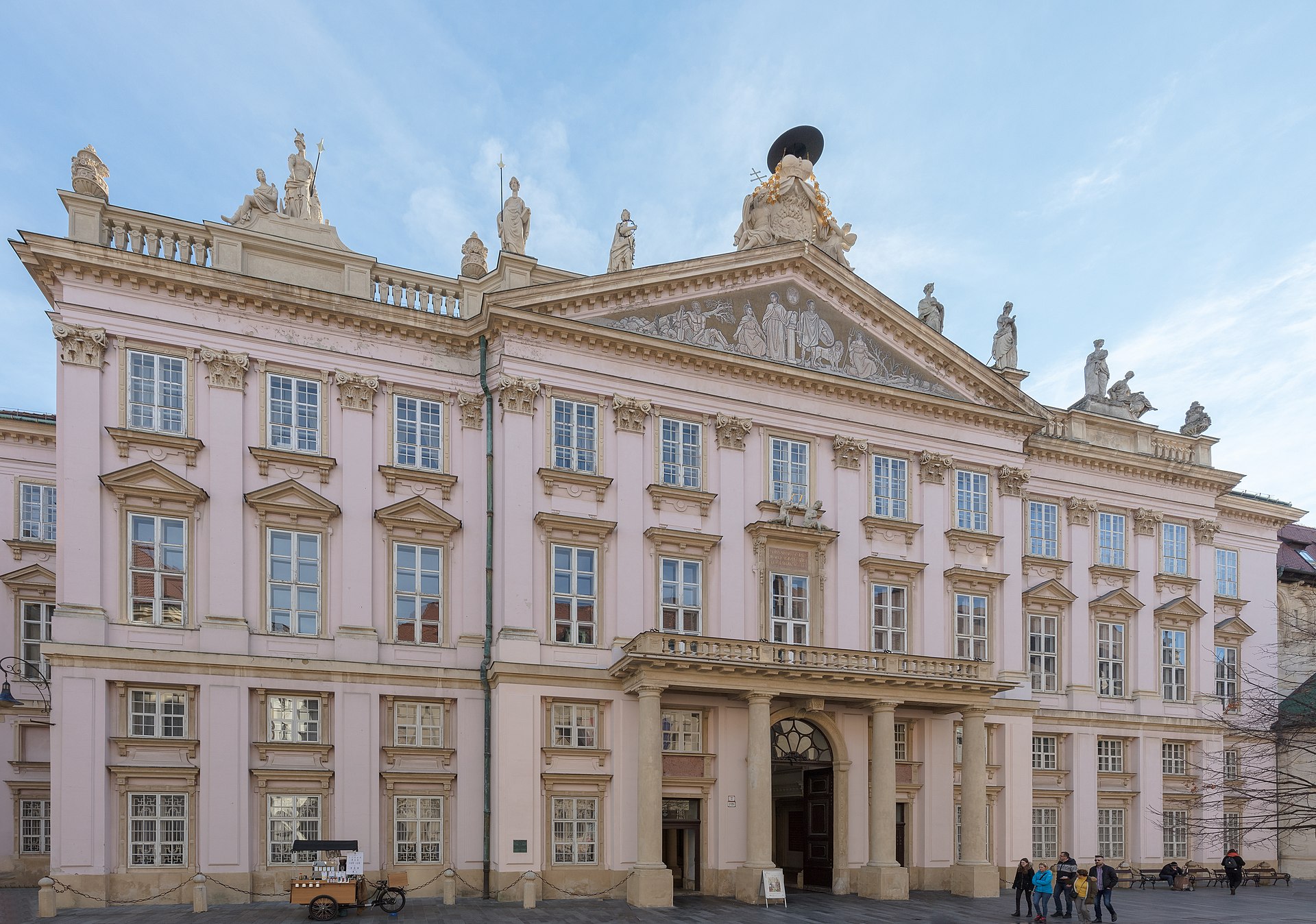
The Primacial Palace, located in the heart of Bratislava, Slovakia, was originally constructed in the late 18th century as the residence of the Archbishop of Esztergom. It served as a center of ecclesiastical power and later became the seat of civic administration. The palace underwent several reconstructions over the centuries, blending Baroque and Neoclassical architectural styles. The palace houses ornate ceremonial halls, historic frescoes, and a collection of period furnishings. Today, it is used for official state events, exhibitions, and cultural functions, while also being partially accessible to visitors for guided tours.
Key Facts
- Materials
- Stone, Brick, Stucco, Wood, Fresco plaster
- Civilization
- Austro-Hungarian
- Accessibility
- Wheelchair accessible at main entrance; guided tours available
- Date(s)
- 1778-1781 CE
- Condition
- Well-preserved, active cultural and governmental venue
- Original Function
- Archbishop’s residence
- Key Figures
- Archbishop József Batthyány, Various Slovak state officials
- Architectural Style
- Baroque with Neoclassical elements
Construction and Early Use
1778-1781 CEBuilt under the supervision of Archbishop József Batthyány, the palace was intended to serve as a grand ecclesiastical residence. The Baroque design incorporated spacious ceremonial halls, private apartments, and chapels for religious services.
19th-Century Renovations
1800sDuring the 19th century, the palace underwent Neoclassical modifications to modernize the interior and facade. These changes included updated ceremonial rooms and new decorative elements reflecting contemporary tastes.
Civic Use and Preservation
20th century - presentFollowing the dissolution of the Austro-Hungarian Empire, parts of the palace were repurposed for civic administration. Restoration efforts in the late 20th century preserved frescoes, structural integrity, and historical interiors, ensuring public access for cultural events.
Cultural Significance
The Primacial Palace has historically symbolized ecclesiastical authority and, later, civic governance in Bratislava. Its ceremonial halls were sites for political and religious gatherings, and the palace continues to host official events that reinforce its role in Slovak state identity. The building is a key cultural landmark in Bratislava, embodying the stylistic transition between Baroque opulence and Neoclassical restraint, reflecting the city’s historical evolution under Austro-Hungarian influence.
Interpretive Notes
Scholarly debates and areas of uncertainty
Scholarly attention has focused on the accuracy of restored frescoes and decorative interiors. Debate exists regarding the extent to which 19th-century Neoclassical renovations altered the original Baroque designs and whether certain ceremonial spaces reflect authentic 18th-century use.
Visiting Information
Entry Rules
Open daily, with guided tours available for visitors. Main halls are accessible for exhibitions and official events. Entry is ticketed for tours; certain ceremonial areas are only accessible during scheduled events.
Best Times to Visit
Late spring and early autumn provide the best visiting conditions, with fewer crowds and mild weather. Special cultural events and state ceremonies offer additional historical context for visitors interested in the palace’s civic role.
Photography
Photography permitted without flash inside exhibition rooms. Tripods and commercial photography require prior authorization from palace administration.
Preservation Notes
Do not touch frescoes or delicate furnishings. Stay within designated visitor areas. Restoration work may temporarily restrict access to certain rooms.
Nearby POIs
11 shownSources & Further Reading
- [1]
- [2]Baroque and Neoclassical Architecture in Bratislava — Mária Keresturiová. Slovak National Museum (2015)
- [3]The Primatial Palace in Bratislava: History and Restoration — Peter Kováč. Historical Review of Slovakia (2018)
Key Facts
- Materials
- Stone, Brick, Stucco, Wood, Fresco plaster
- Civilization
- Austro-Hungarian
- Accessibility
- Wheelchair accessible at main entrance; guided tours available
- Date(s)
- 1778-1781 CE
- Condition
- Well-preserved, active cultural and governmental venue
- Original Function
- Archbishop’s residence
- Key Figures
- Archbishop József Batthyány, Various Slovak state officials
- Architectural Style
- Baroque with Neoclassical elements