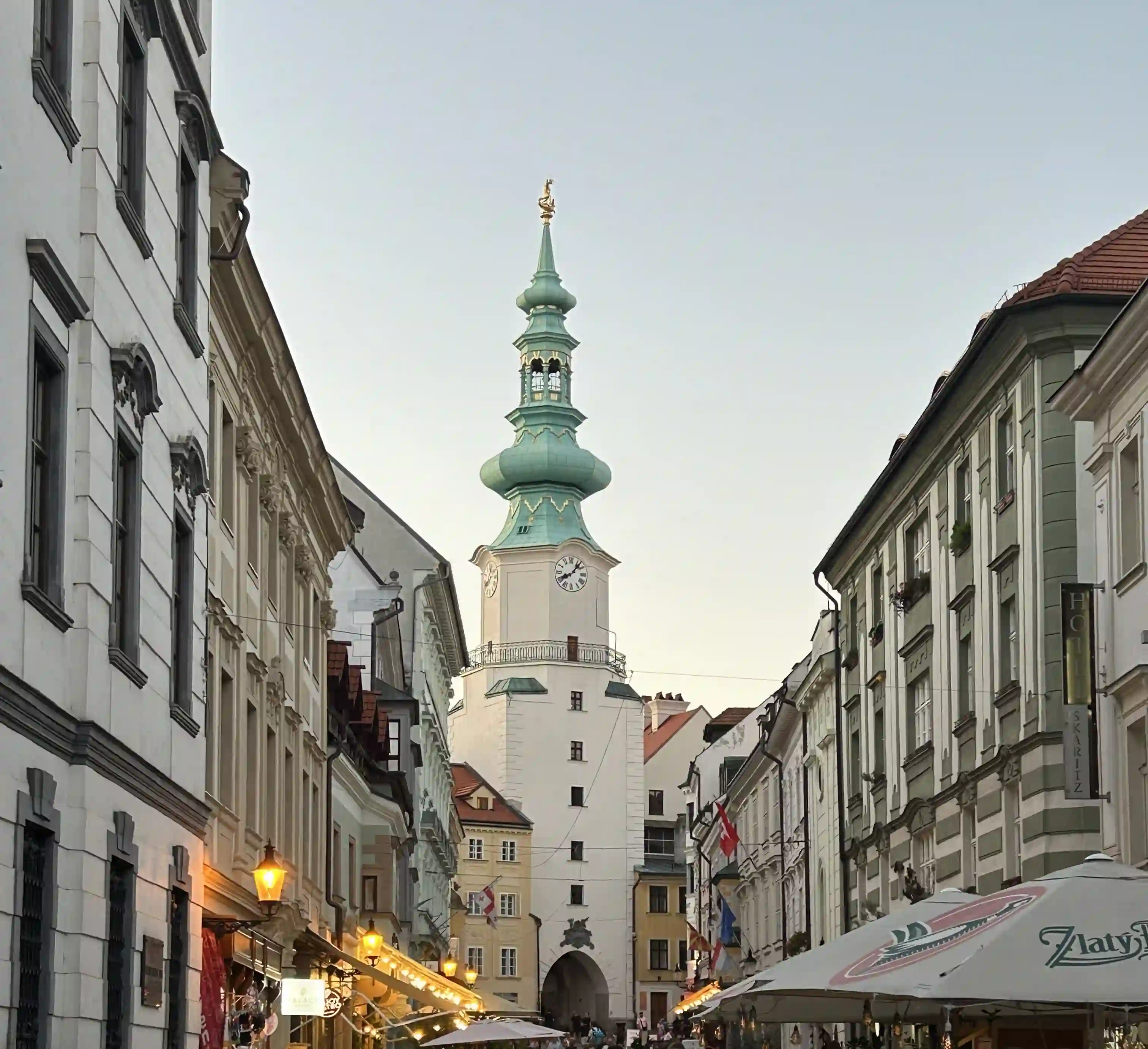
Michael's Gate is the only preserved medieval city gate of Bratislava’s fortification system, originally constructed in the 14th century as part of the town’s defensive walls. It marked the northern entrance into the walled city and was one of four main gates controlling access to the urban center. The structure played both a military and symbolic role, regulating movement and representing the authority of the town. In the 18th century, the gate underwent Baroque reconstruction, including the addition of its distinctive tower topped with a statue of St. Michael defeating a dragon. Today, it stands as a prominent historical landmark in Bratislava’s Old Town and houses a museum dedicated to the city’s fortifications and urban history.
Key Facts
- Materials
- Stone, Brick
- Civilization
- Kingdom of Hungary
- Accessibility
- Accessible at street level; tower interior has stairs
- Date(s)
- 14th century CE (Baroque modifications in 18th century)
- Condition
- Well-preserved, restored
- Original Function
- City gate and defensive fortification
- Key Figures
- St. Michael
Medieval Construction
14th centuryMichael's Gate was constructed as part of Bratislava’s medieval fortification system, serving as a key northern प्रवेश point into the city. It was one of four gates that controlled entry and exit, reinforcing the city’s defensive infrastructure during a period of regional instability.
Role in Urban Defense
15th-17th centuryThe gate functioned as a checkpoint for goods and people entering the city. Guards stationed at the gate monitored trade and collected tolls, while the surrounding walls provided protection against potential invasions.
Baroque Reconstruction
18th centuryDuring the Baroque period, the gate was significantly modified. The tower was heightened and topped with a statue of St. Michael slaying a dragon, transforming the structure from a purely defensive feature into a symbolic and architectural landmark.
Survival and Preservation
18th-20th centuryAs Bratislava expanded and its fortifications were gradually dismantled, Michael's Gate remained the only preserved city gate. It survived urban redevelopment and was later restored as a historical monument.
Modern Use
20th century - presentThe structure now houses a museum of arms and city fortifications. It continues to function as a pedestrian passage into the Old Town and is a focal point for tourism and cultural heritage in Bratislava.
Cultural Significance
Michael's Gate represents the medieval urban identity of Bratislava and its historical role as a fortified trade center within the Kingdom of Hungary. As the last surviving gate, it symbolizes the transition from a walled medieval town to a modern open city, preserving a tangible link to its defensive past. The Baroque modifications reflect broader cultural and artistic shifts in Central Europe, embedding religious symbolism into civic architecture. The statue of St. Michael defeating the dragon conveys themes of protection and moral order, reinforcing the gate’s symbolic function beyond its original military role.
Visiting Information
Entry Rules
Open daily. Entry to the gate passage is free. Access to the tower museum requires a ticket.
Best Times to Visit
Early morning or late evening for reduced foot traffic. Midday can be crowded due to its location in a central pedestrian zone.
Photography
Photography permitted. Tripods may be restricted inside the tower museum.
Preservation Notes
Do not climb on exterior structures. Interior staircases are narrow and require caution. Follow museum guidelines when accessing exhibits.
Nearby POIs
11 shownSources & Further Reading
- [1]Bratislava: City of Coronations — Ján Lukačka. Slovak Academic Press (2010)
- [2]Medieval Fortifications in Central Europe — Jiří Kuthan. Karolinum Press (2014)
- [3]Urban Development of Bratislava — Tatiana Štefanovičová. Slovak National Museum (2005)
Key Facts
- Materials
- Stone, Brick
- Civilization
- Kingdom of Hungary
- Accessibility
- Accessible at street level; tower interior has stairs
- Date(s)
- 14th century CE (Baroque modifications in 18th century)
- Condition
- Well-preserved, restored
- Original Function
- City gate and defensive fortification
- Key Figures
- St. Michael