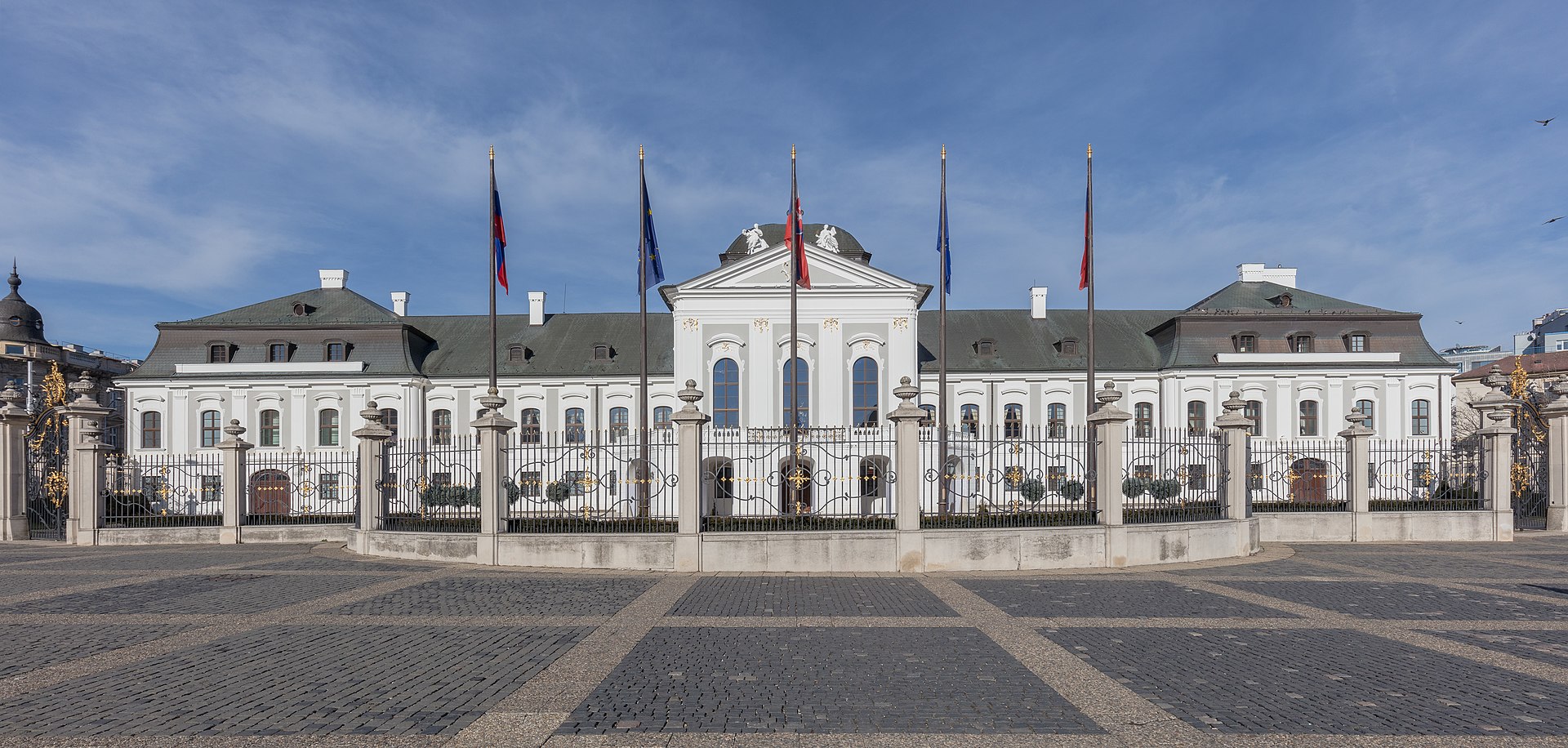
The Grassalkovich Palace is an 18th-century Baroque residence located in Bratislava, constructed as a summer palace for Count Antal Grassalkovich, a prominent nobleman and advisor to the Habsburg court. Built around 1760, the palace exemplifies Central European aristocratic architecture of the period, combining formal symmetry with ornamental detailing typical of Baroque design. It served as a social and cultural hub for the Hungarian nobility, hosting concerts and gatherings, including performances associated with composers such as Joseph Haydn. Following the decline of aristocratic use, the palace underwent various functional transformations in the 20th century, including periods of state use under different political regimes. Today, it serves as the official residence of the President of Slovakia. While the interior is not open to the general public, the surrounding gardens are accessible and remain an important public space within the city.
Key Facts
- Materials
- Stone, Stucco
- Civilization
- Habsburg Monarchy
- Current Function
- Official residence of the President of Slovakia
- Date(s)
- c. 1760
- Condition
- Fully preserved and maintained government building
- Original Function
- Aristocratic summer residence
- Key Figures
- Antal Grassalkovich, Joseph Haydn
- Architectural Style
- Baroque
Construction and Aristocratic Patronage
18th centuryThe palace was commissioned by Count Antal Grassalkovich, a key figure in the Habsburg administration, and constructed around 1760. Designed in the Baroque style, it reflected both the wealth and political influence of its owner. The estate included formal gardens and functioned as a venue for elite social gatherings.
Cultural Role in the Habsburg Era
18th centuryDuring its early period, the palace hosted concerts and cultural events attended by members of the nobility. It became associated with the musical life of the region, with performances linked to composers active within the Habsburg cultural sphere.
Transition Through Political Change
19th–20th centuryFollowing the decline of aristocratic dominance, the palace passed through various ownerships and uses. During the 20th century, it was repurposed under changing political systems, reflecting broader transformations in Central Europe.
Modern State Function
Late 20th century – presentAfter restoration, the palace was designated as the official residence of the President of Slovakia. Its function as a government building limits public access, though the exterior and gardens remain accessible.
Cultural Significance
The Grassalkovich Palace reflects the role of aristocratic residences within the political and cultural framework of the Habsburg Monarchy. As a venue for elite social life, it illustrates how architecture functioned as a display of status and influence, as well as a setting for artistic patronage, particularly in music. In contemporary Slovakia, the palace holds political significance as the residence of the head of state. Its continued use by national leadership connects historical aristocratic authority with modern governance, while the public accessibility of its gardens integrates the site into the everyday urban life of Bratislava.
Visiting Information
Entry Rules
Exterior and gardens are accessible daily. The interior is not open to the public as it serves as the official residence of the President of Slovakia. On certain special days, usually in June, the palace is open to the public.
Best Times to Visit
Early morning or late afternoon for quieter access to the gardens. Weekdays are generally less crowded than weekends.
Photography
Photography permitted in the exterior areas and gardens. No photography allowed inside the building.
Preservation Notes
Stay within designated garden paths. Security presence is active due to its function as a presidential residence; follow posted guidelines.
Nearby POIs
11 shownSources & Further Reading
- [1]Grassalkovich Palace. Bratislava City Official Resources
- [2]Baroque Architecture in Central Europe — Helmut Lorenz. Yale University Press (2008)
- [3]Joseph Haydn and the Esterházy Court — James Webster. Cambridge University Press (2002)
Key Facts
- Materials
- Stone, Stucco
- Civilization
- Habsburg Monarchy
- Current Function
- Official residence of the President of Slovakia
- Date(s)
- c. 1760
- Condition
- Fully preserved and maintained government building
- Original Function
- Aristocratic summer residence
- Key Figures
- Antal Grassalkovich, Joseph Haydn
- Architectural Style
- Baroque