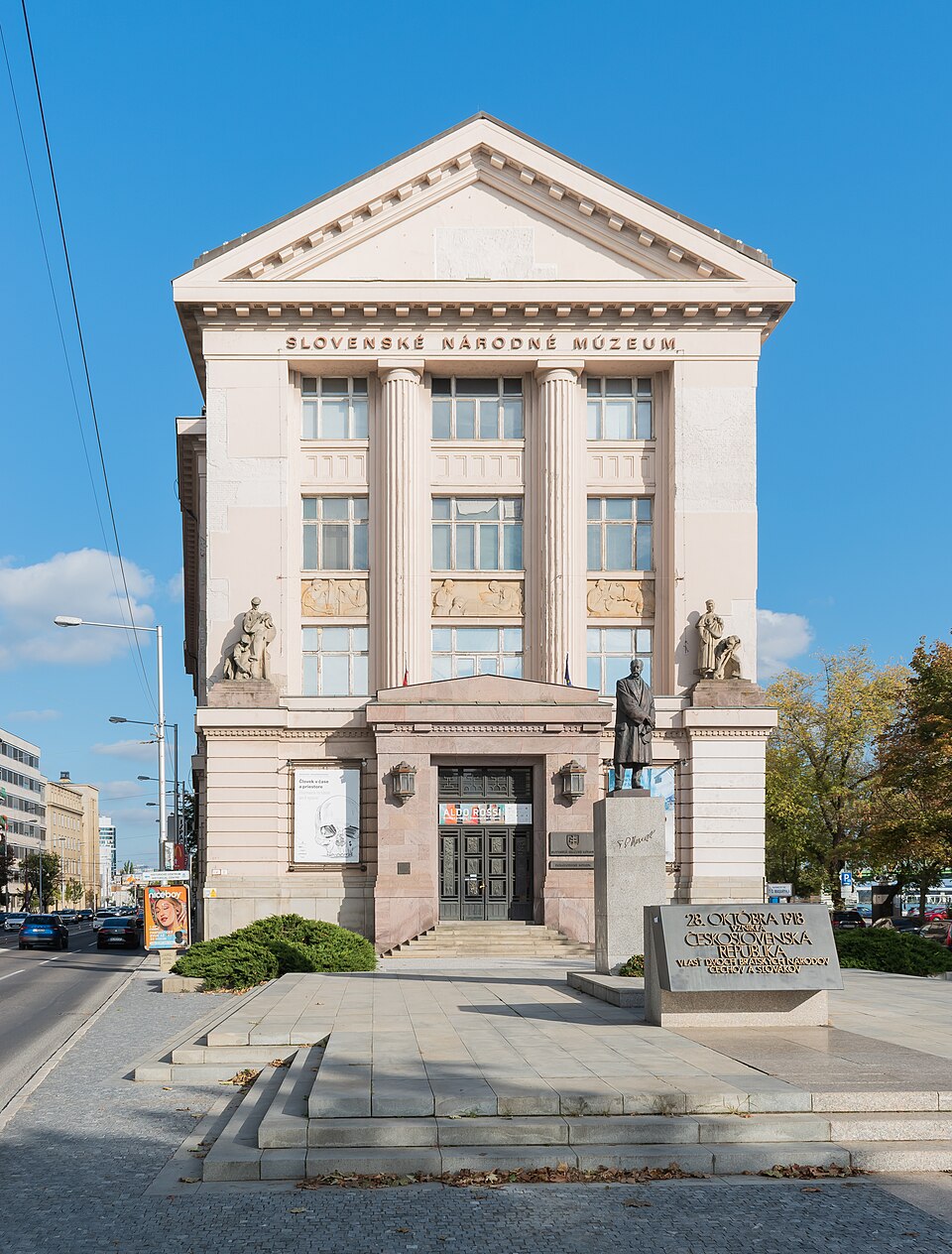
The Slovak National Museum (Slovenské národné múzeum) serves as the primary institution for the preservation and exhibition of Slovak cultural, historical, and natural heritage. Located in a prominent Neo-Renaissance building along the Danube embankment in Bratislava, the museum functions as the central hub for a network of specialized museums across the country.
The institution houses extensive collections ranging from prehistoric archaeological finds and medieval artifacts to ethnographic displays and natural history specimens. It plays a critical role in documenting the development of Slovak society, providing a comprehensive overview of the nation's identity through its diverse permanent and rotating exhibitions.
Key Facts
- Materials
- Stone, Brick, Steel, Glass
- Civilization
- Slovak
- Accessibility
- Wheelchair accessible with elevator access to exhibition floors
- Date(s)
- 1924-1928
- Condition
- Well-maintained, active cultural institution
- Original Function
- Museum and administrative center
- Key Figures
- Michal Milan Harminc
Foundations and Early Development
19th centuryThe origins of the museum trace back to the Matica slovenská period in the 19th century, when efforts to collect and preserve Slovak cultural artifacts began. These early collections were initially housed in Martin before the central institution was established in Bratislava.
Construction of the Main Building
1924-1928The current main building on Vajanského nábrežie was designed by the architect Michal Milan Harminc. Construction was completed in the late 1920s to provide a centralized facility for the growing national collections.
Post-War Expansion
1945-1990Following World War II, the museum underwent significant reorganization and expansion. It integrated various smaller collections and specialized museums, solidifying its role as the primary national repository for natural and social history.
Modern Era
1993-presentSince the independence of Slovakia in 1993, the museum has continued to modernize its exhibition spaces and digital archives. It remains the largest cultural institution in the country, overseeing a vast network of specialized museums and galleries.
Cultural Significance
The Slovak National Museum is the cornerstone of Slovak cultural memory. It acts as the primary guardian of the nation's historical narrative, bridging the gap between prehistoric archaeological evidence and contemporary societal developments. The institution is vital for educational outreach and the promotion of Slovak heritage both domestically and internationally.
Interpretive Notes
Scholarly debates and areas of uncertainty
Discussions within the institution often center on the balance between traditional ethnographic preservation and the need for modern, interactive museum experiences. There is ongoing academic discourse regarding the representation of complex 20th-century political history within the museum's permanent galleries.
Visiting Information
Entry Rules
Open Tuesday through Sunday. Tickets can be purchased at the entrance or online. Photography for personal use is permitted without flash. Large bags must be stored in provided lockers.
Best Times to Visit
Weekday mornings are generally quieter. The museum is a popular destination during the annual 'Night of Museums and Galleries' event in May.
Photography
Personal photography is allowed without the use of tripods, selfie sticks, or flash. Professional photography requires prior authorization from the museum administration.
Preservation Notes
Visitors are requested to refrain from touching artifacts or display cases. Maintain a respectful distance from all exhibits to ensure the longevity of the collections.
Nearby POIs
11 shownSources & Further Reading
- [1]
- [2]Architectural Heritage of Bratislava — Jana Krivošová. Veda (2015)
Key Facts
- Materials
- Stone, Brick, Steel, Glass
- Civilization
- Slovak
- Accessibility
- Wheelchair accessible with elevator access to exhibition floors
- Date(s)
- 1924-1928
- Condition
- Well-maintained, active cultural institution
- Original Function
- Museum and administrative center
- Key Figures
- Michal Milan Harminc