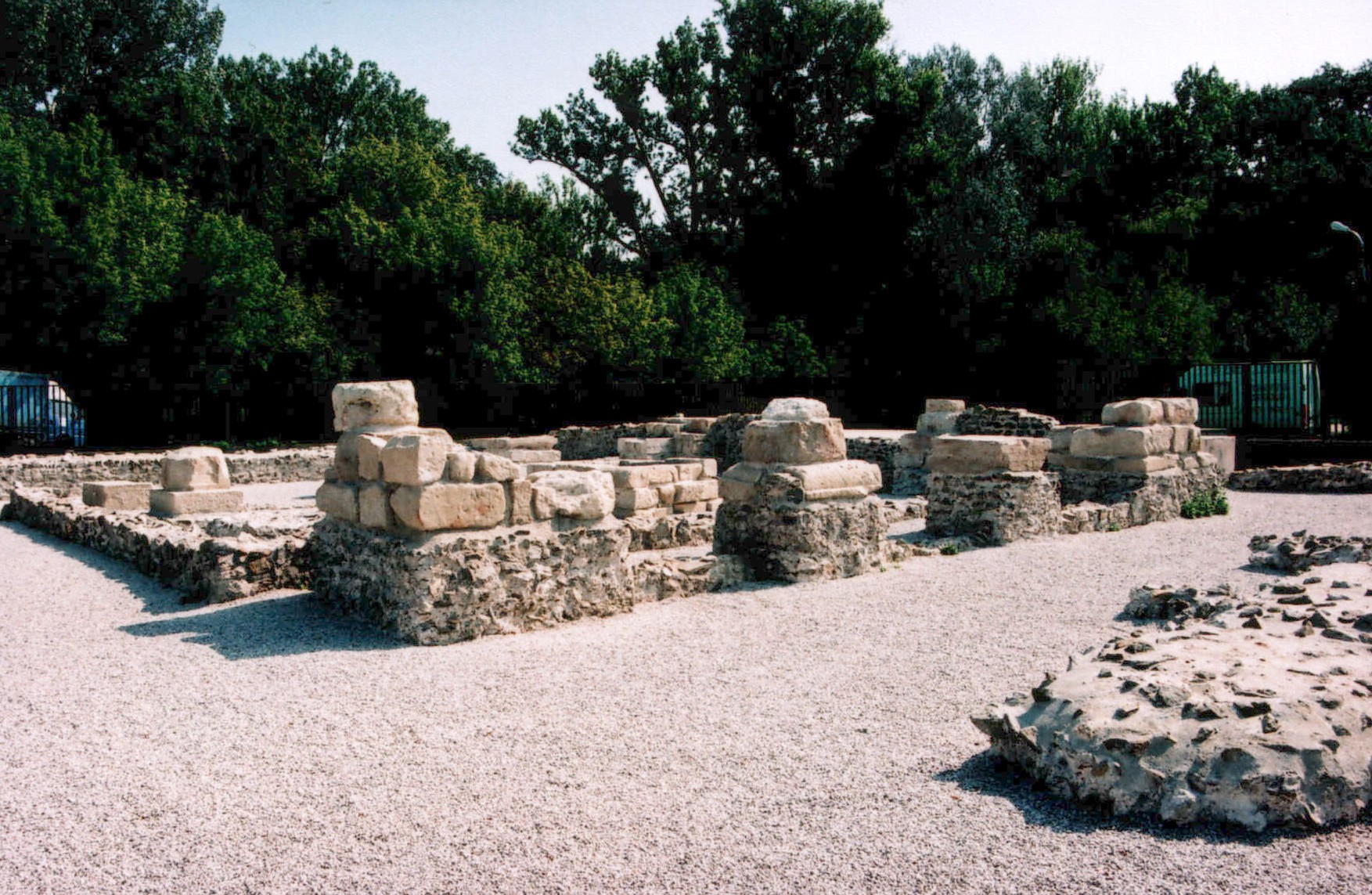
Gerulata was a Roman military site located along the Danube frontier in the province of Pannonia, within the modern territory of Rusovce, a district of Bratislava. Established in the 1st century CE, it formed part of the defensive system known as the Limes Romanus, which marked the northern boundary of the Roman Empire. The site functioned primarily as an auxiliary military camp, supporting troop movements and monitoring river traffic along this strategic corridor. Over time, Gerulata developed into a more complex settlement, incorporating civilian structures alongside its military installations. Archaeological excavations have revealed remains of fortifications, barracks, and funerary monuments, reflecting both its defensive role and the presence of a settled community. Today, the site is preserved as an open-air archaeological area with a museum displaying artifacts recovered from the excavations.
Key Facts
- Materials
- Stone, Wood, Brick
- Civilization
- Roman
- Date(s)
- 1st century CE
- Condition
- Partially preserved ruins with on-site museum
- Original Function
- Auxiliary military camp on the Danube frontier
- Key Figures
- Roman auxiliary troops
Establishment on the Danube Frontier
1st century CEGerulata was established during the early expansion of Roman control into Pannonia, positioned along the Danube as part of a chain of forts securing the empire’s northern boundary. Its placement allowed Roman forces to monitor movement across the river and maintain communication between nearby military installations.
Military Function and Development
1st–3rd century CEThe site functioned as an auxiliary fort housing non-legionary troops recruited from various parts of the empire. Over time, defensive structures were reinforced in stone, replacing earlier wooden constructions. The presence of baths, workshops, and administrative buildings indicates a well-organized military community.
Civilian Settlement and Cultural Life
2nd–3rd century CEA civilian settlement developed around the fort, inhabited by families of soldiers, traders, and craftsmen. Funerary monuments discovered at the site suggest a culturally diverse population, reflecting the broader composition of the Roman auxiliary forces stationed there.
Decline and Abandonment
4th century CEAs pressure increased along the Danube frontier during the late Roman period, Gerulata gradually lost its strategic importance. The fort was eventually abandoned, likely in connection with the broader withdrawal of Roman forces from the region.
Archaeological Rediscovery and Preservation
20th century – presentSystematic archaeological excavations in the 20th century uncovered significant portions of the fort and associated burial grounds. Today, the site is preserved as part of the cultural heritage of Slovakia, with a museum exhibiting inscriptions, reliefs, and everyday objects recovered from the area.
Cultural Significance
Gerulata formed part of the broader defensive and administrative system of the Roman Empire along the Danube, where military presence shaped local economic and social structures. The fort served not only as a defensive installation but also as a point of interaction between Roman authorities and local populations, facilitating trade and cultural exchange across the frontier. In the regional context of modern Slovakia, Gerulata represents one of the most significant remnants of Roman presence north of the Danube. Its preservation contributes to understanding the extent of Roman influence beyond the empire’s core territories and highlights the integration of frontier zones into imperial systems.
Visiting Information
Entry Rules
Open Tuesday through Sunday. Entry is ticketed through the on-site museum. Closed on Mondays.
Best Times to Visit
Weekday mornings for smaller crowds. Spring and early autumn offer more comfortable conditions for exploring the outdoor remains.
Photography
Personal photography permitted. Flash and tripods may be restricted in the museum exhibition spaces.
Preservation Notes
Remain on designated paths to protect archaeological remains. Do not touch exposed stonework or artifacts. Some sections are fragmentary and require careful footing.
Nearby POIs
11 shownSources & Further Reading
- [1]
- [2]Gerulata – Roman Military Camp. Bratislava City Museum (2020)
- [3]The Roman Army on the Danube — Pat Southern. Routledge (2007)
Key Facts
- Materials
- Stone, Wood, Brick
- Civilization
- Roman
- Date(s)
- 1st century CE
- Condition
- Partially preserved ruins with on-site museum
- Original Function
- Auxiliary military camp on the Danube frontier
- Key Figures
- Roman auxiliary troops