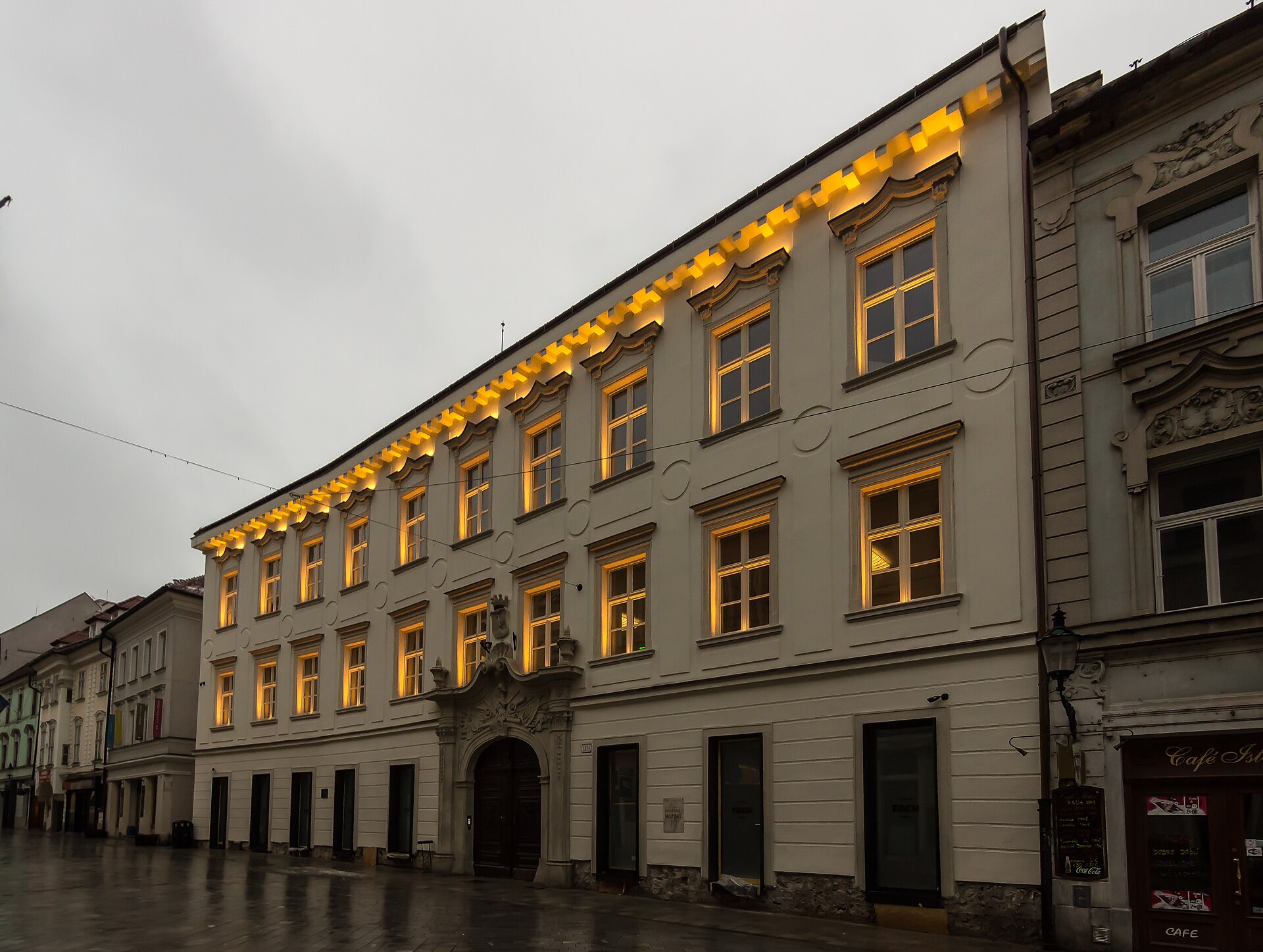
Pálffy Palace in Bratislava is a historic aristocratic residence located in the city’s Old Town. The structure dates primarily to the Baroque period and was owned by the Pálffy family, one of the most influential noble families in the Kingdom of Hungary during the early modern era. The palace formed part of a network of noble residences that surrounded the coronation route used during the period when Bratislava served as the coronation city for Hungarian monarchs. Over time the building served a range of cultural and residential functions. In the modern period the palace has been incorporated into the Bratislava City Gallery system and functions as an exhibition venue. Its historic interiors and courtyard spaces are used for art displays and cultural events, reflecting the continued adaptation of aristocratic architecture within the urban cultural landscape of Bratislava.
Key Facts
- Materials
- Stone masonry, Plaster, Wood structural elements
- Civilization
- Kingdom of Hungary
- Date(s)
- 17th–18th centuries
- Condition
- Preserved historic palace used as a gallery and cultural venue
- Original Function
- Aristocratic residence
- Key Figures
- Pálffy family, Wolfgang Amadeus Mozart
- Architectural Style
- Baroque
Origins of the Palace
17th centuryThe Pálffy Palace was constructed during the 17th century as an aristocratic residence for members of the Pálffy family, an influential noble lineage within the Kingdom of Hungary. Bratislava—known historically as Pressburg—served as the political center of the Hungarian crown during the Ottoman occupation of much of Hungary, making the city a focal point for noble estates and political activity.
Baroque Expansion
18th centuryDuring the 18th century the palace underwent renovations and expansion in the Baroque architectural style. The redesign reflected broader architectural trends across Central Europe in which aristocratic residences emphasized formal facades, decorated interiors, and courtyard layouts suitable for social gatherings and ceremonial events.
Cultural Associations
18th centuryThe palace became associated with the cultural life of the city. Historical accounts record that Wolfgang Amadeus Mozart performed a concert in the palace as a child during his travels through Central Europe. Such performances reflected the role of aristocratic residences as venues for private concerts and cultural patronage.
Modern Cultural Use
20th century – presentIn the modern period the palace was integrated into the Bratislava City Gallery network. The building now functions primarily as an exhibition space for visual art and cultural events. Restoration work has preserved the historical architectural elements while adapting the interior spaces for contemporary gallery use.
Cultural Significance
Pálffy Palace reflects the political and cultural importance of Bratislava during the early modern period when the city served as the coronation and administrative center of the Kingdom of Hungary. Aristocratic families such as the Pálffys maintained residences in the city to participate in royal ceremonies, government assemblies, and the social life of the court. Today the building represents the integration of aristocratic heritage into the cultural institutions of modern Slovakia. Its use as part of the Bratislava City Gallery preserves the architectural legacy of the noble residence while supporting contemporary artistic activity within the historic urban environment.
Interpretive Notes
Scholarly debates and areas of uncertainty
There is limited documentation about the earliest phases of the palace's construction, and historians debate whether the current structure fully replaced an earlier residence on the site or incorporated elements of older buildings. Architectural analysis suggests that multiple phases of reconstruction occurred during the 17th and 18th centuries. The historical record of Mozart’s performance at the palace is also based primarily on later accounts rather than detailed contemporary documentation, leading to some uncertainty regarding the exact location and circumstances of the concert.
Visiting Information
Entry Rules
Open Tuesday through Sunday as part of the Bratislava City Gallery system. Entry requires a gallery ticket, with some temporary exhibitions carrying separate admission.
Best Times to Visit
Weekday mornings generally provide the quietest conditions for viewing exhibitions. Late afternoon visits are also less crowded outside the peak summer tourist season.
Photography
Personal photography is typically permitted in gallery areas without flash. Tripods and commercial photography require permission from gallery administration.
Preservation Notes
Visitors should follow gallery guidelines and remain within designated exhibition areas. Some historic interior elements are preserved and should not be touched.
Nearby POIs
11 shownSources & Further Reading
- [1]Pálffy Palace – Bratislava City Gallery — Bratislava City Gallery
- [2]Bratislava: A Historical Guide — Ivan Štefanec. Slovak Academic Press
- [3]The Kingdom of Hungary and Central European Nobility — Pál Engel. I.B. Tauris (2001)
Key Facts
- Materials
- Stone masonry, Plaster, Wood structural elements
- Civilization
- Kingdom of Hungary
- Date(s)
- 17th–18th centuries
- Condition
- Preserved historic palace used as a gallery and cultural venue
- Original Function
- Aristocratic residence
- Key Figures
- Pálffy family, Wolfgang Amadeus Mozart
- Architectural Style
- Baroque