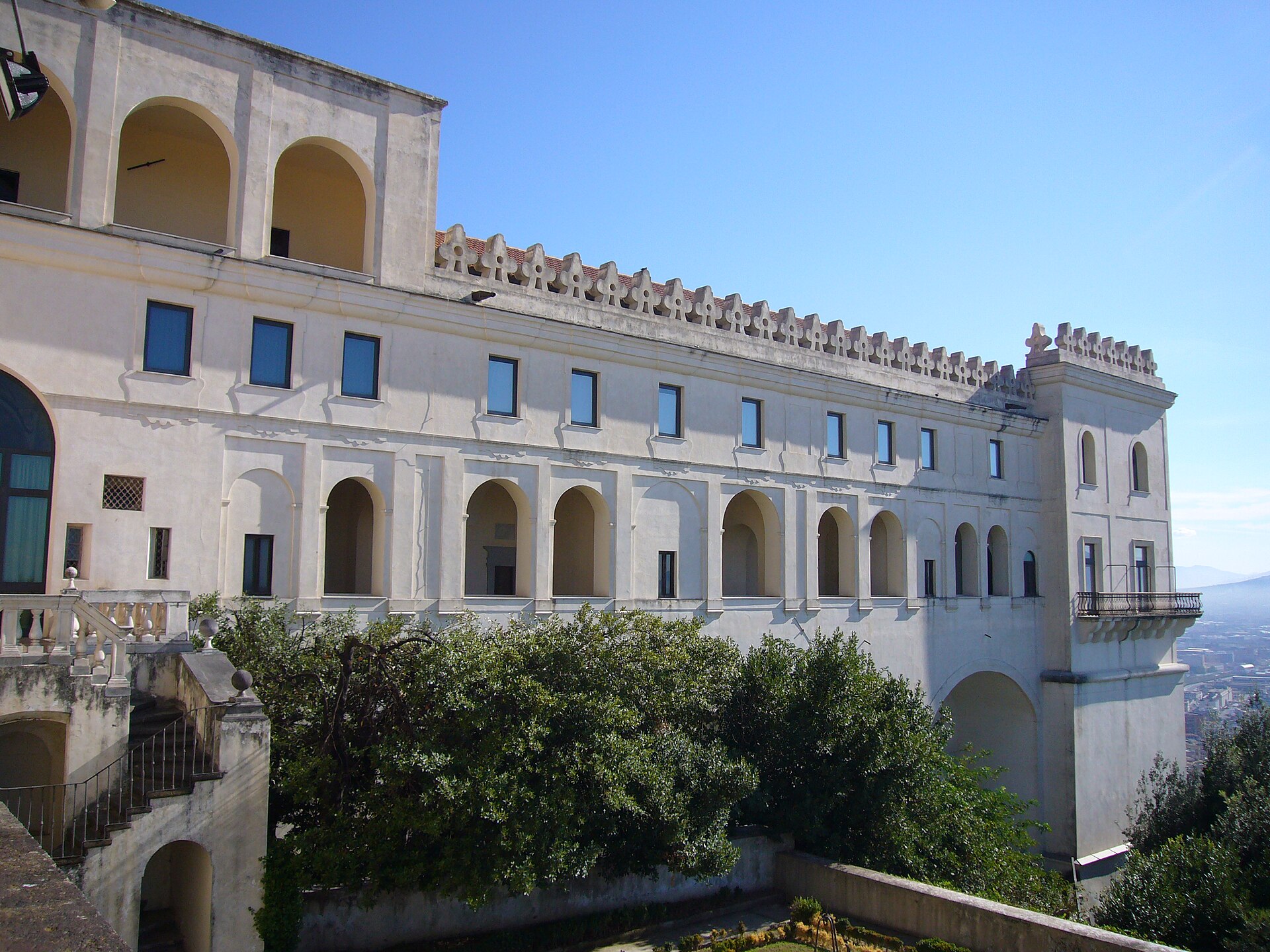
The Museo nazionale di San Martino is located within the former Carthusian monastery of Certosa di San Martino, situated on the Vomero hill overlooking the city of Naples. The complex was founded in 1325 by Charles, Duke of Calabria, and underwent significant architectural expansions during the 16th and 17th centuries, evolving into a masterpiece of Neapolitan Baroque art and architecture.
Today, the museum houses an extensive collection of artifacts documenting the history of Naples from the Bourbon period to the unification of Italy. The galleries feature a diverse array of items, including royal carriages, naval memorabilia, intricate nativity scenes (presepi), and paintings by prominent artists such as Massimo Stanzione and Jusepe de Ribera, all set within the historic monastic cloisters and chapels.
Key Facts
- Materials
- Marble, Stucco, Tufa, Wood
- Civilization
- Italian
- Accessibility
- Partially accessible; some areas involve stairs due to historic architecture
- Date(s)
- 1325 CE
- Condition
- Well-preserved, active museum
- Original Function
- Carthusian Monastery
- Key Figures
- Charles, Duke of Calabria, Cosimo Fanzago, Giovanni Antonio Dosio
Foundation and Early Years
14th CenturyThe Certosa was established in 1325 by Charles, Duke of Calabria, on the site of a former fortress. It was designed to serve the Carthusian order, providing a secluded space for prayer and contemplation high above the city.
Baroque Expansion
16th-17th CenturyDuring the 16th and 17th centuries, the monastery underwent massive renovations. Architects like Cosimo Fanzago transformed the interior into a showcase of Neapolitan Baroque, featuring elaborate marble inlays and frescoes.
Secularization and Museum Establishment
1866Following the unification of Italy and the suppression of religious orders, the monastery was secularized. In 1866, it was officially converted into a national museum to preserve the artistic and historical heritage of the Kingdom of the Two Sicilies.
Cultural Significance
The museum is a cornerstone of Neapolitan cultural identity, preserving the material history of the city's royal and religious past. The collection of 'presepi' (nativity scenes) is particularly significant, as it documents a centuries-old Neapolitan tradition that blends sacred art with everyday social observation.
Beyond its collections, the site itself is a symbol of the city's architectural evolution. Its location on the Vomero hill provides a panoramic vantage point that has been depicted by countless artists and writers throughout history, cementing its status as a landmark of the Neapolitan landscape.
Interpretive Notes
Scholarly debates and areas of uncertainty
Debates often center on the attribution of specific works within the museum's vast collection of Baroque paintings, as many pieces were moved from suppressed churches throughout the city. Additionally, there is ongoing discussion regarding the balance between preserving the monastic structure and adapting the space for modern museum display requirements.
Visiting Information
Entry Rules
Open daily except Wednesdays. Tickets can be purchased at the entrance. Visitors are expected to maintain a quiet demeanor appropriate for a historic site.
Best Times to Visit
Weekday mornings are recommended to avoid weekend crowds and to enjoy the panoramic views of the city in clearer light.
Photography
Personal photography is permitted without flash or tripods. Professional photography requires prior authorization from the museum administration.
Preservation Notes
The site is a historic monument; visitors are requested to refrain from touching the marble surfaces and to remain within designated visitor areas to protect the delicate frescoes and artifacts.
Nearby POIs
11 shown- Castel Sant'Elmo0.2 km
- Naples Underground Geothermal Zone0.7 km
- Basilica di San Francesco di Paola1 km
- Chiesa di Gesu Nuovo1 km
- Palazzo Reale di Napoli1.1 km
- Basilica di Santa Chiara1.1 km
- Castel Nuovo1.1 km
- Galleria Borbonica1.2 km
- Cappella Sansevero1.4 km
- Museo Archeologico Nazionale di Napoli1.4 km
- Cattedrale di Santa Maria Assunta1.9 km
Sources & Further Reading
- [1]The Certosa di San Martino: A History of the Monastery and Museum — Nicola Spinosa. Electa Napoli (2006)
- [2]Naples and the Baroque: Art and Architecture — Anthony Blunt. Pallas Athene (2002)
Key Facts
- Materials
- Marble, Stucco, Tufa, Wood
- Civilization
- Italian
- Accessibility
- Partially accessible; some areas involve stairs due to historic architecture
- Date(s)
- 1325 CE
- Condition
- Well-preserved, active museum
- Original Function
- Carthusian Monastery
- Key Figures
- Charles, Duke of Calabria, Cosimo Fanzago, Giovanni Antonio Dosio
Nearby POIs
11 shown- Castel Sant'Elmo0.2 km
- Naples Underground Geothermal Zone0.7 km
- Basilica di San Francesco di Paola1 km
- Chiesa di Gesu Nuovo1 km
- Palazzo Reale di Napoli1.1 km
- Basilica di Santa Chiara1.1 km
- Castel Nuovo1.1 km
- Galleria Borbonica1.2 km
- Cappella Sansevero1.4 km
- Museo Archeologico Nazionale di Napoli1.4 km
- Cattedrale di Santa Maria Assunta1.9 km