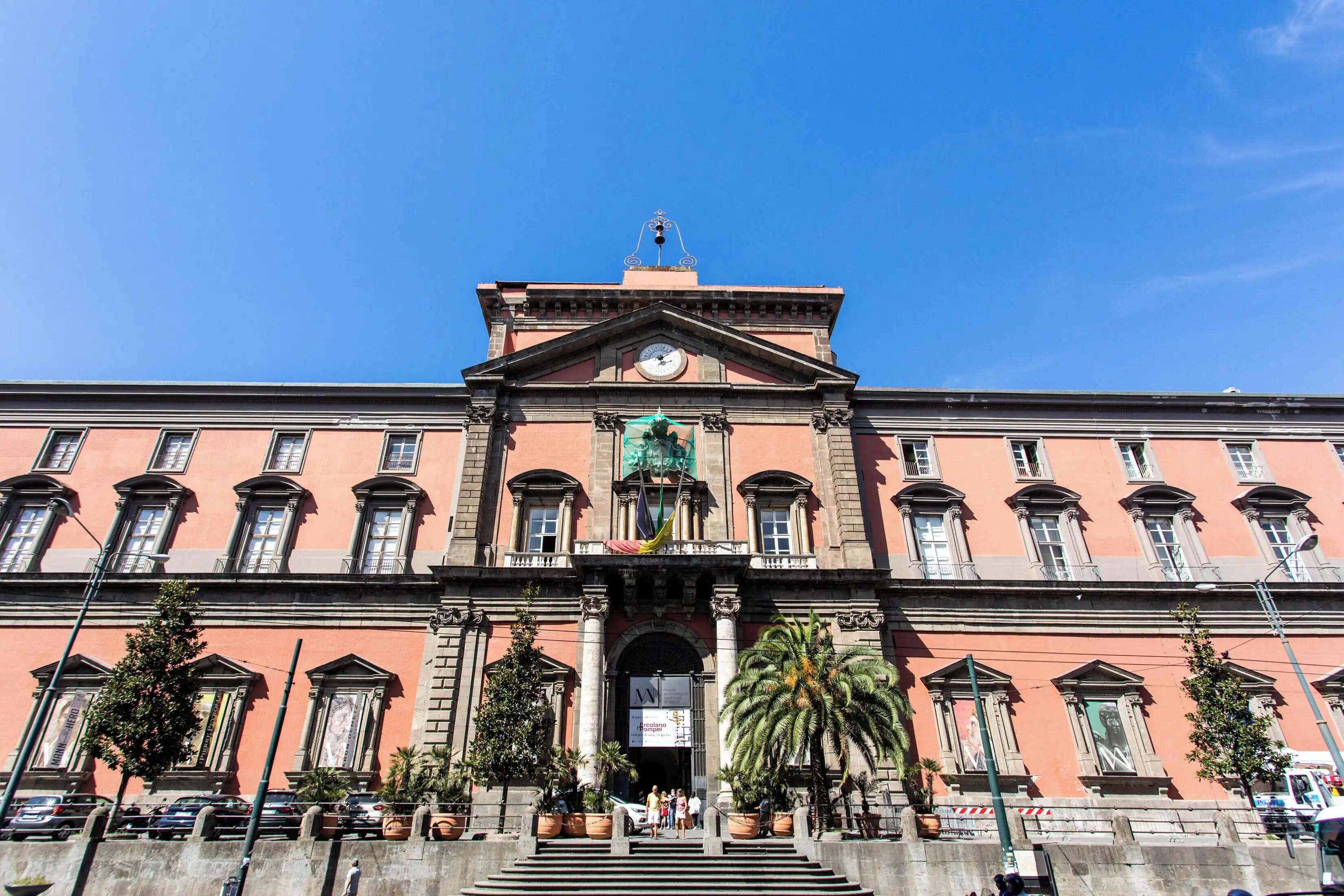
The National Archaeological Museum of Naples (MANN) is one of the world's most significant archaeological institutions, housing an extensive collection of Greek and Roman antiquities. Originally constructed in the late 16th century as a cavalry barracks and later repurposed as a university, the building was transformed into a museum in the 18th century under the patronage of King Charles III of Spain.
The museum is particularly renowned for its vast collection of artifacts recovered from the volcanic eruption sites of Pompeii, Herculaneum, and Stabiae. It serves as the primary repository for the Farnese Collection, which includes monumental sculptures, mosaics, and gems that trace the artistic evolution of the Mediterranean from antiquity through the Renaissance.
Key Facts
- Materials
- Brick, Tuff, Marble
- Civilization
- Roman, Greek, Bourbon
- Accessibility
- Wheelchair accessible with elevator access to all floors
- Date(s)
- 1585-1615
- Condition
- Active museum
- Original Function
- Cavalry barracks
- Key Figures
- King Charles III of Spain, Ferdinand IV of Naples
Origins as a Barracks
1585The building was commissioned by the Spanish Viceroy of Naples, Pedro Téllez-Girón, to serve as a cavalry barracks. It was designed by architect Giulio Cesare Fontana.
Royal Museum Transformation
1777King Ferdinand IV ordered the transfer of the Royal Library and the Farnese collection to the building, initiating its conversion into a museum of antiquities.
The Bourbon Collection
19th CenturyThe museum expanded significantly as artifacts from the ongoing excavations at Pompeii and Herculaneum were moved here for preservation and display.
Modern Era
1957-PresentThe museum underwent major reorganization and modernization to accommodate its growing collection and to improve public access to its world-class mosaic and sculpture galleries.
Cultural Significance
The museum acts as the primary custodian of the cultural heritage of Southern Italy. By centralizing the findings from the Vesuvius sites, it provides a comprehensive view of Roman daily life, art, and domestic culture that is unparalleled globally.
It remains a cornerstone of Neapolitan identity, bridging the gap between the city's ancient Greek foundations and its later Bourbon history. The museum is a focal point for international research regarding Roman wall painting and mosaic techniques.
Interpretive Notes
Scholarly debates and areas of uncertainty
There is ongoing academic discussion regarding the ethics of displaying human remains and specific funerary artifacts recovered from the Vesuvius sites. Additionally, scholars frequently debate the provenance and original placement of the Farnese sculptures, as many were heavily restored or modified during the 16th and 17th centuries.
Visiting Information
Entry Rules
Open daily except Tuesdays. Tickets can be purchased online or at the entrance. Photography is permitted for personal use without flash or tripods.
Best Times to Visit
Weekday mornings are recommended to avoid weekend crowds. Allow at least 3-4 hours for a comprehensive visit.
Photography
No flash photography or tripods allowed. Professional photography requires prior authorization.
Preservation Notes
Maintain a respectful distance from all artifacts. Do not touch the marble surfaces or mosaics. Climate control is strictly maintained to preserve the integrity of the frescoes.
Nearby POIs
11 shown- Cappella Sansevero0.6 km
- Chiesa di Gesu Nuovo0.7 km
- Cattedrale di Santa Maria Assunta0.8 km
- Basilica di Santa Chiara0.8 km
- Catacombs of San Gennaro1.3 km
- Museo Nazionale di San Martino1.4 km
- Castel Sant'Elmo1.5 km
- Museo di Capodimonte1.5 km
- Castel Nuovo1.7 km
- Naples Underground Geothermal Zone1.9 km
- Palazzo Reale di Napoli1.9 km
Sources & Further Reading
- [1]The National Archaeological Museum of Naples — Stefano De Caro. Electa (2001)
- [2]Pompeii and the Roman Villa — Andrew Wallace-Hadrill. University of Michigan Press (2011)
Key Facts
- Materials
- Brick, Tuff, Marble
- Civilization
- Roman, Greek, Bourbon
- Accessibility
- Wheelchair accessible with elevator access to all floors
- Date(s)
- 1585-1615
- Condition
- Active museum
- Original Function
- Cavalry barracks
- Key Figures
- King Charles III of Spain, Ferdinand IV of Naples
Nearby POIs
11 shown- Cappella Sansevero0.6 km
- Chiesa di Gesu Nuovo0.7 km
- Cattedrale di Santa Maria Assunta0.8 km
- Basilica di Santa Chiara0.8 km
- Catacombs of San Gennaro1.3 km
- Museo Nazionale di San Martino1.4 km
- Castel Sant'Elmo1.5 km
- Museo di Capodimonte1.5 km
- Castel Nuovo1.7 km
- Naples Underground Geothermal Zone1.9 km
- Palazzo Reale di Napoli1.9 km