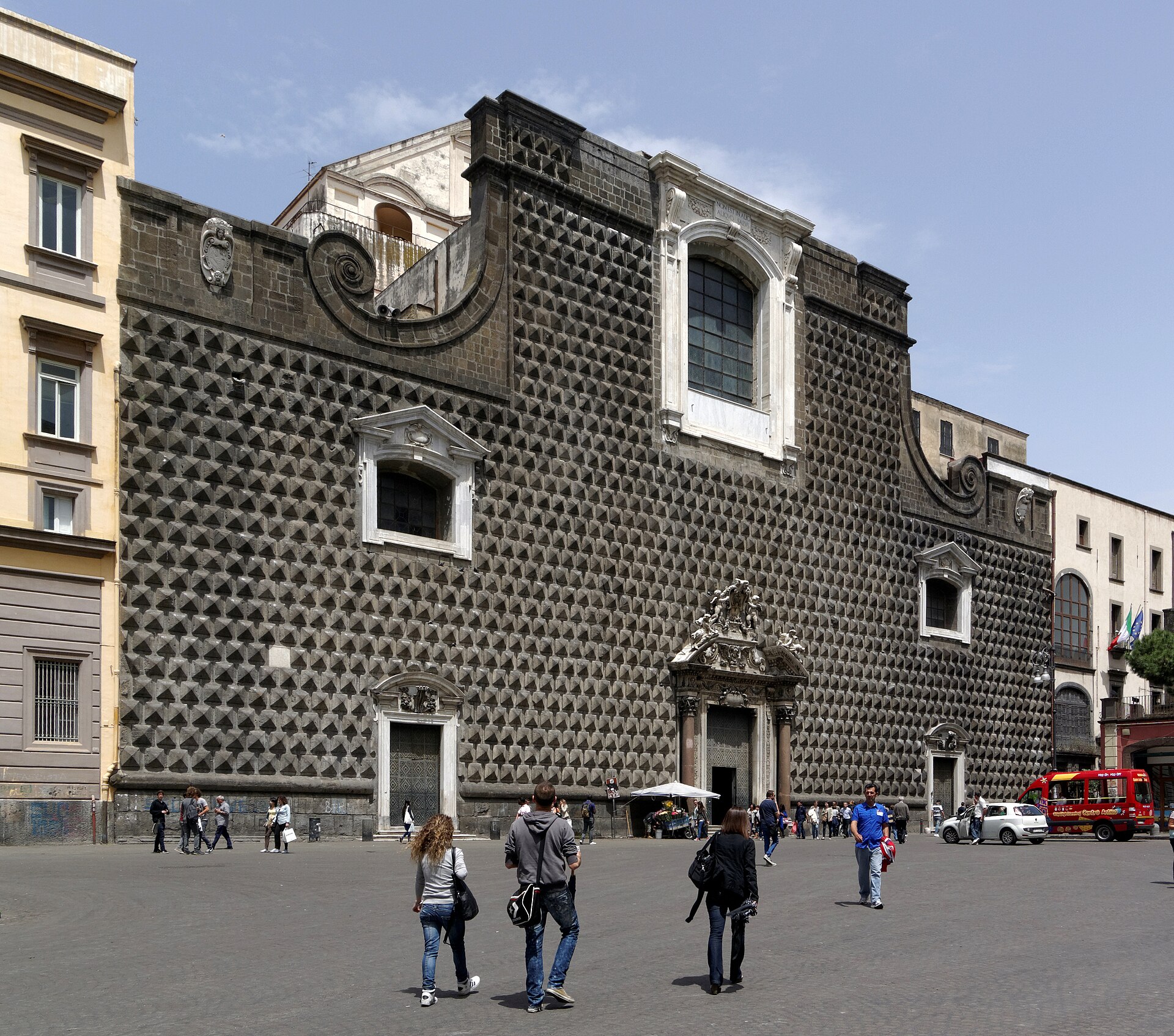
The Chiesa del Gesù Nuovo is a prominent religious structure located in the heart of Naples, Italy. Originally constructed as the Palazzo Sanseverino in the late 15th century, the building was transformed into a Jesuit church between 1584 and 1601. The exterior retains the original diamond-pointed ashlar facade of the palace, creating a striking contrast with the opulent interior.
The interior represents one of the most significant examples of Neapolitan Baroque art. It features an extensive collection of frescoes, marble inlays, and gilded stucco work created by leading artists of the 17th and 18th centuries, including Cosimo Fanzago and Luca Giordano. The church serves as a major site of pilgrimage, housing the remains of Saint Giuseppe Moscati.
Key Facts
- Materials
- Piperno stone, Marble, Stucco, Gold leaf
- Civilization
- Italian
- Accessibility
- Ground level accessible
- Date(s)
- 1584-1601
- Condition
- Active church, well-preserved
- Original Function
- Palace (Palazzo Sanseverino)
- Key Figures
- Saint Giuseppe Moscati, Cosimo Fanzago, Luca Giordano
Palatial Origins
1470The structure was originally commissioned by Roberto Sanseverino, Prince of Salerno, as a private residence. The distinctive diamond-pointed facade was a hallmark of the Renaissance architectural style in Naples.
Jesuit Transformation
1584-1601The Jesuit order acquired the palace and initiated a massive renovation to convert the secular residence into a church. Architects Pietro Provedi and Agazio Stoia oversaw the structural changes, preserving the exterior while gutting the interior to create a grand nave.
Baroque Expansion
17th-18th centuryFollowing an earthquake in 1688, the church underwent significant artistic enrichment. The interior was adorned with elaborate marble decorations and frescoes, establishing it as a masterpiece of the Neapolitan Baroque movement.
Modern Era
20th century-presentThe church was designated as the final resting place for Giuseppe Moscati, a physician canonized by the Catholic Church. It continues to function as an active parish and a site of significant cultural and religious interest.
Cultural Significance
The Gesù Nuovo is a cornerstone of Neapolitan religious life and art history. Its unique history—transitioning from a symbol of aristocratic power to a center of Jesuit education and charity—reflects the shifting social landscape of Naples. The church is deeply associated with the veneration of Saint Giuseppe Moscati, known as the 'physician of the poor,' which draws thousands of pilgrims annually.
Architecturally, the building is a primary reference point for the study of the Neapolitan Baroque. The synthesis of the rugged, defensive-looking Renaissance facade with the ethereal, light-filled Baroque interior is considered a defining characteristic of the city's urban aesthetic.
Interpretive Notes
Scholarly debates and areas of uncertainty
There is ongoing academic discussion regarding the extent to which the original 15th-century palace layout influenced the specific spatial configuration of the church nave. Additionally, the attribution of certain minor sculptural works within the side chapels remains a subject of investigation among art historians specializing in the Neapolitan school.
Visiting Information
Entry Rules
Open daily to the public. Entry is free. Visitors are expected to dress modestly and maintain silence as it is an active place of worship.
Best Times to Visit
Weekday mornings are generally quieter. Avoid Sunday mornings during scheduled mass services.
Photography
Personal photography is permitted without flash. Tripods and professional equipment require prior authorization from the parish office.
Preservation Notes
The site is subject to ongoing conservation efforts due to the fragility of the gilded stucco and frescoed ceilings. Visitors should refrain from touching any surfaces or marble inlays.
Nearby POIs
11 shown- Basilica di Santa Chiara0.2 km
- Cappella Sansevero0.3 km
- Museo Archeologico Nazionale di Napoli0.7 km
- Cattedrale di Santa Maria Assunta0.9 km
- Museo Nazionale di San Martino1 km
- Castel Nuovo1 km
- Castel Sant'Elmo1.1 km
- Palazzo Reale di Napoli1.2 km
- Naples Underground Geothermal Zone1.3 km
- Basilica di San Francesco di Paola1.4 km
- Galleria Borbonica1.8 km
Sources & Further Reading
- [1]The Architecture of the Jesuit Church in Naples — Anthony Blunt. Journal of the Warburg and Courtauld Institutes (1975)View
- [2]Baroque Naples: A Documentary History — John Marciari. Yale University Press (2012)
Key Facts
- Materials
- Piperno stone, Marble, Stucco, Gold leaf
- Civilization
- Italian
- Accessibility
- Ground level accessible
- Date(s)
- 1584-1601
- Condition
- Active church, well-preserved
- Original Function
- Palace (Palazzo Sanseverino)
- Key Figures
- Saint Giuseppe Moscati, Cosimo Fanzago, Luca Giordano
Nearby POIs
11 shown- Basilica di Santa Chiara0.2 km
- Cappella Sansevero0.3 km
- Museo Archeologico Nazionale di Napoli0.7 km
- Cattedrale di Santa Maria Assunta0.9 km
- Museo Nazionale di San Martino1 km
- Castel Nuovo1 km
- Castel Sant'Elmo1.1 km
- Palazzo Reale di Napoli1.2 km
- Naples Underground Geothermal Zone1.3 km
- Basilica di San Francesco di Paola1.4 km
- Galleria Borbonica1.8 km