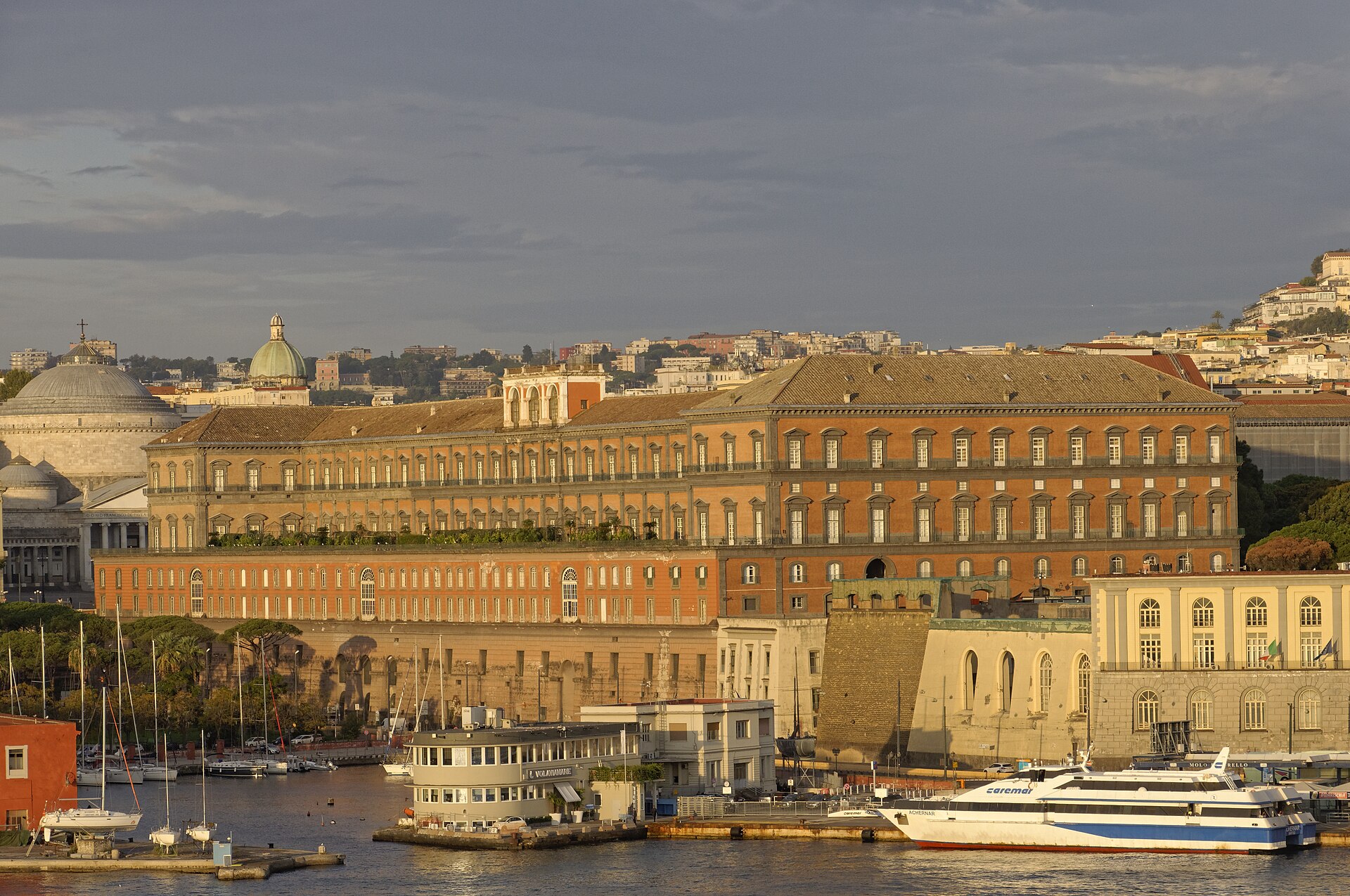
The Palazzo Reale di Napoli is a historic palace located in the Piazza del Plebiscito, serving as one of the four residences used by the Bourbon kings during their rule of the Kingdom of the Two Sicilies. Construction began in 1600 under the direction of architect Domenico Fontana, commissioned by the Spanish viceroy Fernando Ruiz de Castro to host King Philip III of Spain, though the monarch never visited.
Over the centuries, the palace underwent significant expansions and renovations, most notably following a fire in 1837. Today, the complex houses the National Library of Naples, the historic Royal Apartments, and the Teatro di San Carlo, functioning as a major cultural institution that preserves the artistic and political history of the city.
Key Facts
- Materials
- Brick, Stucco, Marble, Tufa
- Civilization
- Kingdom of Naples
- Accessibility
- Partially accessible; elevator access to the Royal Apartments
- Date(s)
- 1600-1602
- Condition
- Well-preserved, functioning as a museum and library
- Original Function
- Royal residence for the Spanish viceroys
- Key Figures
- Domenico Fontana, Luigi Vanvitelli, Ferdinand I of the Two Sicilies
Origins and Spanish Viceroys
1600-1734Commissioned by Viceroy Fernando Ruiz de Castro, the palace was designed by Domenico Fontana to provide a grand residence for the Spanish monarchy. It served as the seat of the Spanish viceroys for over a century.
The Bourbon Era
1734-1860With the establishment of the independent Kingdom of the Two Sicilies, the palace became the primary residence of the Bourbon kings. Architects like Luigi Vanvitelli were employed to modernize the interiors and expand the structure.
Modern Transformation
1860-PresentFollowing the unification of Italy, the palace became a residence for the House of Savoy. In 1925, the building was transferred to the state, which established the National Library of Naples within its walls, alongside the museum of the Royal Apartments.
Cultural Significance
The Palazzo Reale stands as a symbol of Naples' status as a major European capital during the Bourbon era. Its architecture and the surrounding Piazza del Plebiscito define the urban landscape of the city, reflecting the transition from Spanish colonial administration to an independent Italian kingdom.
Interpretive Notes
Scholarly debates and areas of uncertainty
There is ongoing academic discussion regarding the extent of the original 17th-century architectural layout versus the extensive modifications made during the 19th-century restorations, particularly concerning the preservation of the original facade's integrity.
Visiting Information
Entry Rules
Open daily except Wednesdays. Tickets are required for the Royal Apartments. Visitors must follow standard museum conduct; large bags must be left in the cloakroom.
Best Times to Visit
Weekday mornings to avoid weekend crowds. The palace is particularly significant during the annual 'Domenica al Museo' (first Sunday of the month) when entry is free.
Photography
Personal photography is permitted without flash or tripods. Professional photography requires prior authorization from the museum administration.
Preservation Notes
The palace is subject to ongoing conservation efforts. Visitors are requested not to touch the tapestries or furniture and to remain within the designated visitor paths.
Nearby POIs
11 shown- Basilica di San Francesco di Paola0.3 km
- Castel Nuovo0.3 km
- Naples Underground Geothermal Zone0.4 km
- Galleria Borbonica0.7 km
- Museo Nazionale di San Martino1.1 km
- Basilica di Santa Chiara1.1 km
- Castel Sant'Elmo1.2 km
- Chiesa di Gesu Nuovo1.2 km
- Cappella Sansevero1.5 km
- Museo Archeologico Nazionale di Napoli1.9 km
- Cattedrale di Santa Maria Assunta2 km
Sources & Further Reading
- [1]The Royal Palace of Naples: A History — Giuseppe Galasso. Electa Napoli (2002)
- [2]Palazzo Reale di Napoli: Guida al percorso museale — Annalisa Porzio. Arte'm (2014)
Key Facts
- Materials
- Brick, Stucco, Marble, Tufa
- Civilization
- Kingdom of Naples
- Accessibility
- Partially accessible; elevator access to the Royal Apartments
- Date(s)
- 1600-1602
- Condition
- Well-preserved, functioning as a museum and library
- Original Function
- Royal residence for the Spanish viceroys
- Key Figures
- Domenico Fontana, Luigi Vanvitelli, Ferdinand I of the Two Sicilies
Nearby POIs
11 shown- Basilica di San Francesco di Paola0.3 km
- Castel Nuovo0.3 km
- Naples Underground Geothermal Zone0.4 km
- Galleria Borbonica0.7 km
- Museo Nazionale di San Martino1.1 km
- Basilica di Santa Chiara1.1 km
- Castel Sant'Elmo1.2 km
- Chiesa di Gesu Nuovo1.2 km
- Cappella Sansevero1.5 km
- Museo Archeologico Nazionale di Napoli1.9 km
- Cattedrale di Santa Maria Assunta2 km