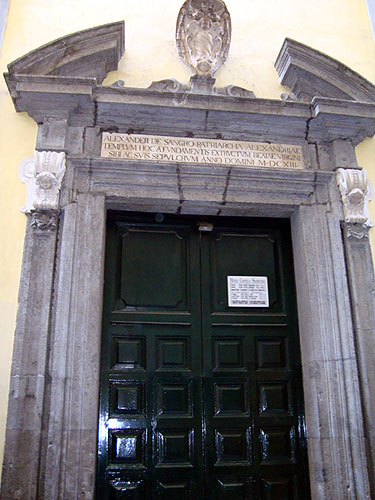
The Cappella Sansevero, also known as the Cappella Sansevero de' Sangri or Pietatella, is a chapel located in the historic center of Naples. Originally commissioned in 1590 by Giovanni di Sangro, it was later transformed into a private funerary monument and an artistic masterpiece by Raimondo di Sangro, the seventh Prince of Sansevero, during the mid-18th century.
The chapel is renowned for its elaborate interior, which houses significant works of Rococo sculpture, including Giuseppe Sanmartino's 'Veiled Christ'. The artistic program was designed to reflect the esoteric and scientific interests of the Prince, integrating complex iconography with exceptional craftsmanship in marble and stucco.
Key Facts
- Materials
- Marble, Stucco, Gold leaf
- Civilization
- Italian
- Accessibility
- Limited; historic building with narrow spaces
- Date(s)
- 1590 (original), 1749-1771 (major renovation)
- Condition
- Well-preserved, functioning as a museum
- Original Function
- Private funerary chapel
- Key Figures
- Raimondo di Sangro, Giuseppe Sanmartino, Antonio Corradini, Francesco Queirolo
Foundation and Early Years
1590The chapel was founded by Giovanni di Sangro as a private place of worship for the Sansevero family. It was initially built on the site of a small chapel dedicated to the Virgin Mary, known as the 'Pietatella'.
The Prince's Transformation
1749-1771Raimondo di Sangro, a polymath and alchemist, undertook a radical renovation of the chapel. He commissioned leading artists of the time to create a series of allegorical sculptures that would serve as a testament to his family's prestige and his own intellectual pursuits.
Modern Preservation
20th century - presentFollowing centuries of private ownership, the chapel was opened to the public as a museum. It is now managed by the Museo Cappella Sansevero, which oversees the ongoing conservation of the delicate marble sculptures and the structural integrity of the building.
Cultural Significance
The Cappella Sansevero is a cornerstone of Neapolitan cultural heritage, representing the pinnacle of 18th-century Italian sculpture. It serves as a unique intersection of religious devotion, aristocratic patronage, and the Enlightenment-era fascination with science and alchemy.
The site is deeply embedded in local folklore, particularly regarding the 'Veiled Christ', which is often cited as one of the most remarkable sculptures in the world due to the lifelike quality of the marble veil. It remains a primary destination for scholars of art history and visitors interested in the esoteric history of Naples.
Interpretive Notes
Scholarly debates and areas of uncertainty
The 'Anatomical Machines'—two skeletons encased in a complex network of hardened veins and arteries—have long been the subject of debate. While 18th-century accounts suggested they were the result of alchemical experimentation by the Prince, modern scientific analysis indicates they were likely constructed using wire, silk, and colored wax over human skeletons, reflecting the anatomical study practices of the period.
Visiting Information
Entry Rules
Entry is by ticket only, and advance booking is strongly recommended due to high demand. The chapel is open daily except Tuesdays. Modest dress is requested, and visitors must follow designated paths to protect the sculptures.
Best Times to Visit
Early morning or late afternoon on weekdays to avoid the heaviest tourist crowds. The chapel is small and can become congested during peak hours.
Photography
Photography is strictly prohibited inside the chapel to protect the artworks and maintain the atmosphere of the space.
Preservation Notes
Do not touch any surfaces, including the sculptures or walls. The environment is climate-controlled to preserve the marble and stucco; please refrain from using flash or bringing large bags into the exhibition area.
Nearby POIs
11 shown- Chiesa di Gesu Nuovo0.3 km
- Basilica di Santa Chiara0.3 km
- Cattedrale di Santa Maria Assunta0.6 km
- Museo Archeologico Nazionale di Napoli0.6 km
- Castel Nuovo1.2 km
- Museo Nazionale di San Martino1.4 km
- Castel Sant'Elmo1.5 km
- Palazzo Reale di Napoli1.5 km
- Naples Underground Geothermal Zone1.6 km
- Basilica di San Francesco di Paola1.7 km
- Catacombs of San Gennaro1.9 km
Sources & Further Reading
- [1]The Veiled Christ: The Cappella Sansevero — Clara Miccinelli. Electa Napoli (1998)
- [2]Raimondo di Sangro, Prince of Sansevero: A Life of Science and Art — Antonio Emanuele Piedimonte. Edizioni del Delfino (2012)
Key Facts
- Materials
- Marble, Stucco, Gold leaf
- Civilization
- Italian
- Accessibility
- Limited; historic building with narrow spaces
- Date(s)
- 1590 (original), 1749-1771 (major renovation)
- Condition
- Well-preserved, functioning as a museum
- Original Function
- Private funerary chapel
- Key Figures
- Raimondo di Sangro, Giuseppe Sanmartino, Antonio Corradini, Francesco Queirolo
Nearby POIs
11 shown- Chiesa di Gesu Nuovo0.3 km
- Basilica di Santa Chiara0.3 km
- Cattedrale di Santa Maria Assunta0.6 km
- Museo Archeologico Nazionale di Napoli0.6 km
- Castel Nuovo1.2 km
- Museo Nazionale di San Martino1.4 km
- Castel Sant'Elmo1.5 km
- Palazzo Reale di Napoli1.5 km
- Naples Underground Geothermal Zone1.6 km
- Basilica di San Francesco di Paola1.7 km
- Catacombs of San Gennaro1.9 km