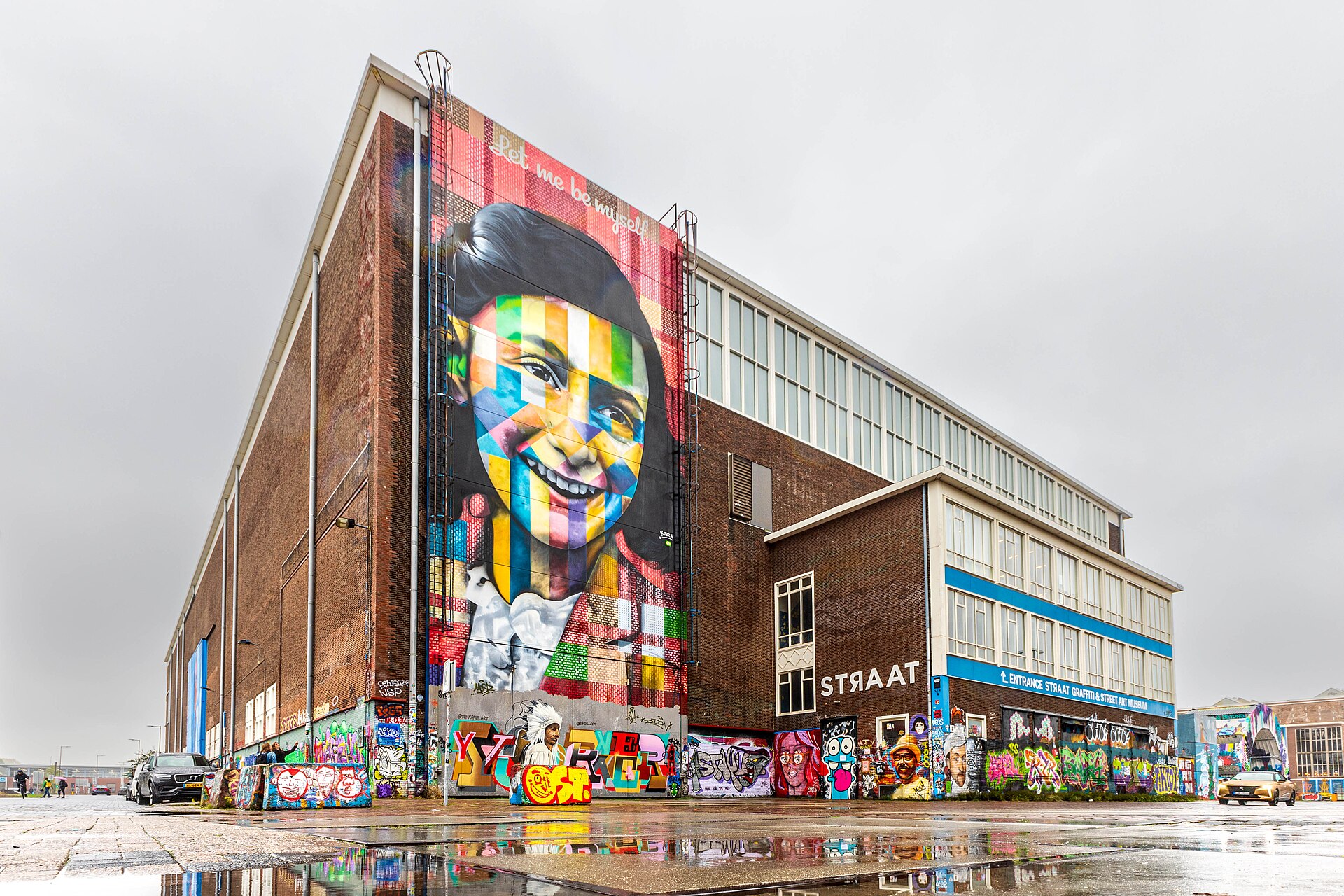
The STRAAT Museum is a dedicated space for street art and graffiti, housed within a massive former shipbuilding warehouse at the NDSM Wharf in Amsterdam. The museum features a collection of over 180 large-scale artworks, many of which were created specifically for the site by international artists, transforming the industrial space into a dynamic gallery.
The museum emphasizes the transition of street art from public urban spaces into a controlled environment, allowing for the preservation and display of works that would otherwise be ephemeral. The facility serves as both an exhibition space and a cultural hub, highlighting the evolution of global street art movements and their integration into contemporary art discourse.
Key Facts
- Materials
- Steel, Concrete, Industrial glass
- Civilization
- Contemporary Dutch
- Accessibility
- Fully wheelchair accessible
- Date(s)
- 2020
- Condition
- Active museum
- Original Function
- Shipbuilding warehouse
- Key Figures
- David Roos
Industrial Origins
20th CenturyThe NDSM Wharf was historically one of the world's largest shipyards, operated by the Nederlandsche Dok en Scheepsbouw Maatschappij. The warehouse now housing the museum was a central part of this industrial complex, which closed in 1984.
Cultural Revitalization
2000s-2010sFollowing the closure of the shipyard, the NDSM area became a hub for artists, squatters, and creative industries. The warehouse was repurposed to host various cultural events before being selected as the permanent home for the street art collection.
Establishment of STRAAT
2020The STRAAT Museum officially opened its doors in 2020, aiming to provide a professional platform for street art. The museum was designed to accommodate massive canvases, many of which are created on-site by artists invited from around the world.
Cultural Significance
STRAAT plays a significant role in legitimizing street art as a formal artistic discipline. By providing a permanent home for works that are traditionally transient, it challenges the boundaries between 'vandalism' and 'fine art' while preserving the history of the NDSM Wharf's transformation from an industrial site to a creative district.
Interpretive Notes
Scholarly debates and areas of uncertainty
The primary debate surrounding the museum concerns the 'institutionalization' of street art. Critics and scholars discuss whether removing street art from its original urban context and placing it in a museum setting strips the work of its subversive nature and original social commentary.
Visiting Information
Entry Rules
Open Tuesday through Sunday. Tickets can be purchased online or at the entrance. No specific dress code is required.
Best Times to Visit
Weekday mornings are generally quieter. The NDSM area is accessible via a free ferry from Amsterdam Central Station.
Photography
Personal photography is permitted for non-commercial use. Flash and tripods are generally prohibited to ensure the safety of the artworks.
Preservation Notes
Visitors are requested not to touch the artworks, as many are created with materials that are sensitive to oils and moisture from skin.
Nearby POIs
11 shownKey Facts
- Materials
- Steel, Concrete, Industrial glass
- Civilization
- Contemporary Dutch
- Accessibility
- Fully wheelchair accessible
- Date(s)
- 2020
- Condition
- Active museum
- Original Function
- Shipbuilding warehouse
- Key Figures
- David Roos