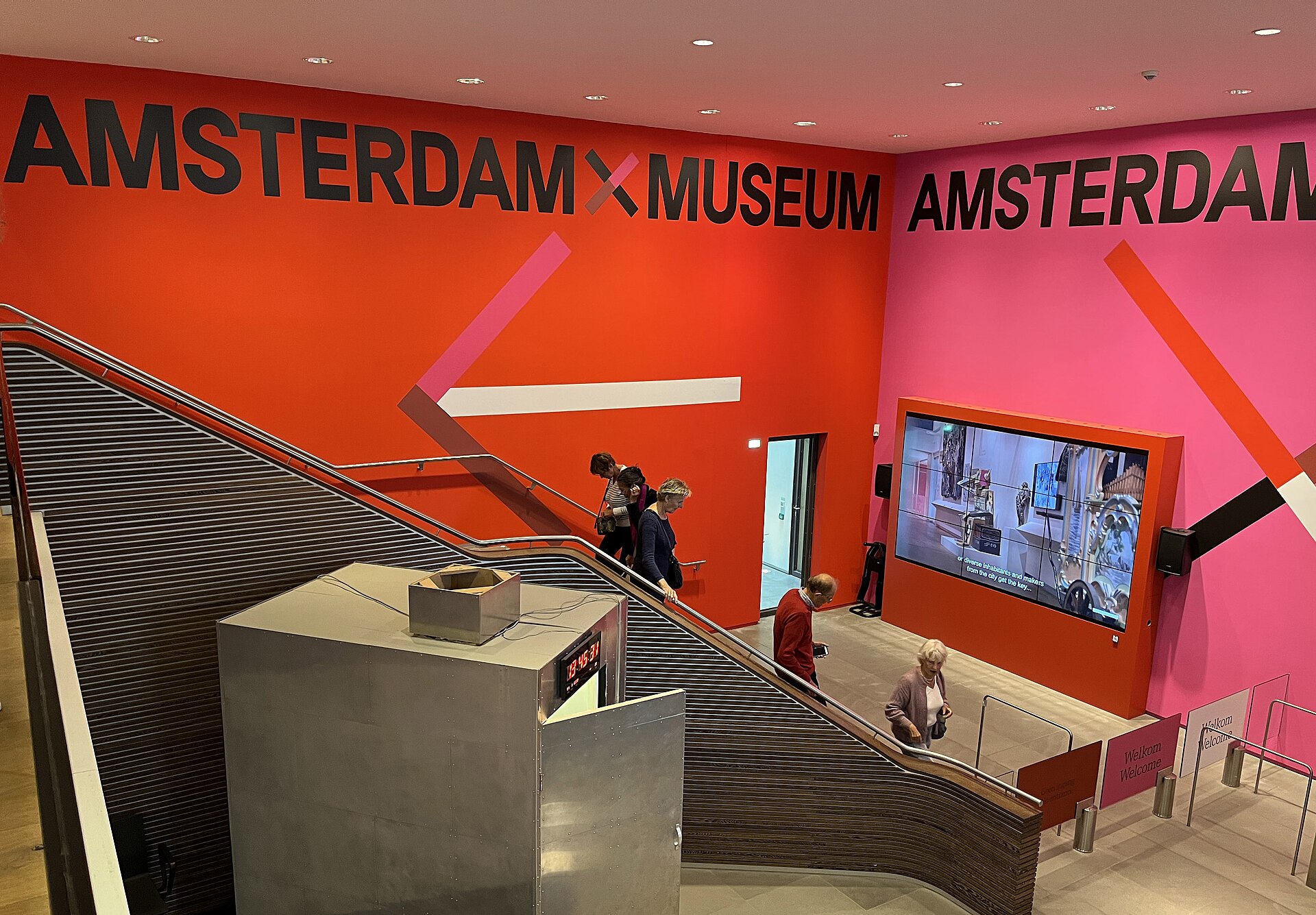
The Amsterdam Museum is dedicated to the history of Amsterdam, tracing its development from a small 13th-century fishing village into a major global commercial center. The museum is housed in the historic Burgerweeshuis (Civic Orphanage), a complex of buildings that served as an orphanage from the 16th century until 1960.
The collection features a diverse array of artifacts, including paintings, archaeological finds, and interactive exhibits that illustrate the city's social, economic, and cultural evolution. It provides a comprehensive overview of the Dutch Golden Age, the city's colonial history, and its contemporary identity as a multicultural metropolis.
Key Facts
- Materials
- Brick, Stone, Glass
- Civilization
- Dutch
- Accessibility
- Fully wheelchair accessible
- Date(s)
- 1580 - 1960 (Orphanage complex)
- Condition
- Active museum
- Original Function
- Civic Orphanage
- Key Figures
- Hendrick de Keyser
The Civic Orphanage
1580-1960The site originally functioned as the Burgerweeshuis, a charitable institution for orphans. The architecture incorporates several historic buildings, including the former St. Lucien's Convent, which were repurposed to house the city's orphaned children for nearly four centuries.
Establishment of the Museum
1975Following the relocation of the orphanage, the complex was converted into the Amsterdam Historical Museum, opening its doors in 1975. The renovation preserved the historic courtyard and architectural character of the orphanage while adapting the interior for exhibition spaces.
Modern Transformation
2011-PresentThe institution was rebranded as the Amsterdam Museum in 2011 to reflect a broader scope of historical inquiry. The museum continues to undergo periodic renovations to modernize its narrative approach and improve visitor engagement with the city's complex history.
Cultural Significance
The museum serves as the primary repository for the collective memory of Amsterdam. By occupying the former Civic Orphanage, it maintains a physical link to the city's tradition of social welfare and civic responsibility, which were foundational to the development of the Dutch Republic.
Interpretive Notes
Scholarly debates and areas of uncertainty
Recent academic and curatorial discourse has focused on the museum's role in addressing the city's colonial past, particularly the involvement of the Dutch East India Company (VOC) in the slave trade. Debates center on how to balance traditional narratives of the 'Golden Age' with the critical examination of systemic exploitation.
Visiting Information
Entry Rules
Open daily. Tickets can be purchased online or at the entrance. Visitors are encouraged to book time slots in advance during peak tourist seasons.
Best Times to Visit
Weekday mornings are generally quieter. The museum is less crowded during the shoulder seasons of spring and autumn.
Photography
Personal photography is permitted without flash or tripods. Commercial photography requires prior written permission from the museum administration.
Preservation Notes
The historic building structure is protected; visitors are requested to refrain from touching artifacts and to follow all posted signage regarding restricted areas.
Nearby POIs
11 shownSources & Further Reading
- [1]The Amsterdam Museum: A History — Norbert Middelkoop. Amsterdam University Press (2015)
- [2]Civic Orphanage Architecture in the Netherlands — Piet de Rooy. Journal of Dutch History (2018)
Key Facts
- Materials
- Brick, Stone, Glass
- Civilization
- Dutch
- Accessibility
- Fully wheelchair accessible
- Date(s)
- 1580 - 1960 (Orphanage complex)
- Condition
- Active museum
- Original Function
- Civic Orphanage
- Key Figures
- Hendrick de Keyser