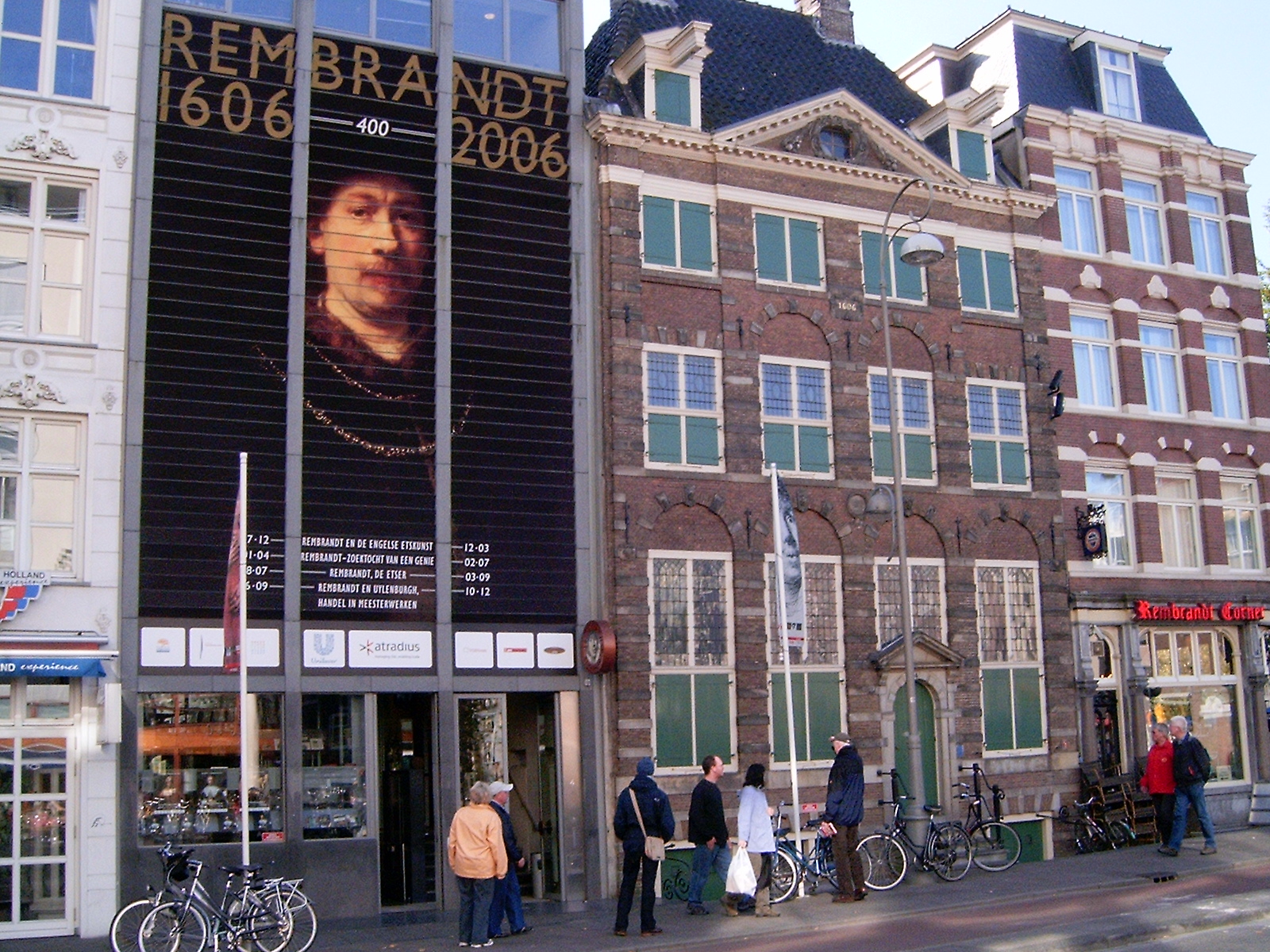
The Rembrandt House Museum, located in the Jodenbreestraat in Amsterdam, is the historic residence where the Dutch master Rembrandt van Rijn lived and worked between 1639 and 1656. The building, a typical 17th-century merchant's house, was purchased by the artist at the height of his career and served as both his home and his professional studio.
Following extensive restoration in the late 20th century, the interior was reconstructed to reflect the period of Rembrandt's residency. The museum displays a comprehensive collection of his etchings, alongside works by his contemporaries and pupils, providing insight into the artistic environment and daily life of the Dutch Golden Age.
Key Facts
- Materials
- Brick, Timber, Sandstone
- Civilization
- Dutch
- Accessibility
- Partially accessible; historic stairs may limit access to upper floors
- Date(s)
- 1606
- Condition
- Restored and maintained as a museum
- Original Function
- Residential house and artist studio
- Key Figures
- Rembrandt van Rijn, Saskia van Uylenburgh, Titus van Rijn
Construction and Ownership
1606-1639The house was built in 1606 on the Sint Antoniesbreestraat, an area popular with wealthy merchants and artists. It was originally constructed as a double-wide house and underwent several architectural modifications before Rembrandt acquired it in 1639.
Rembrandt's Residency
1639-1656Rembrandt lived here for nearly two decades, during which he produced some of his most famous works, including 'The Night Watch'. The house functioned as a bustling studio where he trained numerous apprentices. Financial difficulties eventually forced him to declare bankruptcy, leading to the sale of the house and his possessions in 1658.
Transformation into a Museum
1906-presentThe building was purchased by the Rembrandt House Foundation in 1906 to prevent its demolition. After a major restoration project completed in 1999, the interior was returned to its 17th-century appearance, and a modern wing was added to house the museum's extensive collection of prints and drawings.
Cultural Significance
The museum is central to understanding the professional life of Rembrandt, offering a rare glimpse into the working methods of a 17th-century master. It serves as a primary site for the study of Dutch printmaking and the social history of Amsterdam during its economic zenith.
Beyond its historical value, the museum plays a vital role in the preservation of Dutch cultural heritage, acting as a bridge between the artistic legacy of the Golden Age and contemporary art practice through its rotating exhibitions and educational programs.
Interpretive Notes
Scholarly debates and areas of uncertainty
There is ongoing academic discussion regarding the exact layout of Rembrandt's studio and the specific locations of his apprentices' workstations. While the current reconstruction is based on historical inventories, some scholars argue that the division of space may have been more fluid than the present museum layout suggests.
Visiting Information
Entry Rules
Open daily from 10:00 to 18:00. Tickets are available online and at the entrance. Visitors are encouraged to book time slots in advance to manage capacity.
Best Times to Visit
Weekday mornings are generally quieter. The museum is less crowded during the shoulder seasons of spring and autumn.
Photography
Non-commercial photography is permitted without flash or tripods. Professional photography requires prior written authorization.
Preservation Notes
The historic floors and original architectural elements are fragile; visitors are requested to refrain from touching the walls or displays. Large bags and backpacks must be stored in provided lockers.
Nearby POIs
11 shownSources & Further Reading
- [1]Rembrandt: The Painter at Work — Ernst van de Wetering. Amsterdam University Press (2009)
- [2]Rembrandt's House: A Catalogue of the Collection — Bob van den Boogert. Rembrandt House Museum (2006)
Key Facts
- Materials
- Brick, Timber, Sandstone
- Civilization
- Dutch
- Accessibility
- Partially accessible; historic stairs may limit access to upper floors
- Date(s)
- 1606
- Condition
- Restored and maintained as a museum
- Original Function
- Residential house and artist studio
- Key Figures
- Rembrandt van Rijn, Saskia van Uylenburgh, Titus van Rijn