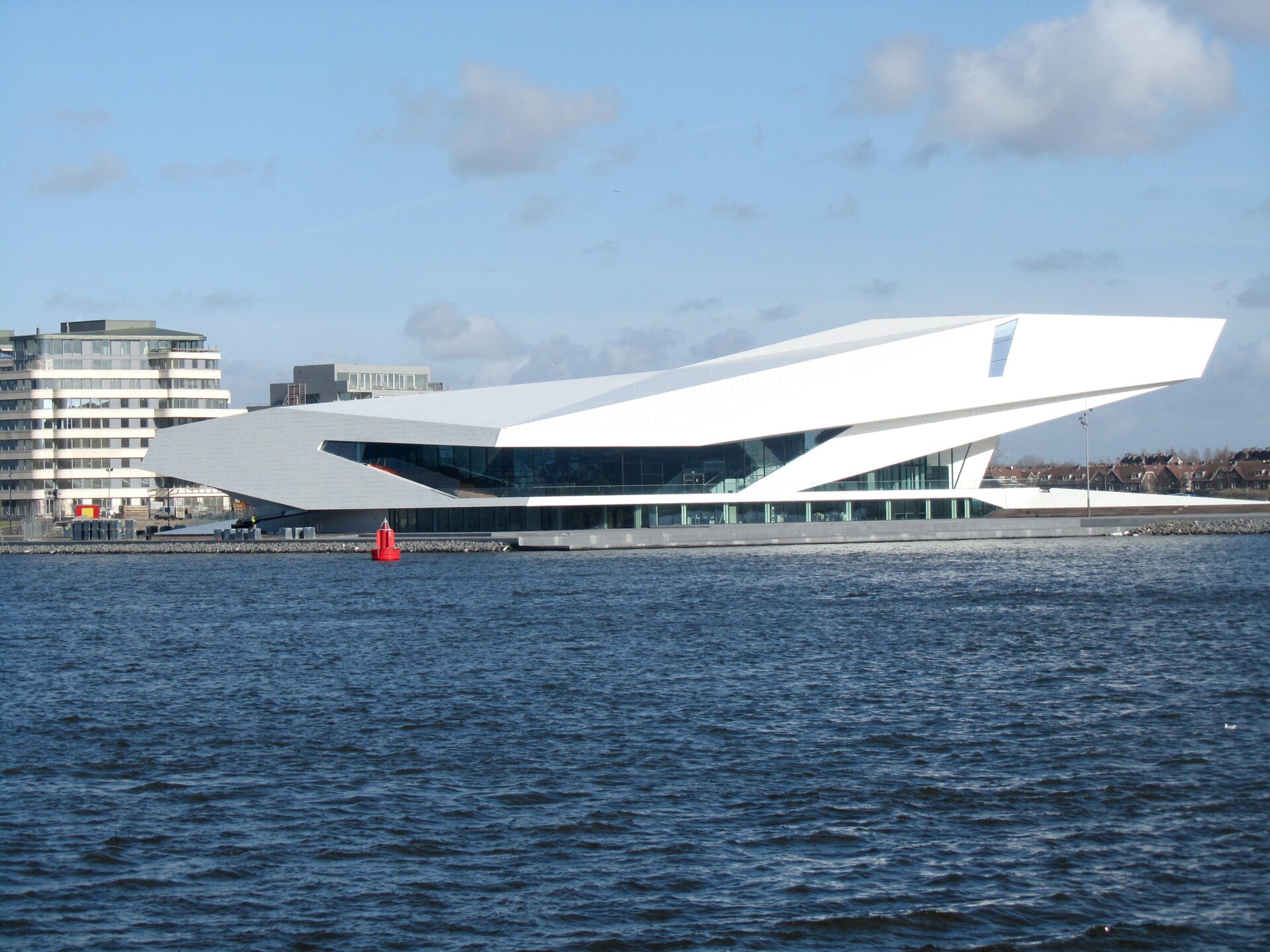
The Eye Filmmuseum is the national museum for film and the moving image in the Netherlands. Located on the northern bank of the IJ river in Amsterdam, the institution is dedicated to the preservation, restoration, and exhibition of cinematic history, housing a vast collection that spans the entire history of film from the late 19th century to the present day.
The museum is housed in a distinctive, futuristic building designed by the Austrian architectural firm Delugan Meissl Associated Architects. Opened in 2012, its angular, white structure is intended to evoke the movement of light and film, serving as a prominent landmark in the Overhoeks district and a hub for film culture, research, and public screenings.
Key Facts
- Materials
- Steel, Glass, Aluminum
- Civilization
- Dutch
- Accessibility
- Fully wheelchair accessible
- Date(s)
- 2009-2012
- Condition
- Active, fully operational
- Original Function
- National film archive and museum
- Key Figures
- Delugan Meissl Associated Architects
Foundations of the Archive
1946-2009The institution originated from the Nederlands Filmmuseum, which was established in 1946. For decades, it operated out of the Vondelparkpaviljoen, housing an extensive collection of film prints, posters, and historical equipment.
Architectural Development
2009-2012To accommodate its growing collection and provide a modern space for public engagement, the museum commissioned a new facility on the IJ waterfront. Construction began in 2009, resulting in the iconic building that opened to the public in April 2012.
Modern Era
2012-PresentSince its opening, the Eye Filmmuseum has become a central institution for international film studies and public cinema. It continues to manage a massive digital and physical archive while hosting rotating exhibitions and film festivals.
Cultural Significance
The Eye Filmmuseum plays a critical role in the preservation of global cinematic heritage. It is one of the few institutions worldwide that maintains a comprehensive archive of both mainstream and experimental film, influencing how film history is curated and studied internationally.
Locally, the museum has been a catalyst for the urban regeneration of the Amsterdam North (Noord) area. Its presence has transformed the former industrial waterfront into a vibrant cultural district, connecting the city center to the northern bank via ferry and architectural development.
Interpretive Notes
Scholarly debates and areas of uncertainty
There is ongoing academic discussion regarding the balance between the museum's role as a public-facing cultural venue and its responsibilities as a scientific archive. Debates often center on the ethics of digital restoration versus the preservation of original analog film prints.
Visiting Information
Entry Rules
Open daily. Tickets are required for museum exhibitions and film screenings. The building's public foyer, restaurant, and shop are accessible without a ticket.
Best Times to Visit
Weekdays during the morning or early afternoon to avoid weekend crowds. The museum is particularly active during the annual International Documentary Film Festival Amsterdam (IDFA).
Photography
Personal photography is permitted in public areas. Photography inside exhibition galleries is generally prohibited to protect copyright and sensitive materials.
Preservation Notes
The archive maintains strict climate control for film storage. Visitors are asked to refrain from bringing food or drink into the exhibition spaces.
Nearby POIs
11 shownKey Facts
- Materials
- Steel, Glass, Aluminum
- Civilization
- Dutch
- Accessibility
- Fully wheelchair accessible
- Date(s)
- 2009-2012
- Condition
- Active, fully operational
- Original Function
- National film archive and museum
- Key Figures
- Delugan Meissl Associated Architects