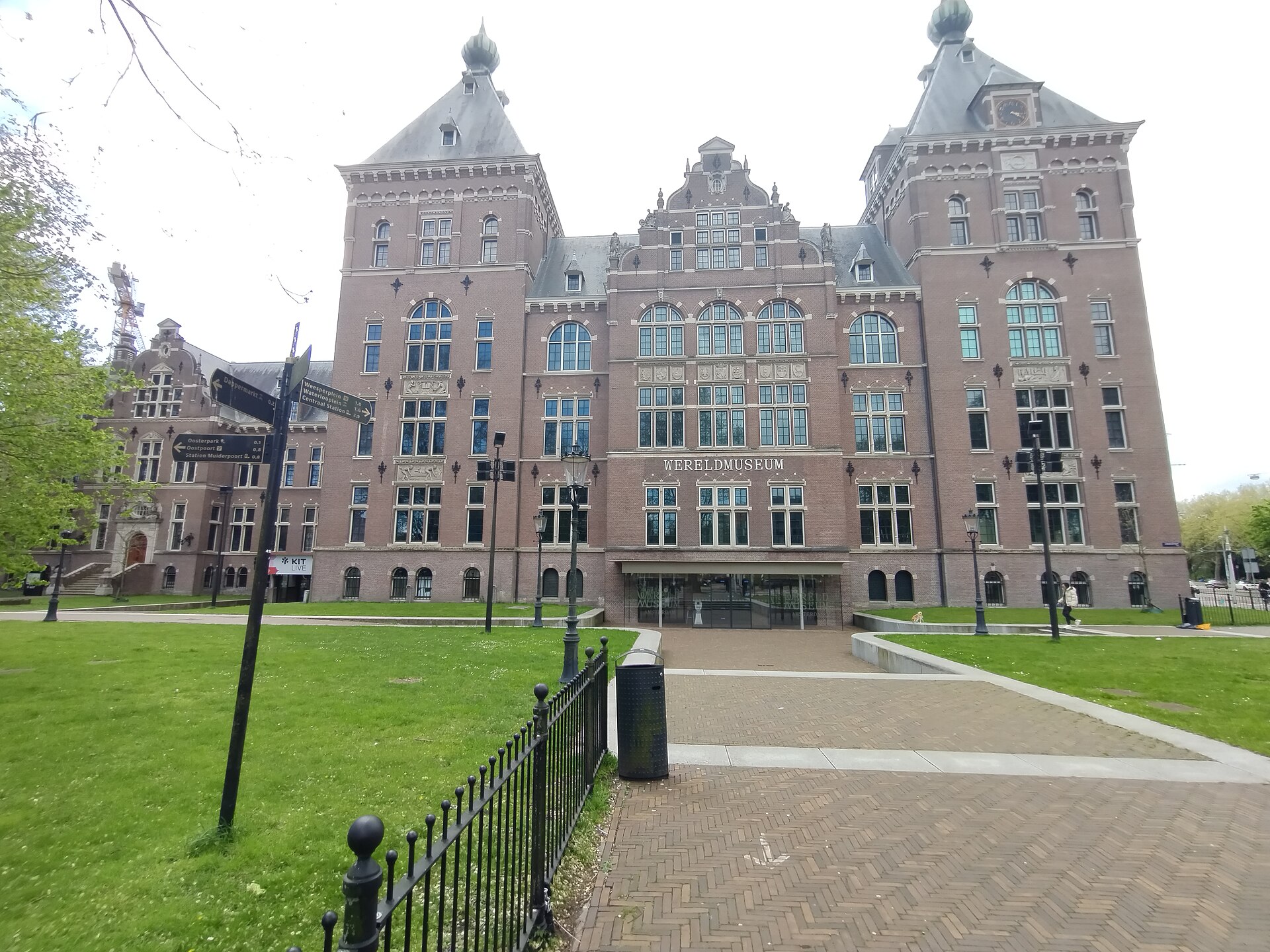
Wereldmuseum Amsterdam, formerly known as the Tropenmuseum, is an ethnographic museum located in the Oosterpark neighborhood of Amsterdam. Housed in a monumental building constructed between 1910 and 1926, the institution was originally established to showcase the cultures and geography of the Dutch East Indies. Its architecture, characterized by grand halls and intricate brickwork, reflects the colonial ambitions and global reach of the Netherlands during the early 20th century.
Today, the museum holds a vast collection of over 175,000 objects, ranging from historical artifacts to contemporary art. The museum has shifted its focus toward critical engagement with colonial history, migration, and the shared human experience. Through its permanent and temporary exhibitions, it explores the complex legacies of imperialism while highlighting the diverse cultural expressions of communities from across the globe.
Key Facts
- Materials
- Brick, Stone, Glass
- Civilization
- Dutch
- Accessibility
- Fully wheelchair accessible
- Date(s)
- 1910-1926
- Condition
- Active museum
- Original Function
- Colonial Museum
- Key Figures
- Johannes van der Waal, J.J. van Nieukerken
Origins and Colonial Context
1864-1910The museum's roots lie in the Colonial Museum in Haarlem, founded in 1864 to display products and artifacts from the Dutch colonies. As the collection grew, the need for a larger, purpose-built facility in Amsterdam became apparent.
Construction of the Monumental Building
1910-1926Architects Johannes van der Waal and J.J. van Nieukerken designed the current building. Construction was delayed by the First World War, but the building was eventually completed in 1926, serving as a symbol of the Dutch colonial empire.
Post-Colonial Transition
1945-2000Following the independence of Indonesia, the museum underwent a significant shift in identity. It transitioned from a colonial display space to an ethnographic museum focused on global cultures and the study of non-Western societies.
Modern Rebranding
2014-PresentIn 2014, the museum merged with other ethnographic institutions to form the Nationaal Museum van Wereldculturen. In 2024, it was officially rebranded as Wereldmuseum Amsterdam, emphasizing a commitment to decolonization and contemporary social dialogue.
Cultural Significance
The museum serves as a critical site for reflecting on the Netherlands' colonial past and its ongoing relationship with former colonies. It plays a vital role in the Dutch cultural landscape by facilitating discussions on identity, diversity, and the ethics of museum collections in a post-colonial world.
Interpretive Notes
Scholarly debates and areas of uncertainty
There is ongoing academic debate regarding the provenance of the museum's collection, particularly items acquired during the colonial era. Scholars and activists frequently discuss the ethics of repatriation and the necessity of recontextualizing artifacts that were removed under duress or through unequal power dynamics.
Visiting Information
Entry Rules
Open Tuesday through Sunday. Tickets can be purchased online or at the entrance. Visitors are encouraged to check the official website for current exhibition schedules and potential holiday closures.
Best Times to Visit
Weekday mornings are generally quieter. The museum is a popular destination for school groups, so visiting outside of peak school hours can provide a more contemplative experience.
Photography
Personal photography is permitted for non-commercial use. Flash and tripods are prohibited in exhibition galleries to protect sensitive artifacts.
Preservation Notes
Maintain a respectful distance from all displayed objects. Do not touch artifacts or display cases. The building is a protected monument; please follow all posted safety and conservation guidelines.
Nearby POIs
11 shownKey Facts
- Materials
- Brick, Stone, Glass
- Civilization
- Dutch
- Accessibility
- Fully wheelchair accessible
- Date(s)
- 1910-1926
- Condition
- Active museum
- Original Function
- Colonial Museum
- Key Figures
- Johannes van der Waal, J.J. van Nieukerken