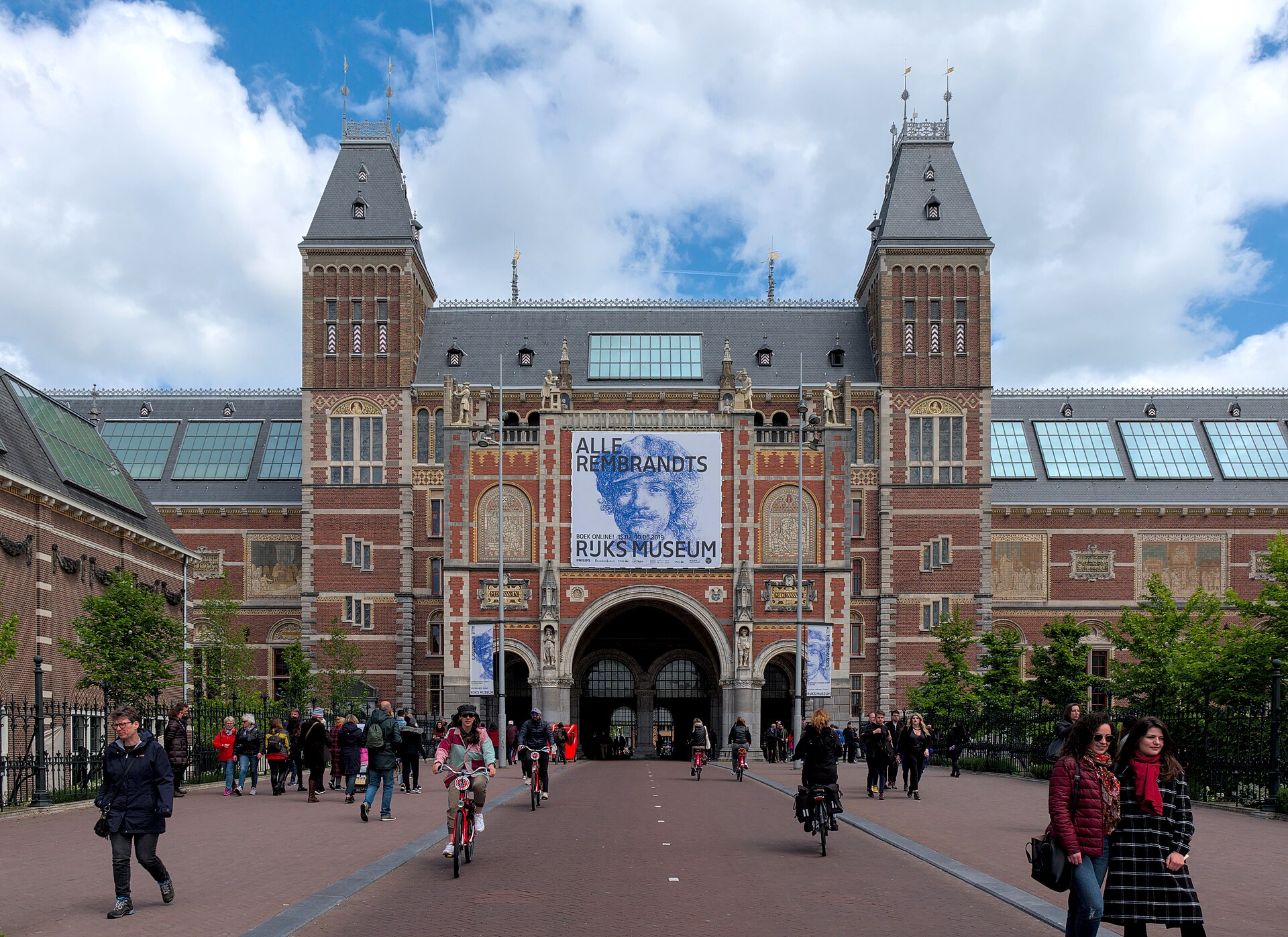
The Rijksmuseum is the national museum of the Netherlands, dedicated to arts and history in Amsterdam. Located at the Museum Square, the museum houses a vast collection of Dutch Golden Age masterpieces, including works by Rembrandt, Frans Hals, and Johannes Vermeer, alongside an extensive collection of Asian art and historical artifacts spanning over 800 years of Dutch history.
The current building, designed by Pierre Cuypers, opened in 1885. It is a notable example of 19th-century Dutch architecture, blending Gothic and Renaissance revival styles. Following a decade-long renovation completed in 2013, the museum was modernized to improve visitor flow and restore the original decorative schemes of the interior, while maintaining its status as a premier global cultural institution.
Key Facts
- Materials
- Brick, Stone, Iron, Glass
- Civilization
- Dutch
- Accessibility
- Fully wheelchair accessible with elevators and ramps
- Date(s)
- 1876-1885
- Condition
- Fully restored and active
- Original Function
- National Museum
- Key Figures
- Pierre Cuypers, Rembrandt van Rijn, Johannes Vermeer
Foundations and Early Collections
1800-1808The museum was originally founded in The Hague in 1800 as the Nationale Kunst-Galerij, modeled after the French Louvre. It moved to Amsterdam in 1808 by order of King Louis Bonaparte, brother of Napoleon, and was housed in the Royal Palace on Dam Square.
The Cuypers Building
1876-1885To accommodate the growing national collection, architect Pierre Cuypers was commissioned to design a dedicated building. The structure was controversial at the time for its heavy use of Gothic and Renaissance motifs, which some critics felt were too ecclesiastical for a secular museum.
The Great Renovation
2003-2013The museum underwent a massive ten-year renovation led by architects Cruz y Ortiz. The project involved removing later additions to the building, restoring the grand central atrium, and reorganizing the collection to emphasize the narrative of Dutch history.
Cultural Significance
The Rijksmuseum serves as the primary repository of Dutch national identity. By housing the works of the Dutch Masters, it provides a visual record of the country's economic and artistic zenith during the 17th century. The museum is central to the Dutch tourism industry and acts as a focal point for international research into European art history.
Interpretive Notes
Scholarly debates and areas of uncertainty
Debates often center on the museum's role in addressing the colonial history of the Netherlands. Recent exhibitions have focused on the Dutch East India Company and the history of slavery, prompting scholarly discussion on how national museums should balance the celebration of 'Golden Age' achievements with the critical examination of colonial exploitation.
Visiting Information
Entry Rules
Open daily from 9:00 to 17:00. Tickets must be booked online in advance for a specific time slot. Large bags and backpacks are not permitted in the galleries; lockers are available.
Best Times to Visit
Weekday mornings before 10:30 or late Friday afternoons to avoid peak tourist crowds. The museum is generally quieter during the winter months.
Photography
Non-commercial photography is permitted without flash or tripods. Selfie sticks are prohibited.
Preservation Notes
Do not touch the artwork or display cases. Maintain a quiet volume in the galleries. The museum maintains strict climate control to preserve delicate canvases and historical artifacts.
Nearby POIs
11 shownSources & Further Reading
- [1]
- [2]The Architecture of the Rijksmuseum — A.J.C. van Leeuwen. Waanders Publishers (2007)
Key Facts
- Materials
- Brick, Stone, Iron, Glass
- Civilization
- Dutch
- Accessibility
- Fully wheelchair accessible with elevators and ramps
- Date(s)
- 1876-1885
- Condition
- Fully restored and active
- Original Function
- National Museum
- Key Figures
- Pierre Cuypers, Rembrandt van Rijn, Johannes Vermeer